Bands are a legitimate answer, not a compromise
The guidance for adults is muscle-strengthening activity on two days a week, covering the major muscle groups — and it does not prescribe the equipment. Bands, bodyweight work and weights all count. For someone starting from a low base, on a medication that brings periods of real fatigue, the equipment that is light, quiet, portable and cheap has a genuine advantage: it is the one that gets used.
Know which of the four products you are buying
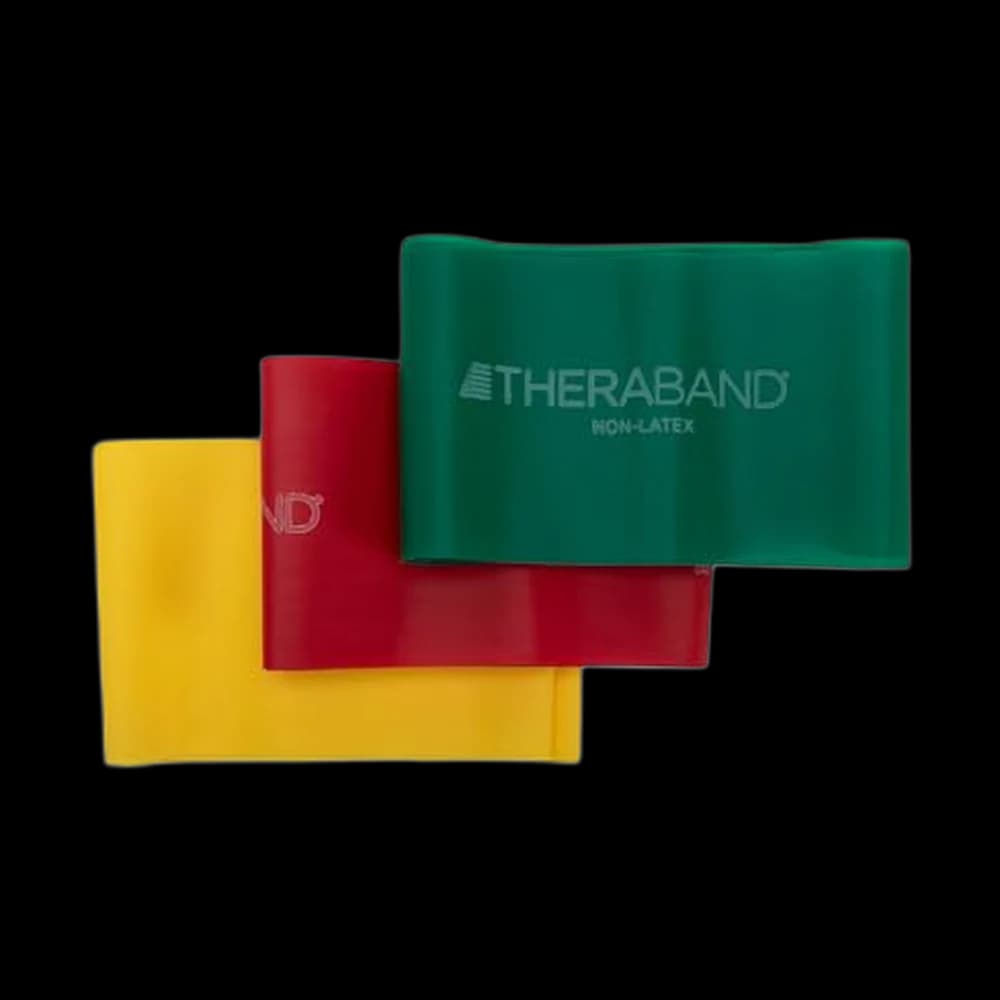
- Flat therapy bands: thin latex sheets, sold by colour. Excellent for rehab, mobility and shoulder work; limited ceiling for strength.
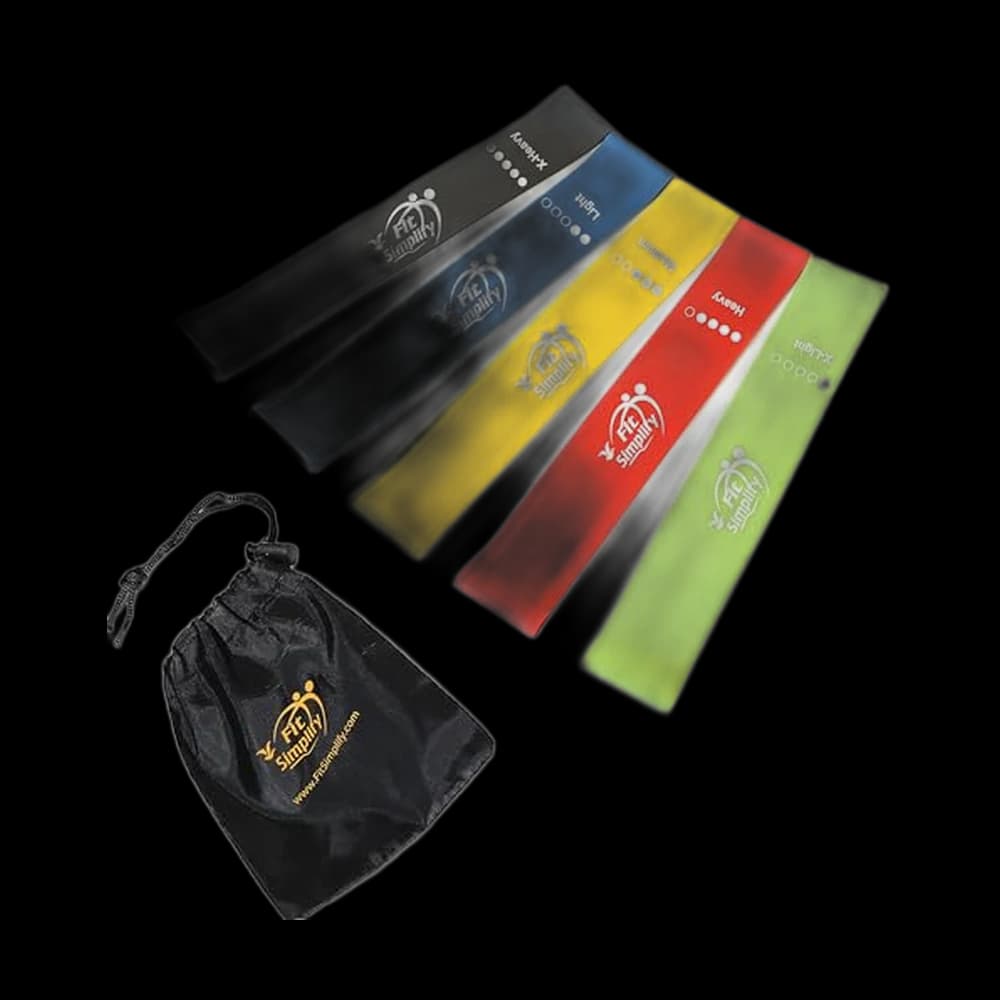
- Fabric loop bands: short loops that do not roll up on the thigh. Best for glute, hip and lower-body work.
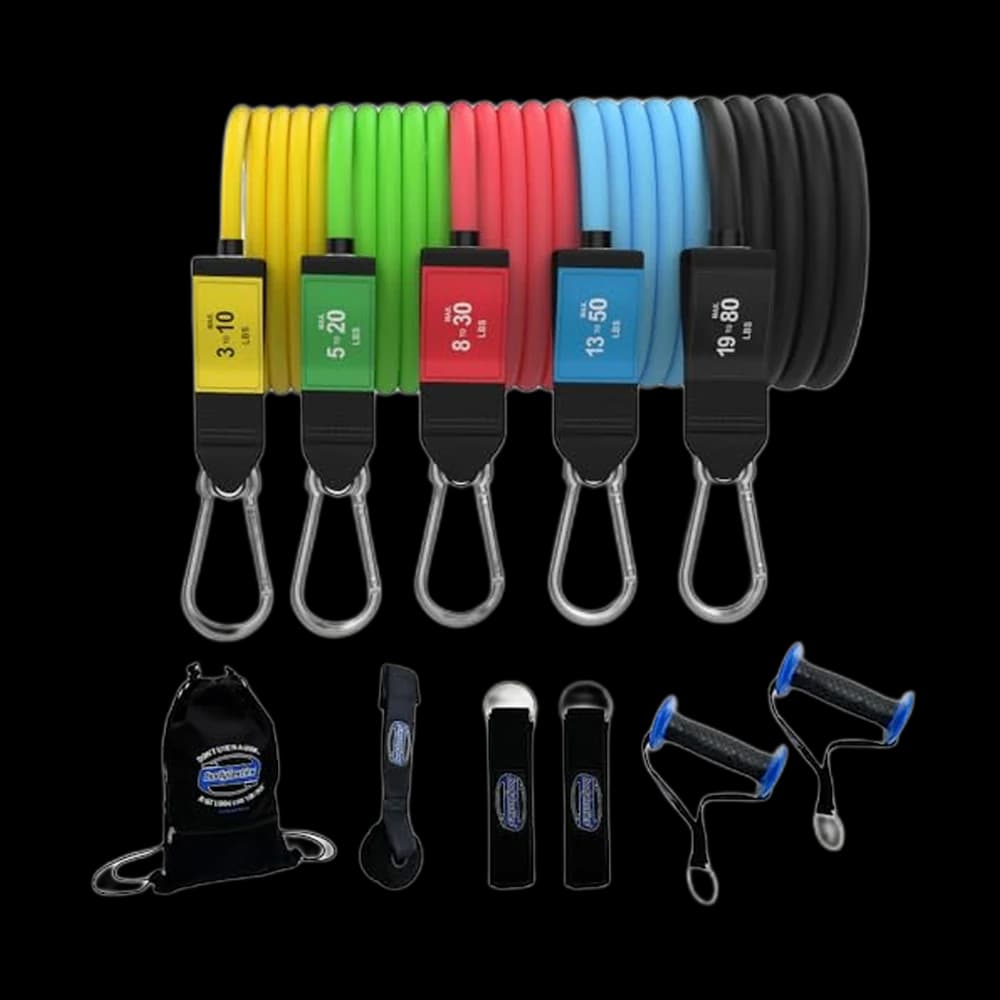
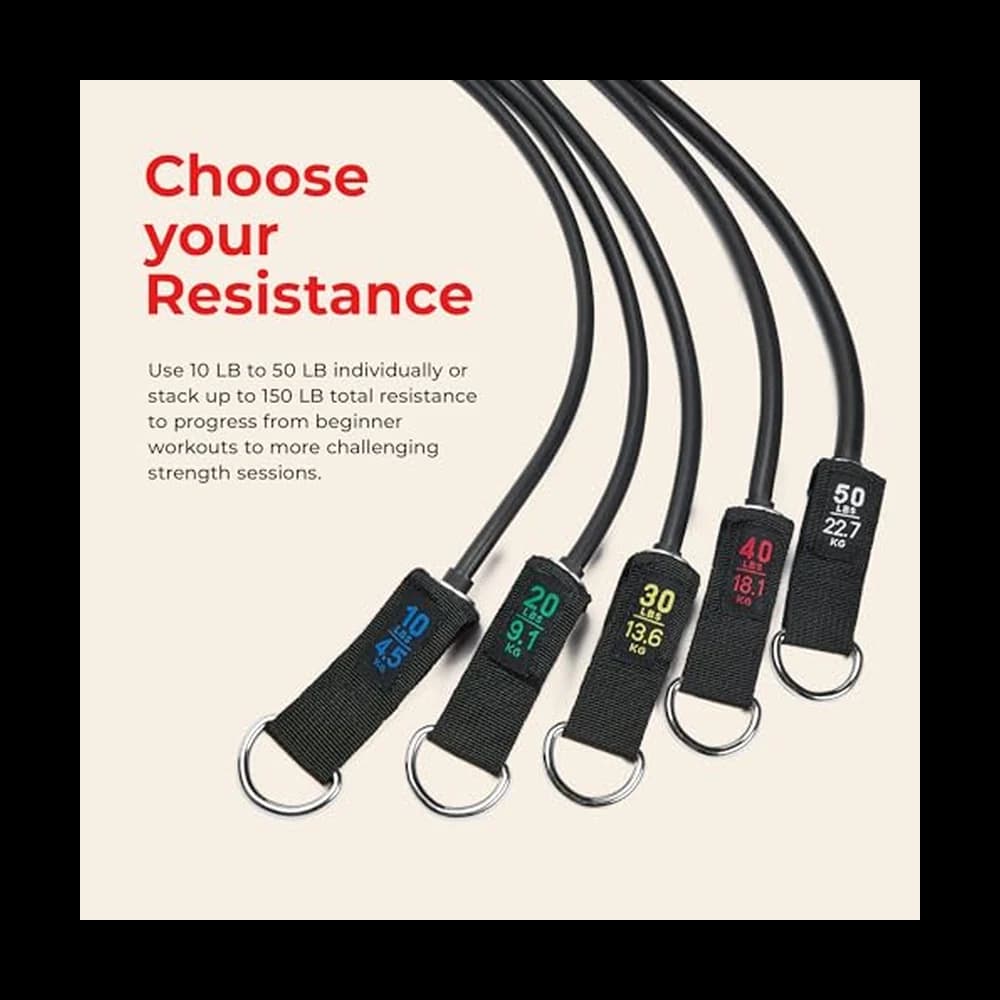
- Tube bands with handles: the closest thing to a cable machine at home. This is the type that covers the most exercises and the one most beginners should start with.
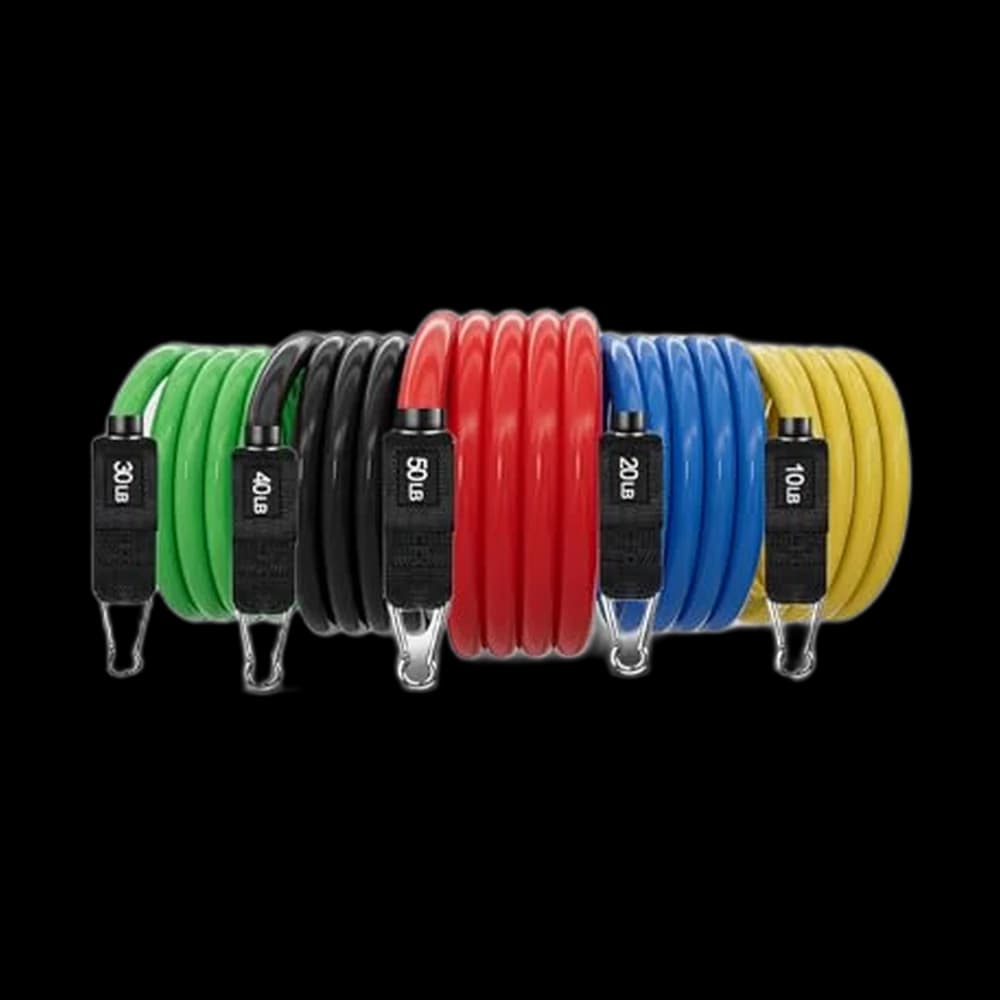
- Long looped power bands: heavy continuous loops used for pull-up assistance and heavy lower-body work. Genuinely strong, and awkward for small-muscle movements.
Treat the printed resistance as a rough ordering
A band's resistance rises the further you stretch it, so "30 lb" describes a point on a curve, not a fixed load, and different manufacturers pick different points. Do not compare pound ratings across brands. What matters is that a set gives you several clearly different levels so you can progress, and that the gaps between them are not enormous.
Red flag: anchoring a door attachment to a door that opens toward you. Put the anchor on the hinge side of a closed door, and check the door cannot be opened from the other side while you are training. This is the one real safety point in the category.
Care, because bands do fail
Latex degrades with heat, UV and time. Keep them out of direct sun and out of a hot car, check for nicks and cloudy patches before each session, and retire anything that shows a tear. If latex allergy applies to you, look for a manufacturer statement — fabric and TPE options exist and are clearly labelled.
Start with two days and a plan
A set with a printed exercise guide is worth more than a set with two extra bands, because band form is less self-evident than dumbbell form. Aim for eight to twelve controlled repetitions, two days a week, across legs, back, chest, shoulders and arms. And keep protein in the picture — resistance work and adequate protein are the pair, not one or the other. If you have any medical condition or are new to exercise, ask your prescriber or a physiotherapist first.