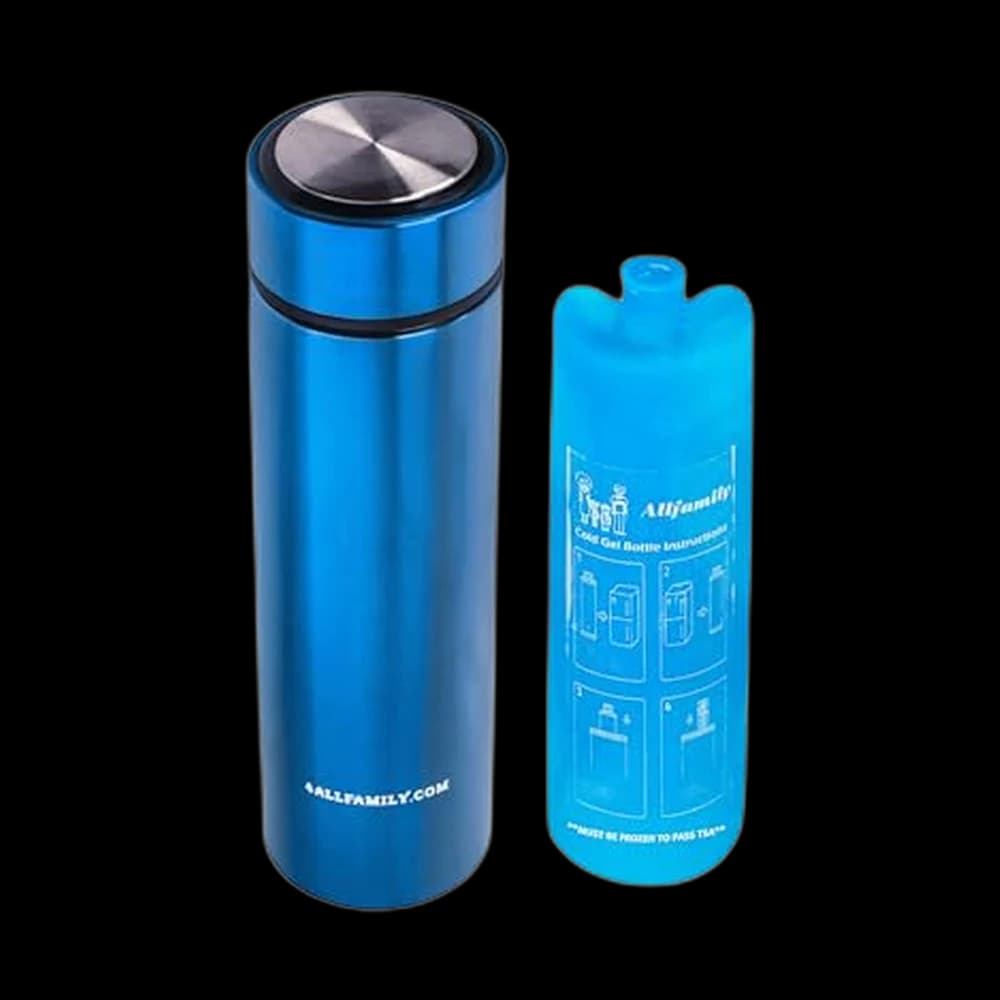
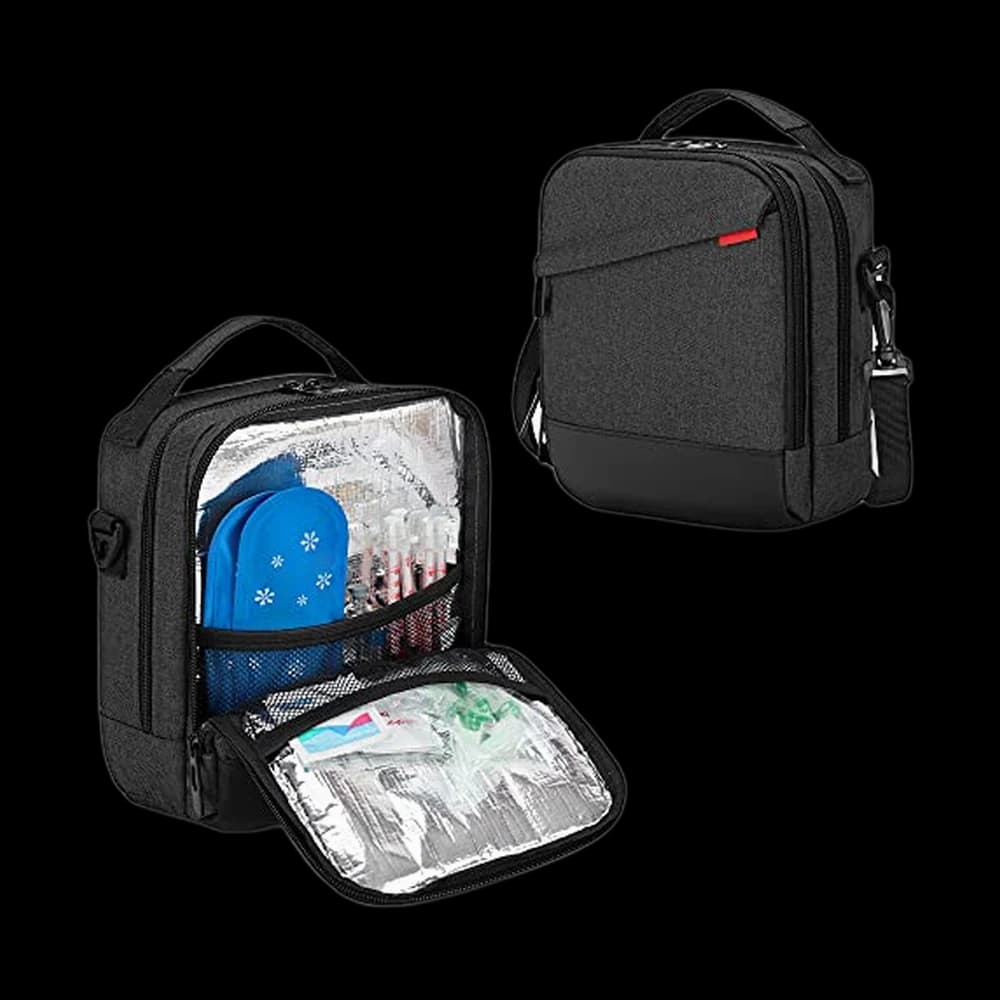
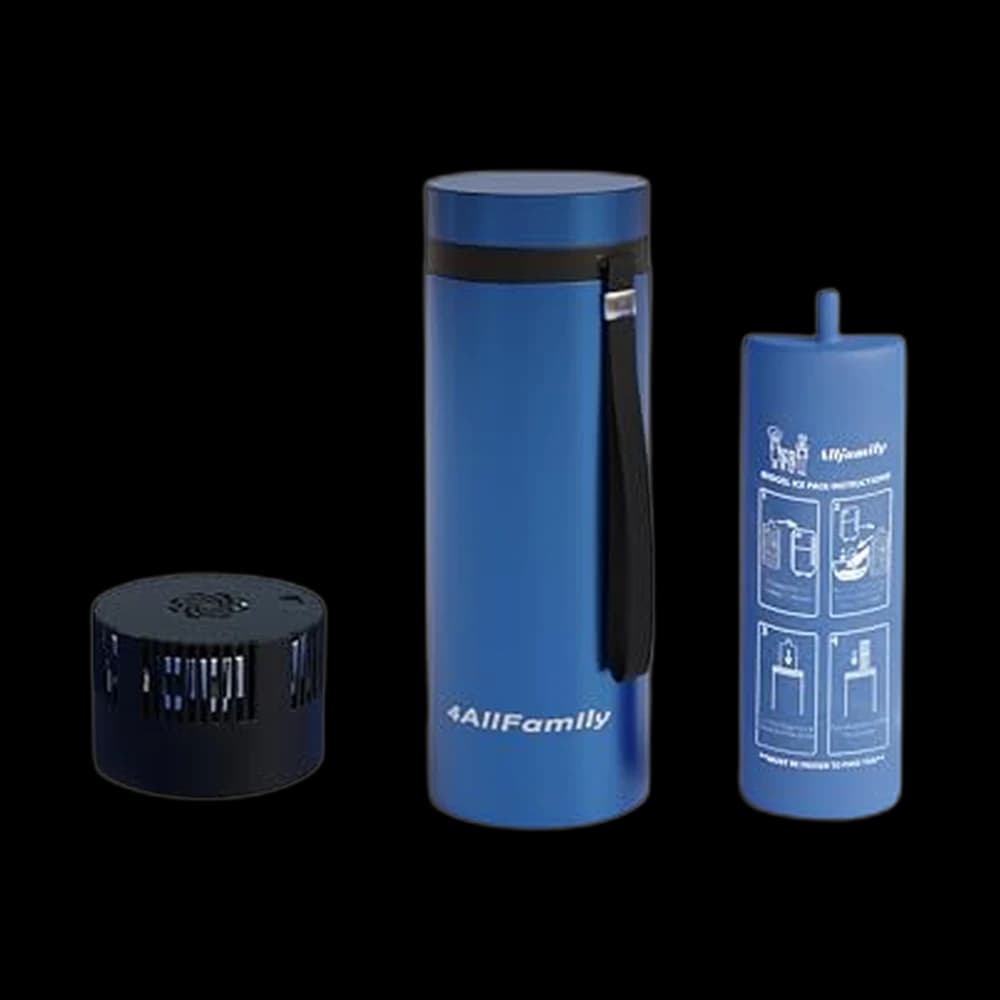
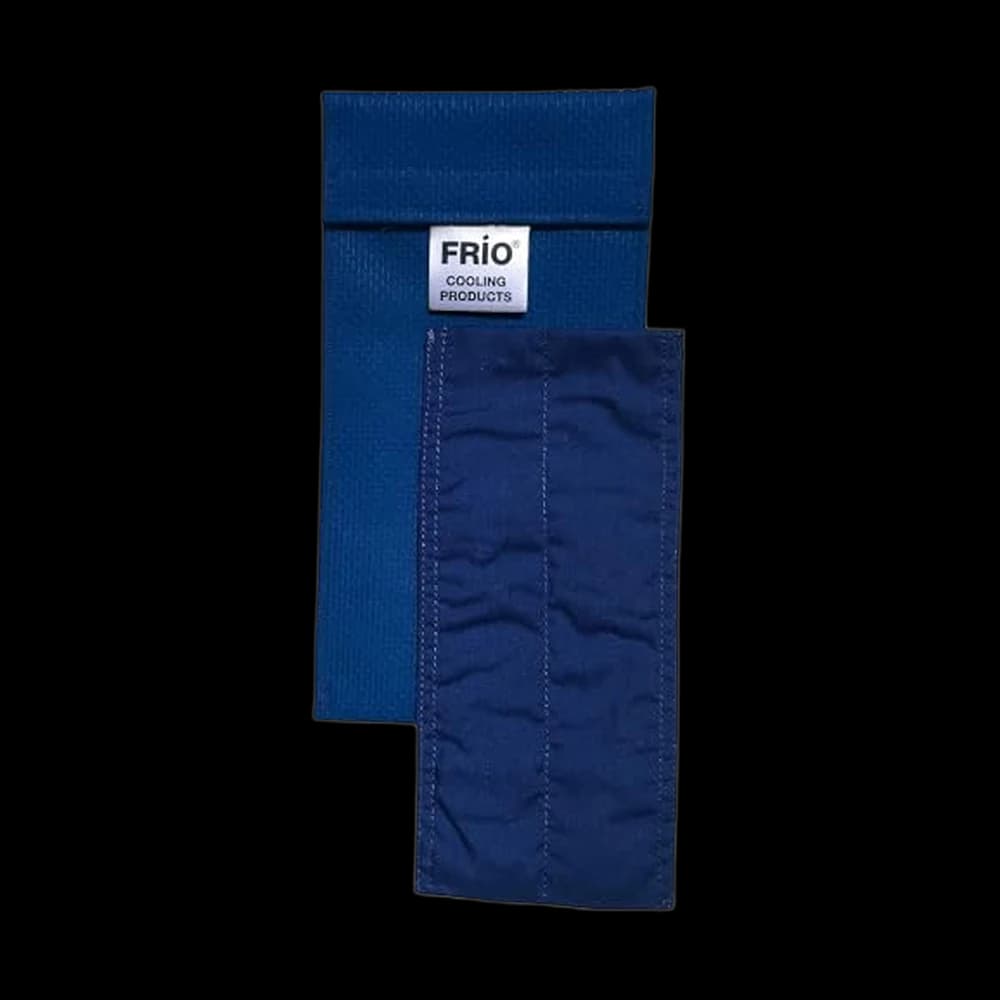
The storage rule is on your own label. Every one of these medications has its own manufacturer storage instructions, and they differ by brand and by presentation — pens, prefilled devices and vials are not the same. Read your product's label and patient information, or ask your pharmacist. This page is about cases, not about storage rules, and it will not give you a temperature.
What fits: the makers' own numbers
The fit question comes up more than any other, so here is what each maker states, read from its own product page on 27 September 2026 (CURMIO publishes no product page of its own, so its row is read from the listing). These are the manufacturers' claims, not our measurements — we have not put a pen in any of these cases. Where a maker states nothing, the cell says so.
| Case | GLP-1 pens the maker says fit | Interior space the maker states | Cooling method, as the maker describes it |
|---|
| 4ALLFAMILY Nomad (Medium) | Up to 2: Ozempic, Wegovy, Saxenda. Up to 1: Mounjaro, Zepbound | Usable length 6.9 in (17.4 cm); free-space diameter 1.3 in (3.3 cm) | Biogel freeze pack; no power |
| CURMIO insulated bag | Not stated | Main compartment 7 × 4.3 × 9.1 in; insulated front compartment size not stated | Foil-lined insulated compartment; sold as an empty bag, ice packs not included |
| 4ALLFAMILY Explorer | Up to 5: Ozempic, Wegovy. Up to 3: Mounjaro, Zepbound, Trulicity | Usable length 7.9 in (20 cm); free-space diameter 1.93 in (4.9 cm) | USB-powered cooling lid, Biogel pack, or both together |
| FRIO Duo wallet | No GLP-1 pen named; the maker states 2 insulin pens or 2 × 10 ml vials | Inner wallet 80 × 180 mm (about 3.25 × 7 in) | Evaporative: soaked in water to activate, no ice |
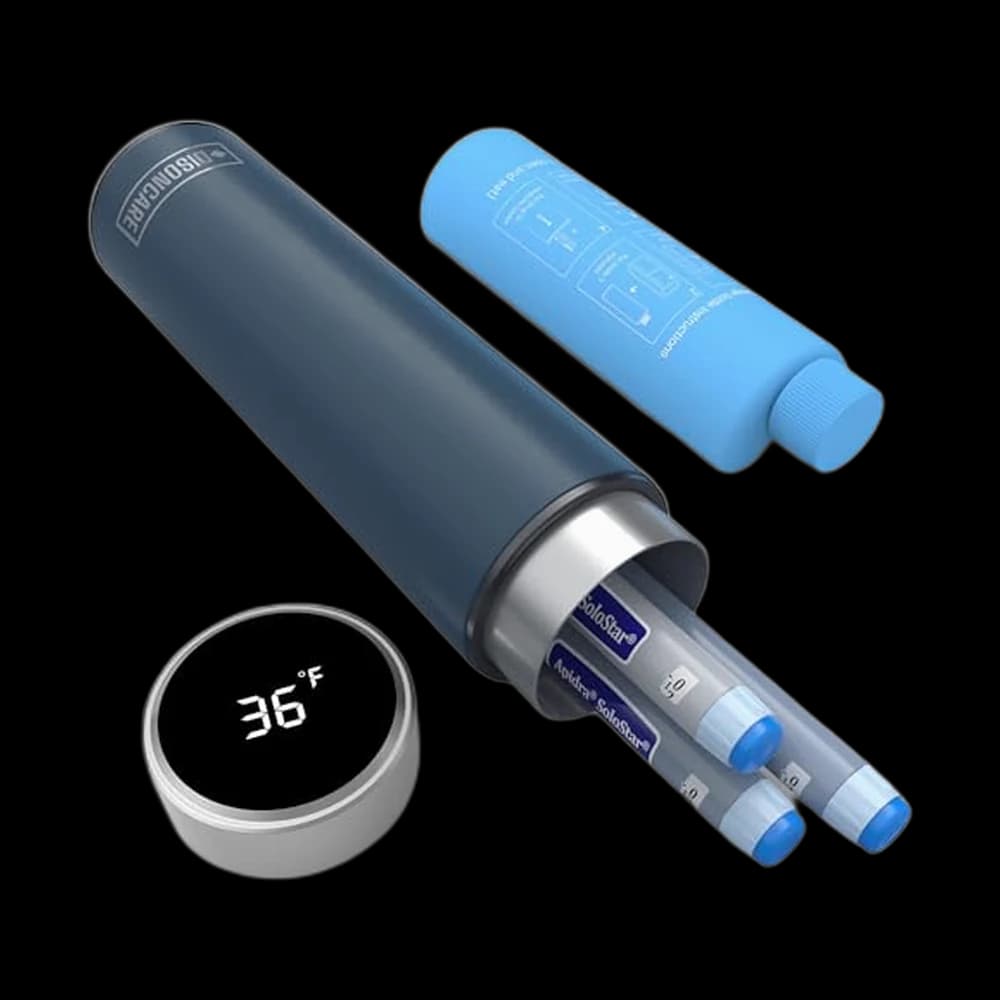
| DISONCARE Odyssey (digital display) | Up to 2 multi-dose pens (Ozempic, Wegovy FlexTouch, Saxenda, Mounjaro KwikPen, Zepbound KwikPen). Up to 1 wider single-dose pen (Wegovy, Mounjaro, Zepbound, Trulicity) | Usable height 6.5 in (16.5 cm); chamber diameter 2.28 in (5.8 cm); 1.29 in (3.3 cm) clearance beside the gel bottle | Frozen BioGel bottle, with a digital temperature display |
How to use this table:
- Measure your own pen, cap on, and compare it with the usable length. None of these makers publishes a maximum pen length, and 4ALLFAMILY and DISONCARE both warn that device sizes vary by brand, dose and country — the same medication name can be a multi-dose pen, a wider single-dose pen or a vial.
- The pen counts are for bare devices. DISONCARE notes that original cartons, protective pouches and needles reduce the space, so a case that fits two pens may not fit two boxes.
- None of these figures says anything about temperature. Whether a case keeps your medication inside its label's storage range on your trip is not something a fit table — or any listing — can tell you. A thermometer inside the case can.
Match the cooling method to the trip
- Evaporative cases are activated with water, need no freezer, and work by evaporation — which means they underperform in humid conditions and need re-wetting. Light and simple for a couple of days.
- Gel-pack cases are the most common. Freeze the packs, and the case buys you a number of hours. The important detail is whether the case keeps the medication in a separate inner pocket rather than against the pack, because several labels prohibit freezing.
- Phase-change panel cases hold a target temperature band rather than simply being cold, and are the middle option for longer journeys.
- Battery-powered coolers run from a power bank and are the choice for very long trips without a refrigerator. They are heavy and expensive, and they are overkill for a weekend.
Buy a thermometer with the case
A case without monitoring tells you nothing. A small digital thermometer or a single-use temperature indicator inside the case turns "it was probably fine" into information. Some cases include one; most do not.
Treat any manufacturer duration claim sceptically unless the test conditions are stated. "36 hours" at what ambient temperature, with what preparation, in what humidity? Without those, the number is not comparable between products.
Size it to the boxes, not the pens
People routinely buy a case that fits bare pens and discover their pharmacy dispenses a box they would rather not open. Measure what you will actually carry, and check the case fits in a carry-on — medication belongs in cabin baggage, not in a cargo hold that is neither temperature-controlled nor guaranteed to arrive with you.
Rule of thumb: label plus letter. Keep the pharmacy label on the box and carry a note from your prescriber. FDA gives the same advice for sharps, and it makes every screening conversation shorter.
At the airport
TSA allows medically necessary liquids and gels in reasonable quantities beyond the usual limits, but you must declare them at the checkpoint for inspection. Inform the officer about medical devices attached to your body before screening begins. TSA Cares exists for exactly these conversations and can be contacted before you travel.
And take a travel-size sharps container. FDA advises always carrying one when away from home — see the sharps containers category for what makes a good one.