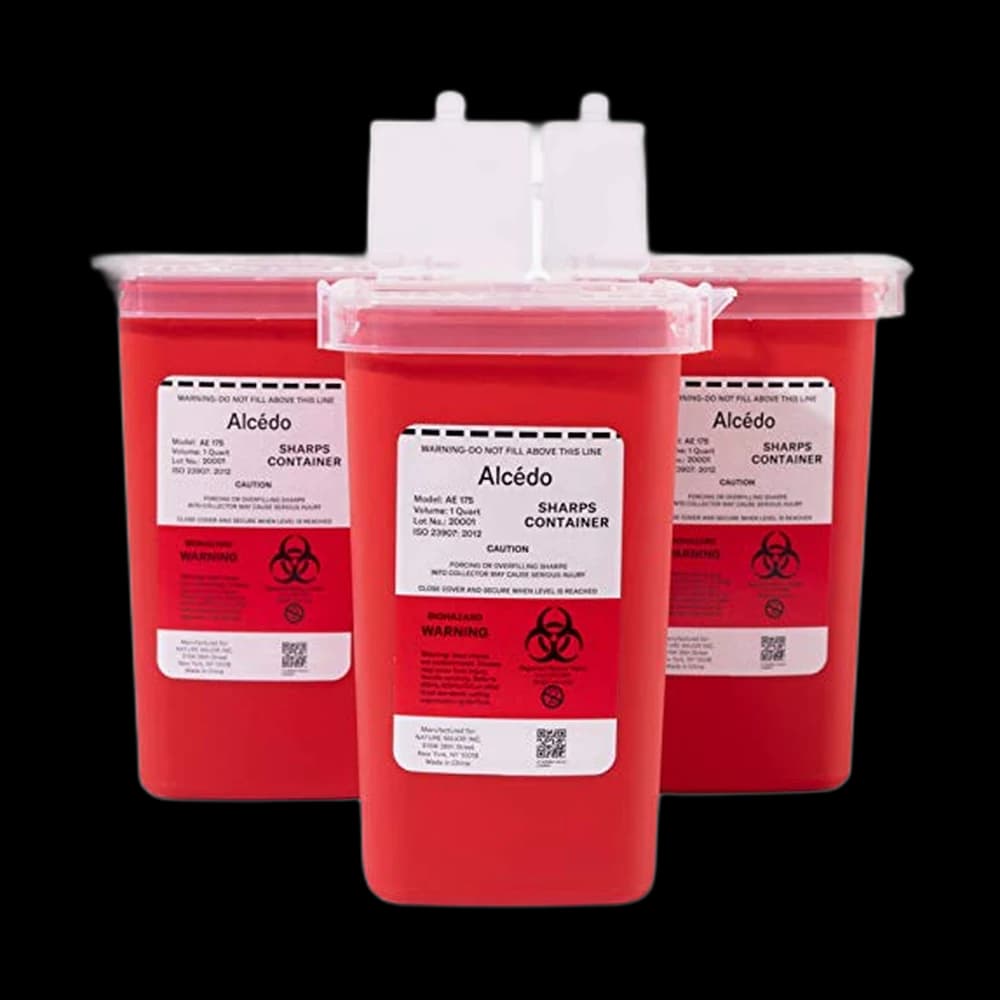
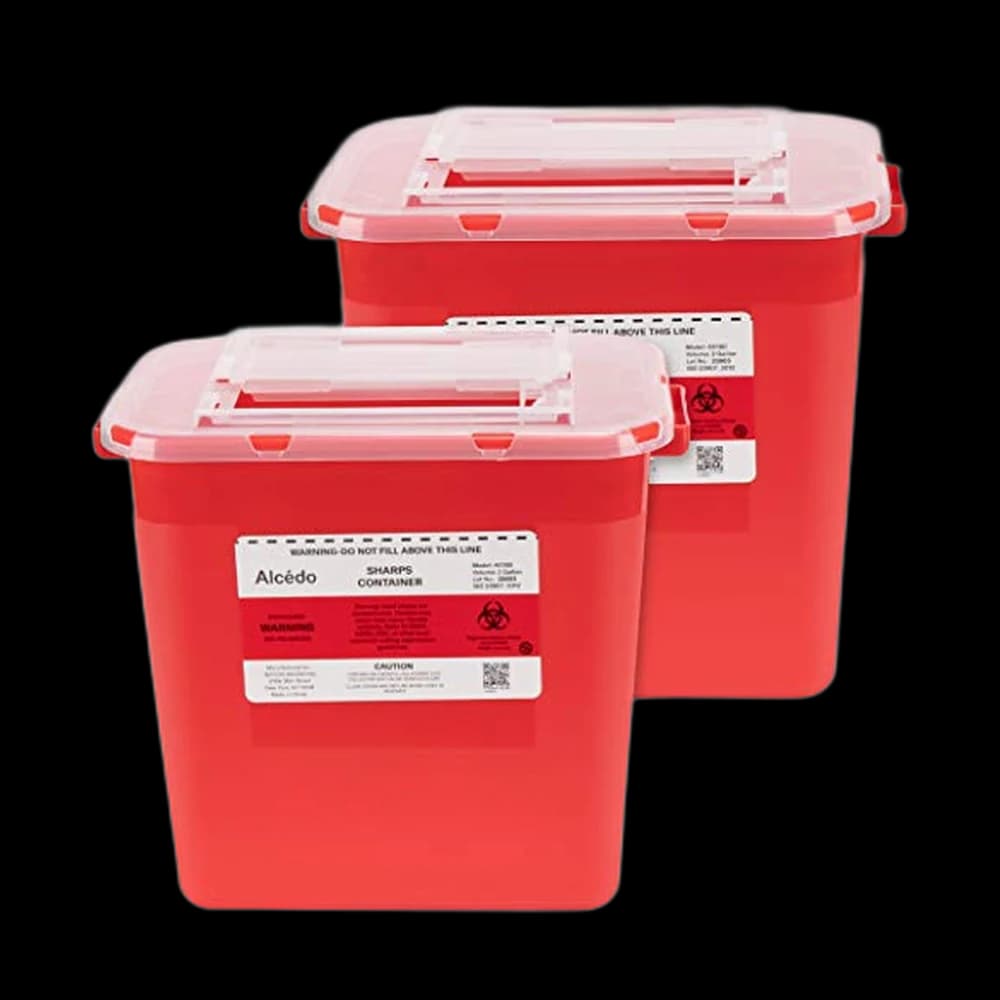
Before anything else: ask your pharmacy, your prescriber's office and your medication's manufacturer whether they provide a sharps container free. Many do, and many will take a full one back. This category may be a purchase you do not need to make.
What FDA actually recommends
FDA describes a two-step process. Step one: put every needle and sharp into a sharps disposal container immediately after use, and keep the container out of reach of children and pets. Step two: dispose of the full container according to your community's guidelines, because those genuinely differ from place to place.
An FDA-cleared container is made of rigid plastic and carries a marked line showing when it should be considered full. FDA advises acting on your community's disposal route when the container is about three-quarters full, because overfilling raises the risk of a needle-stick injury. Containers are not to be reused.
What makes a container adequate
FDA lists the basic features. A sharps disposal container should be:
- made of heavy-duty plastic
- able to close with a tight-fitting, puncture-resistant lid, with nothing able to come back out
- upright and stable during use
- leak-resistant
- properly labelled to warn of hazardous waste inside
If a cleared container is not available, FDA notes that some organizations and community guidelines recommend a heavy-duty plastic household container that meets those same features — a plastic laundry detergent container is the example FDA itself gives. Check what your community allows before relying on that.
Size it to your actual output
Choose a container that fits your device and available space. Follow its fill line and your local collection rules; this guide does not estimate how many devices fit in a container or how long it will last.
Travel is a separate purchase
FDA's advice is to always carry a small, travel-size sharps disposal container when away from home, and to check TSA guidance before flying. It also suggests keeping medicines labelled with the medication type and manufacturer or a pharmacy label, and carrying a letter from your doctor, to make screening easier.
Never throw loose needles in a trash can or recycling bin, and never flush them. If you are genuinely caught without a container, FDA describes recapping using a one-handed technique or a purpose-made needle clipper as a stopgap until you can reach a proper container.
Finding your local rules
Disposal routes include drop boxes and supervised collection sites, household hazardous waste sites, mail-back programs for certain FDA-cleared containers, and residential special-waste pickup. Safe Needle Disposal publishes state-by-state guidance and drop-off locations, and FDA points people there directly.