Kitchen ScalesDeep dive7 min
Kitchen Scales for Protein Tracking: What Matters
TL;DR
LeanFed may earn a commission from links on this page; it never changes a ranking. Full disclosure.
The short answer
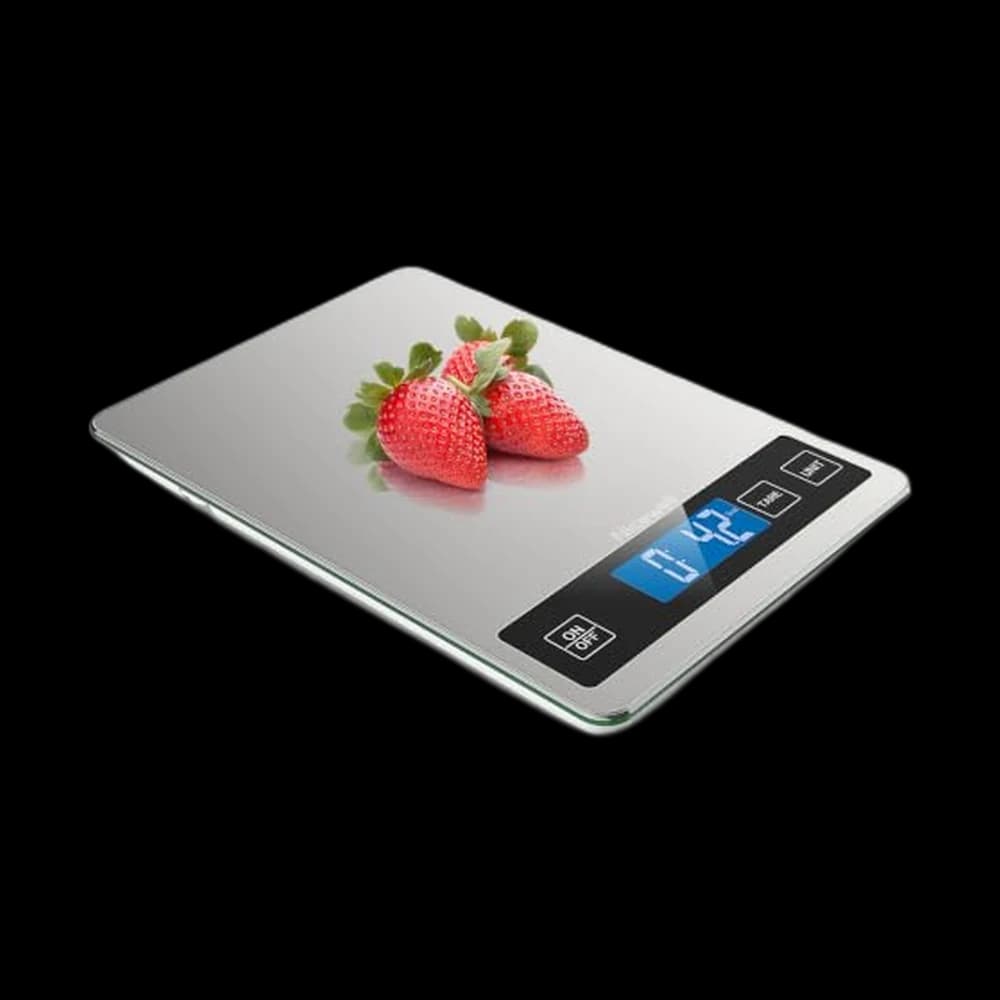
Our pick
Nicewell Food Scale 22lb Digital Kitchen Scale for Cooking Baking- A big platform and double the capacity of the cheap scales, with a hook to hang it.
- Counter space is tight — this is the largest here.
Increment, tare and platform size are the three specs that decide whether a food scale gets used. What each one means, and what a scale cannot tell you.

Key takeaways
- A portion is not a serving. NIDDK's own definition: a portion is how much you choose to eat, a serving is the amount printed on the label. A scale is how you find out which one is in your bowl.
- One gram is the increment that matters. Protein portions here land between 60 and 150 grams; a scale stepping in 5 g rounds away a meaningful slice of a small meal, twice if you tare.
- Tare is the whole feature. Bowl on, zero, add, zero again. Without a reliable one you are doing arithmetic at the counter, which is how a scale ends up in a cupboard.
- Capacity is about the bowl, not the food. A 500 g meal in a 900 g dish needs headroom, and a wide bowl on a small platform hides the display — which is what the pull-out display fixes.
- A scale measures mass, not nutrition. The protein figure comes from the label or from USDA FoodData Central; the readout is only half the sum.
Pick by your situation
| If your situation is… | Pick | Why |
|---|---|---|
| You want one scale and no further thinking | Etekcity 11 lb | 1 gram increments, five units, a backlit display and batteries in the box, at the smallest footprint here. |
| You weigh into a big mixing bowl | OXO Good Grips, for the pull-out display | A wide bowl shadows a flat display, and lifting the bowl to read it changes the reading. The slide-out panel is the only fix in this set. |
| You batch-cook on a Sunday | Nicewell 22 lb | Double the capacity of the others and a 9 by 6.3 inch platform, so a full tray still reads. |
| You want protein read back without an app or an account | Greater Goods nutrition scale | 2,000 built-in food codes show protein and calories for the weight on the platform, offline. Duplicated effort if you already log in an app. |
| You want the one that outlives the kitchen | Escali Primo | Two buttons under a sealed panel — the parts that actually fail on cheap scales are the ones this design removes. |
Each pick is one of the products compared below — a shortcut by situation, not a separate recommendation.
Kitchen Scales: our picks
| Pick | Best for | Rating | Price | LeanScore | Buy |
|---|---|---|---|---|---|
| №1Nicewell Food Scale 22lb Digital Kitchen Scale for Cooking Baking | Glass top, big platform, easy to wipe down. | ★ 4.7 | $25.99 | 88 | Buy on Amazon |
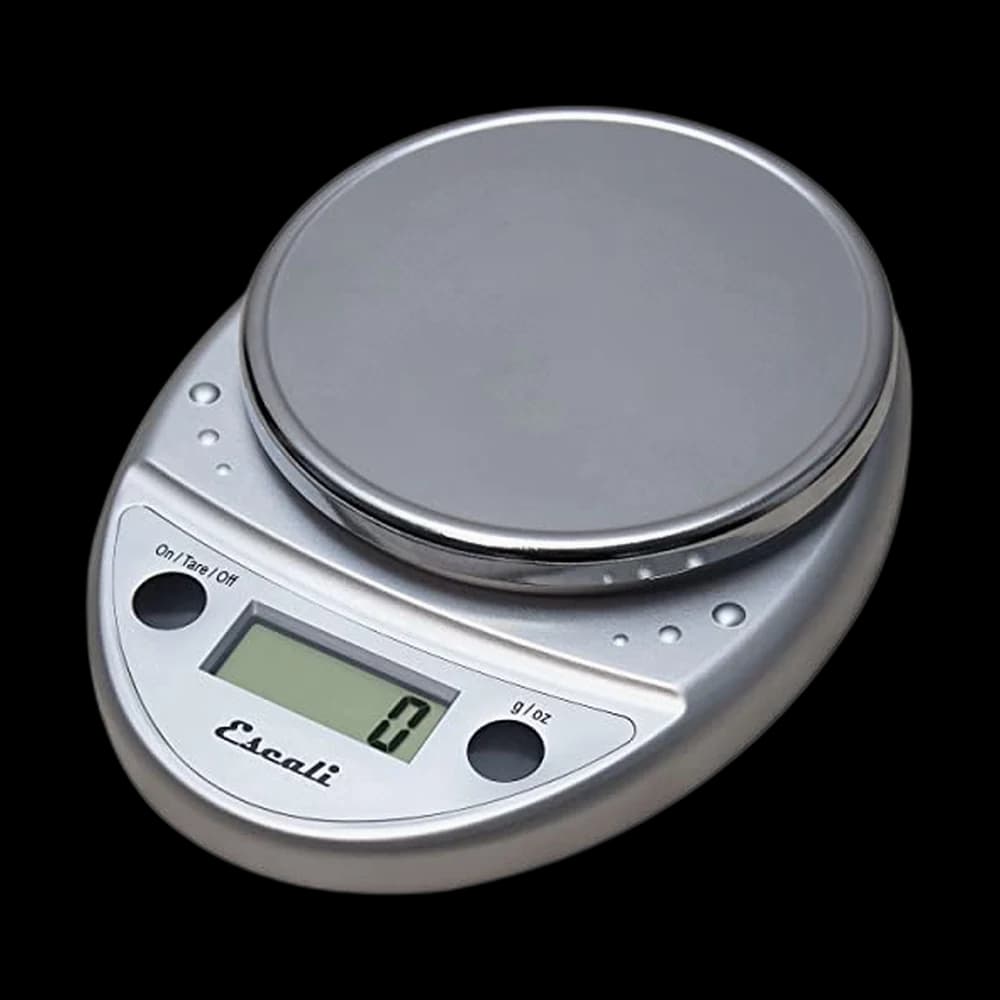 Escali Primo Digital Food Scale Multi-Functional Kitchen Scale and… Escali Primo Digital Food Scale Multi-Functional Kitchen Scale and… | A kitchen-standard scale with a long warranty. | ★ 4.7 | $25.00 | 86 | Buy on Amazon |
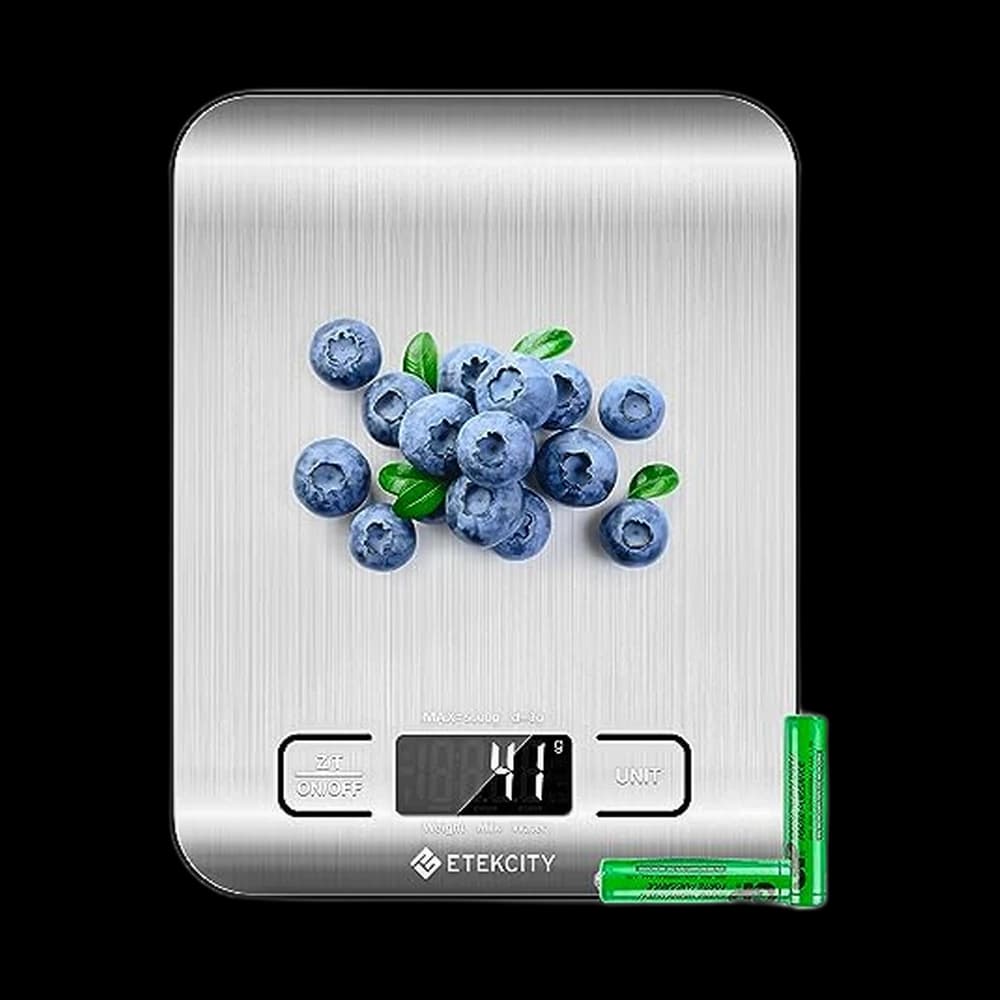 Etekcity Food Kitchen Scale, Digital Grams and Ounces, 11lb Etekcity Food Kitchen Scale, Digital Grams and Ounces, 11lb | The cheap one that is accurate enough for portions. | ★ 4.7 | $13.99 | 85 | Buy on Amazon |
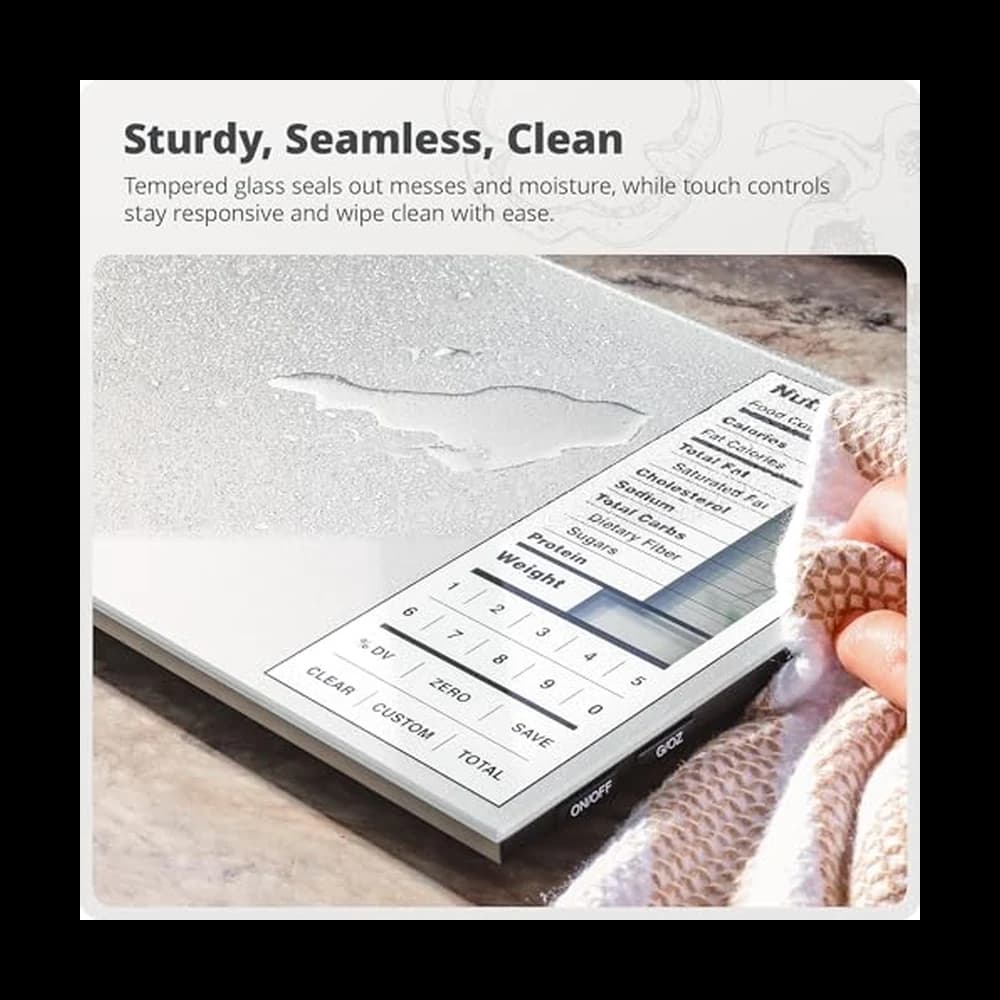 Greater Goods Food Scale with Nutrition Calculator, 2,000 Codes… Greater Goods Food Scale with Nutrition Calculator, 2,000 Codes… | Reads out macros per food code, not just weight. | ★ 4.6 | $34.99 | 81 | Buy on Amazon |
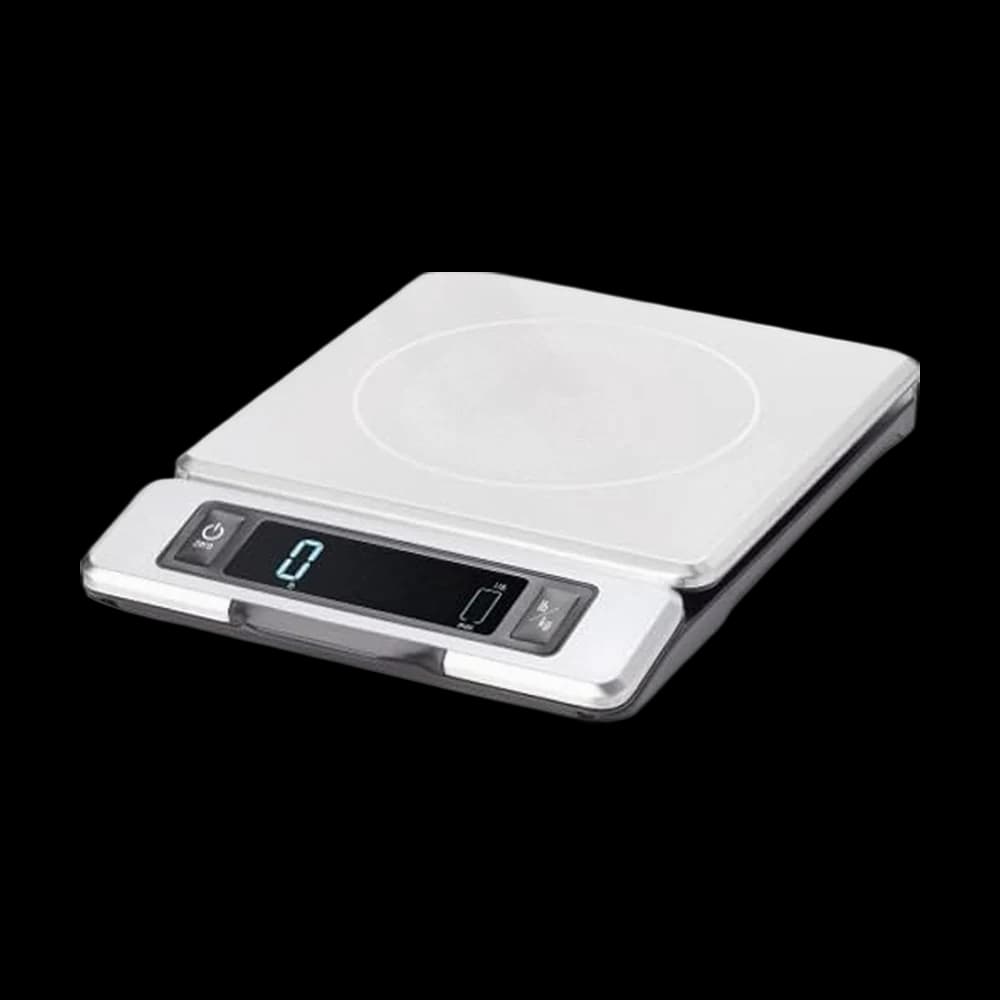 OXO Good Grips 11-Pound Digital Kitchen Food Scale OXO Good Grips 11-Pound Digital Kitchen Food Scale | The pull-out display solves the big-bowl problem. | ★ 4.7 | $60.00 | 80 | Buy on Amazon |
A kitchen scale is the least interesting object in this whole project, and it is the one that quietly makes everything else legible. Not because weighing food is virtuous — it is not, and nobody needs to do it forever — but because grams are the unit every label and every food database is written in, and a plate is not.
Worth raising at your next visitFrom this guide
Before the specs: if weighing food starts to feel like something you cannot stop doing, or if the number on the display is changing how you feel about eating rather than what goes on the plate, that is worth raising with your prescriber or a dietitian. A scale is a translation tool. It should be possible to put it back in the drawer.
Portion, serving, and the number in between
NIDDK draws the line cleanly. A portion is how much food you choose to eat at one time, whether in a restaurant, from a package, or at home. A serving, or serving size, is the amount of food listed on a product's Nutrition Facts label. Those two numbers are almost never the same, and on a small appetite the gap runs in the unfamiliar direction — the portion is usually well under the serving.
That gap is the entire reason a scale earns counter space. The label tells you there are 22 grams of protein in a serving. It does not tell you what fraction of a serving is currently sitting in your bowl, and on a day when six ounces of food is a full meal, that fraction is the only number that matters.
FDA supplies the other half. The serving size is shown as a common household measure appropriate to the food — cup, tablespoon, piece, slice, jar — followed by the metric amount in grams. And in the agency's own words, the serving size is not a recommendation of how much to eat or drink; by law it reflects the amount people typically consume. The gram figure printed beside the household measure is the one a scale can actually check.
NIDDK is also clear that this is a temporary exercise. You don't need to measure and count everything you eat or drink for the rest of your life, the page says — you may only want to do so long enough to learn typical serving and portion sizes. That is the honest ceiling on what this guide is suggesting: a few weeks of calibration, not a practice.
The picks, read against the spec sheet
| Pick | Capacity | Increment | Why it is here |
|---|---|---|---|
| Nicewell 22 lb | 22 lb / 10 kg | 1 g / 0.1 oz | The largest platform in the set, at 9 by 6.3 inches |
| Escali Primo | Per listing | Per listing | Two buttons and a sealed control panel |
| Etekcity 11 lb | 11 lb / 5 kg | 1 g | Five units, batteries included, smallest footprint |
| Greater Goods nutrition scale | Per listing | Per listing | Reads protein and calories back from 2,000 food codes |
| OXO Good Grips | 11 lb | Per listing | A display that pulls out from under the bowl |
Where a cell says "per listing" it is because the manufacturer does not publish that figure, and we do not invent one. Full spec sheets, ratings and the breakdown are on the kitchen scales category page.
Increment: why one gram is the line
The increment is the smallest step the display can show. Every scale worth buying for this job steps in 1 gram, and the reason is arithmetic rather than perfectionism.
Protein foods land in small portions here. Two eggs is about 100 grams. A pouch of tuna is 74 grams. Half a cup of Greek yogurt is 140 grams. A scale that steps in 5 grams is rounding away up to 5 per cent of a portion that is already small, and it does it twice if you tare and add a second ingredient. On a 60-gram serving of chicken that is the difference between 18 and 20 grams of protein — small in isolation, not small across a day you are already struggling to fill.
The other half of readability is the display. Large digits, and a backlight if the scale lives somewhere dim — the Etekcity's LCD is backlit, the Nicewell and the Ozeri run large LCDs without one. A scale you have to bend over to read gets used for a fortnight.
Tare: the button that decides whether it gets used
Tare — sometimes labelled "zero" — resets the display to zero with the bowl already on the platform. Every scale in the set has it. What differs is how well it survives a wet thumb.
The workflow that makes this a thirty-second habit rather than a project is: bowl on, zero, first ingredient in, zero, second ingredient in, zero. No subtraction, nothing written down mid-flow. Without a reliable tare you are weighing the bowl, then the bowl plus food, and doing arithmetic while something is on the hob — which is how a scale ends up at the back of a cupboard. The OXO calls it a zero function and the Ozeri publishes a precision tare; the Escali's sealed two-button panel is the version that matters most in a real kitchen.
The one-line version: a food scale does not tell you what to eat. It tells you what a portion weighs, so the number on the label can be applied to the bowl in front of you.
Capacity and platform, measured in bowls
Capacity is almost never about the food. A 500-gram meal in a 900-gram casserole dish needs 1.4 kilograms of headroom before the display has anything useful to say, and a 5-kilogram scale covers that. Where capacity bites is batch cooking — a full tray plus the tray — which is the argument for the Nicewell's 10 kilograms.
Platform size is the more common irritation. A small square platform with a wide bowl on it is the classic failure: the bowl covers the display, so you lift the bowl to read the number, which changes the number.
That is exactly the problem the OXO solves with a display that slides out from underneath, and it is the single most practical feature in this category that nobody thinks about before buying.
The scale that reads macros back
The Greater Goods nutrition scale is the odd one out. It carries 2,000 built-in food codes and shows calories, protein, carbs, fat and sodium for the weight on the platform, with no app, no account and no internet.
Whether that helps depends on what you already do. If you log food in an app, the codes duplicate work and the scale is a scale with extra buttons. If you do not log and do not want to — a completely reasonable position — reading protein straight off the display is the shortest path to an answer.
One caution applies to every scale of this kind: the food codes are a database of generic foods, not the food in your hand. Chicken breast is not one thing. Where a number matters, read the label on what you bought, or look it up in USDA FoodData Central, which publishes analytical nutrient profiles for commodity and minimally processed foods alongside label data collected from brands.
What a scale cannot do
It weighs mass. That is the whole of it. Everything else is a lookup you perform against a label or a database, which means a scale is half of a two-step sum and the accuracy of the other half is entirely out of its hands.
It cannot tell you what your protein target should be. Nothing on this site can — the Daily Value on a label assumes a 2,000-calorie diet, which is doing a lot of quiet work on a medication that reduces intake. Ask the person who has your labs.
And it cannot tell you whether you finished the bowl. Weighing what goes in is easy; weighing what comes back is the step almost nobody does, and on a small appetite it is the one that would actually change the number. If you weigh once, weigh the plate at the end of a meal rather than the ingredients at the start.
Thirty seconds, then back in the drawer
The realistic version of this habit is short. Weigh the protein element of two or three meals for a fortnight, write nothing down, and notice where your eye was wrong. Most people stop needing the scale for those foods once they have seen the number four or five times.
Then it goes back in the drawer, and comes out for the foods you have not calibrated yet. Our protein-per-dollar tool does the other half of the arithmetic, and the recipe library has twelve small-volume recipes with the protein and the finished volume printed on every card — the same idea without the weighing.
Your next step
Weighing it is step one. Eating it in a portion you can finish is step two.
Frequently asked
The questions that keep coming up
Do I need a food scale to eat protein first?
No. Protein first is an ordering instruction, not a measurement exercise. A scale is useful for a few weeks of calibration if you want to know what a portion actually weighs, and NIDDK says outright that you do not need to measure everything for the rest of your life.
Grams or ounces?
Grams. FDA requires the serving size on a Nutrition Facts label to show the household measure followed by the metric amount in grams, and food databases are written the same way. Weighing in ounces means converting before you can use either.
Where do I get the protein number once I have weighed something?
From the label on what you bought, first. For foods with no label — a chicken breast, an egg, a handful of lentils — USDA FoodData Central publishes analytical nutrient profiles for commodity and minimally processed foods, plus label data collected from brands.
Is a 1 gram increment accurate enough?
For portioning food, yes. These are consumer kitchen scales, not laboratory balances, and none of them is certified for trade. The practical limit is usually the surface they sit on rather than the sensor — a scale on a soft mat or an uneven counter will disagree with itself.
What if weighing food starts to feel compulsive?
Stop and raise it with your prescriber or a dietitian. A scale is a translation tool for a few weeks, and it is meant to go back in the drawer. If the display is changing how you feel about eating rather than what you put on the plate, that is a conversation worth having rather than a habit worth pushing through.
Sources & further reading
We research from primary and authoritative sources. Where our guidance rests on a fact, here's where it comes from.
- NIDDK — Food Portions: Choosing Just Enough for You — Source for the portion-versus-serving definitions quoted here, and for the statement that you need only measure long enough to learn typical serving and portion sizes.
- FDA — Serving Size on the Nutrition Facts Label — Source for serving sizes being shown as a household measure followed by the metric amount in grams, and for the statement that a serving size is not a recommendation of how much to eat or drink.
- USDA FoodData Central (nutrient database) — The nutrient database referenced for foods that carry no label. Its Foundation Foods type holds analytical data on commodity and minimally processed foods; Branded Foods holds label data collected through a public-private partnership.
LeanFed is not medical advice and is not a substitute for your prescriber, pharmacist or dietitian. We do not test products hands-on — we compare labels, specifications and owner reviews. Prices and LeanScores reflect our most recent research and refresh on a cycle; confirm the current price and read the product's own label before buying. We may earn a commission from affiliate retailers — it never changes our recommendations. See how we score.