Walking PadsGuide6 min
Best Walking Pads for Beginners: Space, Capacity, Noise
TL;DR
LeanFed may earn a commission from links on this page; it never changes a ranking. Full disclosure.
The short answer
Our pick
Yagud Walking Pad Treadmill for Home Office, Portable Under Desk…- Ready out of the box with a remote, at the lowest price in the category.
- You are near the 220 lb capacity limit.
Five under-desk walking pads compared on stated capacity, speed, incline, folding and deck size, plus the beginner questions listings never answer.
Key takeaways
- Only three of the five state a weight capacity in the data we hold: 300 lb, 220 lb and 220 lb. An unstated number is not a high one — check the listing.
- 2.5 mph is the bar, not 4. CDC counts walking briskly at 2.5 mph or faster as moderate-intensity activity.
- Storage decides whether you keep using it. Only the C2 folds in half; the rest slide flat under something or stay where they are.
- A walking pad covers half the guideline. CDC asks for 150 minutes a week and muscle-strengthening on 2 days.
- Ignore the calorie-burn claims on the listings — the incline percentages are real specs, the burn multipliers are marketing we cannot verify.
Pick by your situation
| If your situation is… | Pick | Why |
|---|---|---|
| You need the highest stated weight capacity | DeerRun Q1 Mini | 300 lb stated, the highest here, with a manual incline and a cushioned deck. |
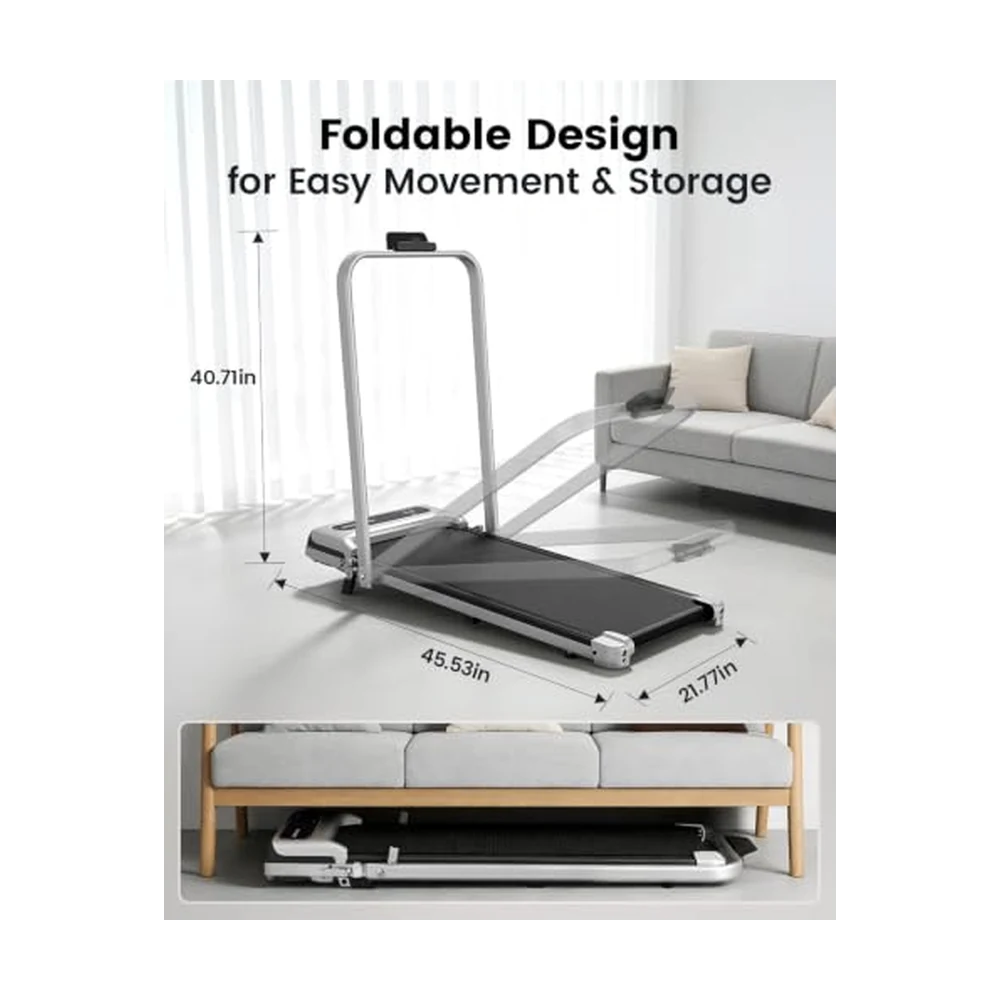
| You live in a small flat with nowhere to put it | WalkingPad C2 | The only pad here that folds in half, to about 5.4 inches, so it slides under a bed or sofa. |
| You want the simplest, cheapest way to start | Yagud Walking Pad | Ready out of the box with a remote, 0.6 to 3.8 mph, and a stated 42 by 19.6 inch deck. |
| Flat walking has stopped feeling like anything | UREVO CyberPad | Automatic incline to 14 percent raises effort without raising speed. |
| You want to jog on it later | Goplus 2-in-1 | With the handrail raised it runs to 12 km/h, which no other pad here does. |
| Downstairs neighbours are the main worry | Yagud Walking Pad | Walk slowly on a mat; the community answer is that walking passes where running does not, on any pad. |
Each pick is one of the products compared below — a shortcut by situation, not a separate recommendation.
Walking Pads: our picks
| Pick | Best for | Rating | Price | LeanScore | Buy |
|---|---|---|---|---|---|
| №1Yagud Walking Pad Treadmill for Home Office, Portable Under Desk… | One of the most-reviewed pads on the platform. | ★ 4 | $109.99 | 77 | Buy on Amazon |
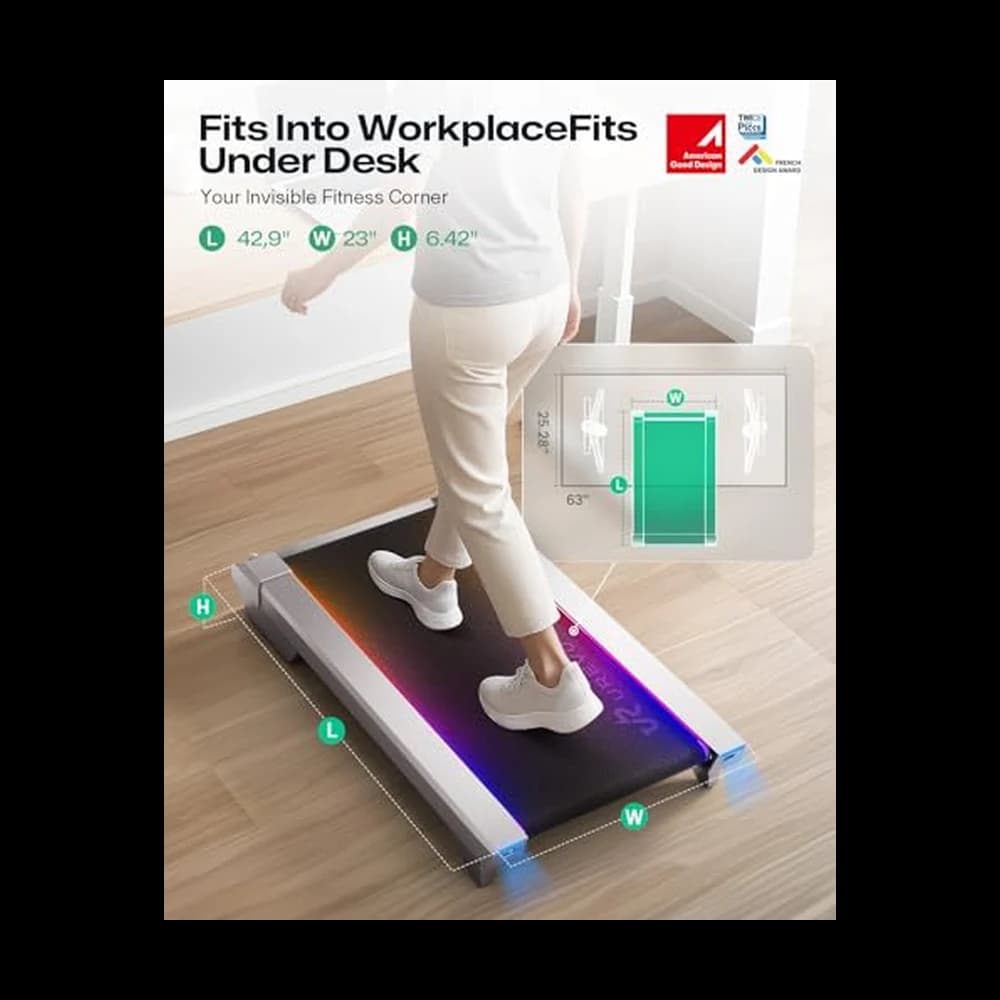 UREVO CyberPad Smart Walking Pad with 14% Auto Incline, Brushless… UREVO CyberPad Smart Walking Pad with 14% Auto Incline, Brushless… | The value pick that keeps showing up in roundups. | ★ 4.2 | $479.99 | 70 | Buy on Amazon |
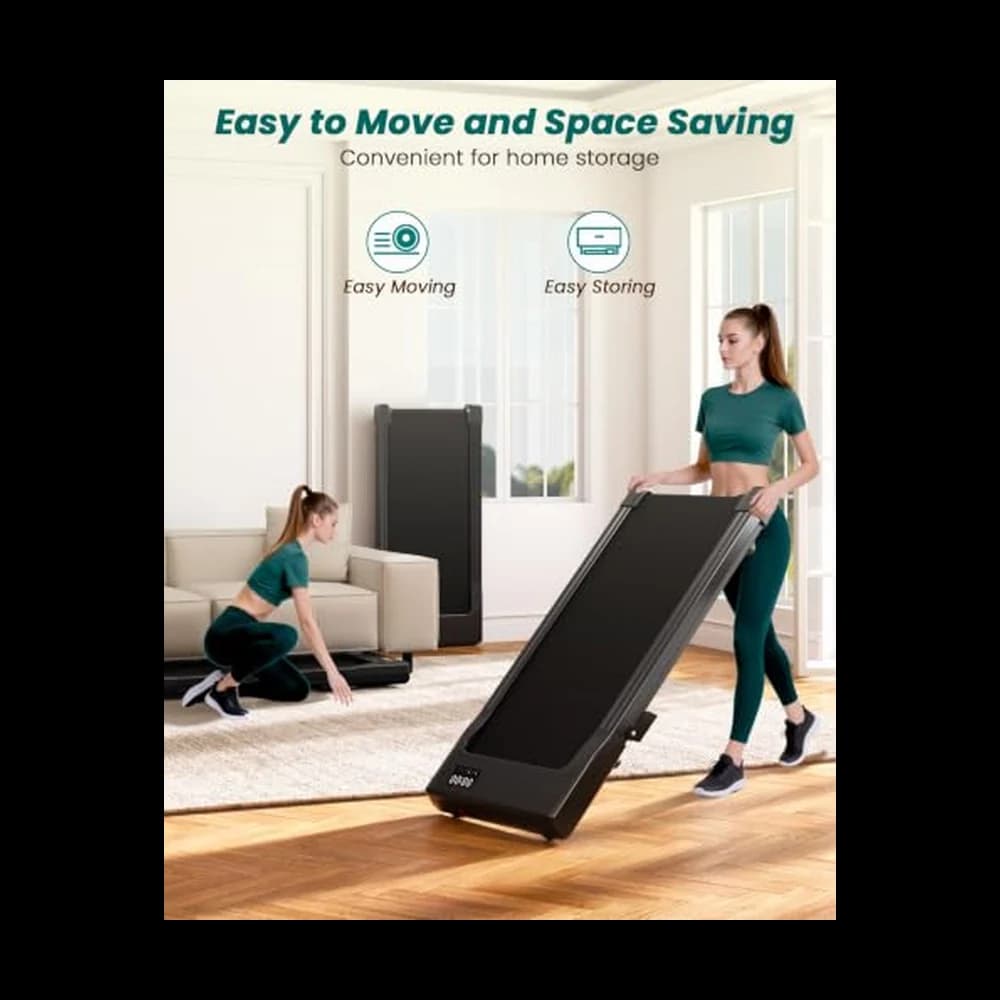 DeerRun Under Desk Walking Pad Treadmill for Home Office & Small… DeerRun Under Desk Walking Pad Treadmill for Home Office & Small… | The cheapest credible entry into desk walking. | ★ 3.4 | $139.99 | 63 | Buy on Amazon |
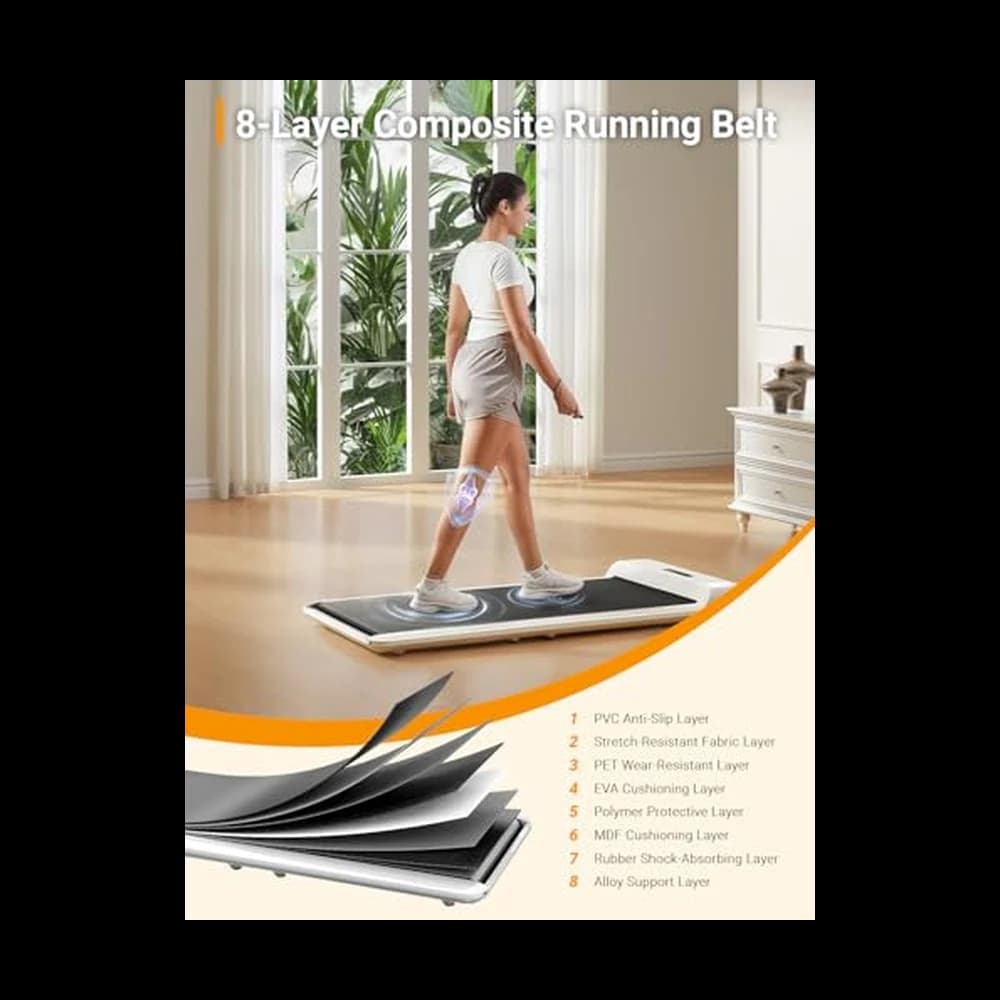 WalkingPad C2 Foldable Walking Pad Treadmill, Under Desk Compact… WalkingPad C2 Foldable Walking Pad Treadmill, Under Desk Compact… | The only pad here that folds in half — about 5.4 inches folded, with an owner rating tied for the best on this shelf. | ★ 4.2 | $449.00 | 62 | Buy on Amazon |
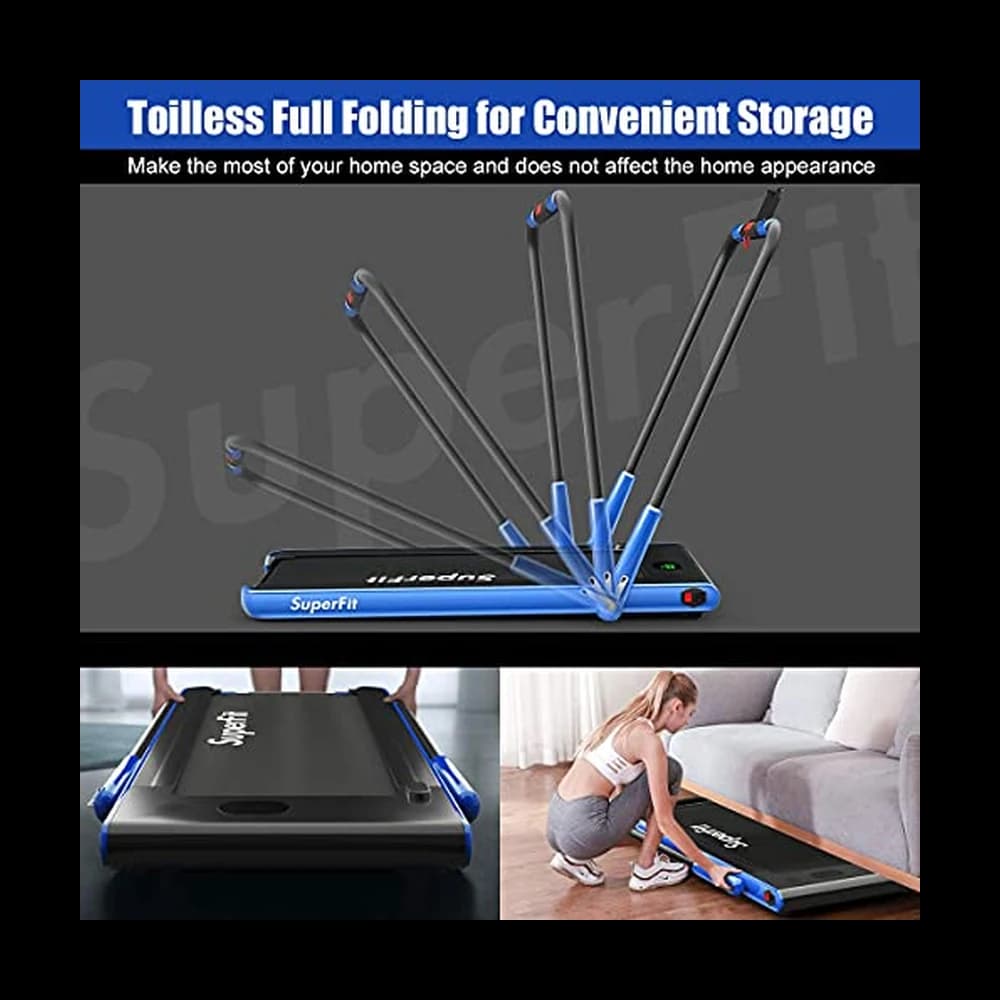 Goplus 2 in 1 Folding Treadmill, 2.25HP Under Desk Electric… Goplus 2 in 1 Folding Treadmill, 2.25HP Under Desk Electric… | Doubles as a low-speed running deck when the handle is up. | ★ 3.1 | $119.99 | 70 | Buy on Amazon |
A walking pad is not exercise equipment in the usual sense. It is a way of removing every excuse between you and a walk: weather, daylight, safety, the fifteen minutes it takes to get out of the door. That is exactly why it suits someone starting from very little activity, and why the specification that matters is not the one the listings shout about.
Before anything else: activity that requires moderate effort is safe for most people, but if you have a chronic health condition, CDC advises talking with your doctor about the types and amounts of activity that are right for you — and specifically before starting vigorous-intensity activity if you have been inactive. Nothing here is medical advice, and nothing here is a weight-loss claim. Movement is for strength, habit, sleep and mood.
The five pads on the numbers they state
Empty cells are specifications the listings do not state. We leave them empty rather than estimating — an unstated capacity is unknown, not high.
| Walking pad | Stated capacity | Speed | Incline | Folds | Deck |
|---|---|---|---|---|---|
| Yagud Walking Pad | 220 lb | 0.6–3.8 mph | None | No | 42 × 19.6 in |
| UREVO CyberPad | — | — | Auto to 14% | No | — |
| DeerRun Q1 Mini | 300 lb | 0.6–3.8 mph | Manual | No | — |
| Goplus 2-in-1 | — | Up to 4 km/h under desk, 12 km/h with handrail up | None | Handrail folds down | — |
| WalkingPad C2 | 220 lb | — | None | Yes, folds in half to about 5.4 in | — |
Two honest observations about that table. First, it has holes, and the holes are the listings' fault, not the products'. Second, the pad with the highest stated capacity here is also the one in the budget tier, which is not the pattern you would predict.
Start with capacity, not speed
Weight capacity is the single specification that quietly rules a pad out, and it is the one buyers check last. Two of these state 220 lb and one states 300 lb. If you are anywhere near a stated limit, that pad is not for you — a treadmill near its limit is a treadmill that runs hot, wears its belt fast and feels unstable underfoot, which is precisely the wrong experience for someone building a habit.
Where a capacity is not stated in our data, treat it as unknown and read the live listing before buying. We will not guess a number that carries this much consequence.
Speed matters less than you think
CDC's own examples of moderate-intensity activity start at "walking briskly (2.5 miles per hour or faster)". Every pad here that states a speed range reaches 3.8 mph, comfortably past that bar. The top speed on the box is not the constraint; your first month is.
Better than a speed number is CDC's talk test: at moderate intensity you can talk but not sing. If you can only manage a few words before pausing for breath, you have drifted into vigorous territory. That test costs nothing and works on any pad.
NIA's advice is the other half of the frame: gradually build up to at least 150 minutes of moderate-intensity aerobic activity a week, and be as physically active as you reasonably can in the meantime, because even light-intensity movement is beneficial. "Gradually" is doing real work in that sentence. Two ten-minute walks while a kettle boils is a legitimate start.
Rule of thumb: pick the pad you will step on at 3 p.m. without thinking about it. Every other specification is downstream of that.
Storage is the real buying decision
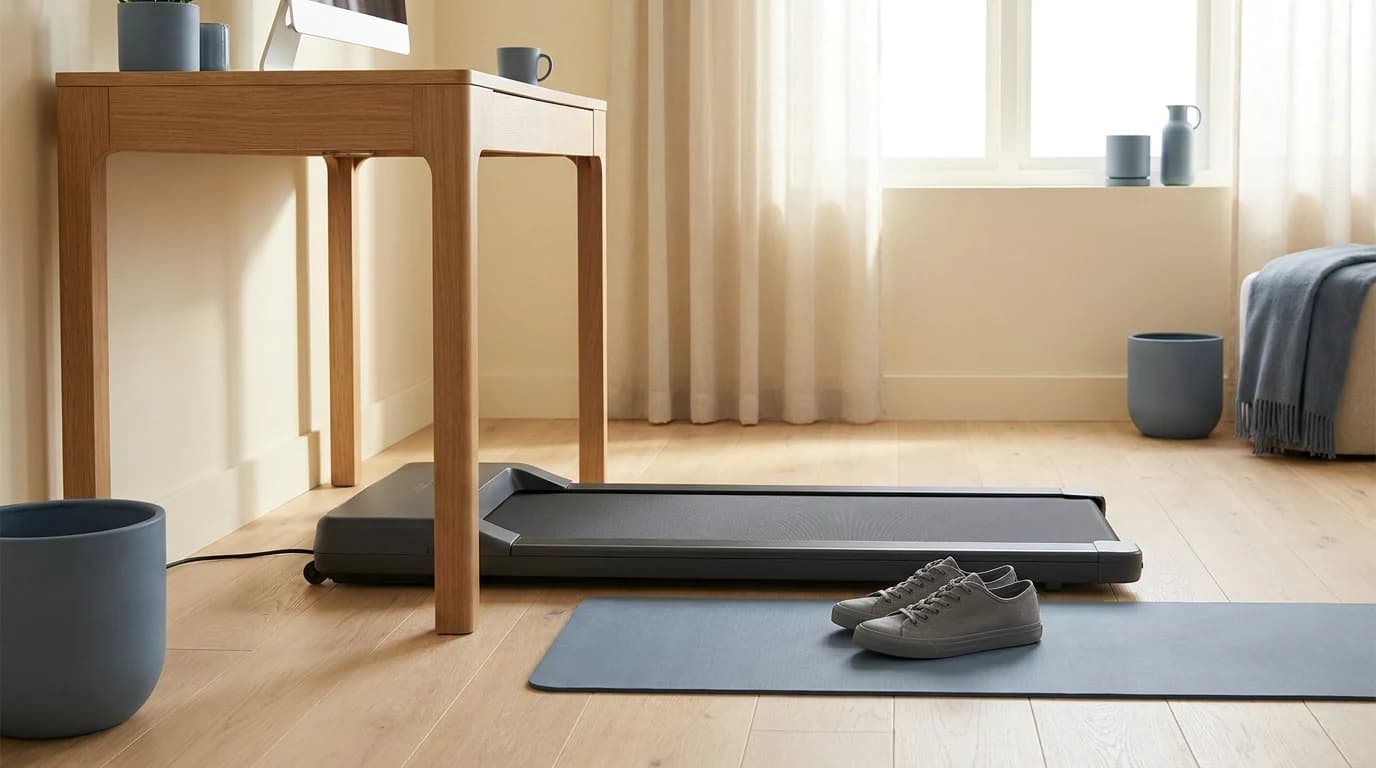
A walking pad that has to be dragged out of a cupboard gets used for a fortnight. The pads here split into three storage stories: the WalkingPad C2 folds in half to about 5.4 inches, which is the entire reason it exists and the reason to pay a premium for it; the Goplus folds its handrail down but is the heaviest thing here to move; and the rest are flat slabs that slide under a sofa or bed, or simply live where you put them.
Measure the gap under whatever you intend to slide it beneath before you buy. Then measure the route from where it lives to where you walk. If either of those is awkward, the fold matters more than any other number on the page.
Noise, apartments and downstairs neighbours
This is the most-asked question in walking pad threads on r/Zepbound and r/Mounjaro, and the community's answer is consistent: walking is usually acceptable in an apartment where running is not, and a mat underneath is the standard recommendation. That is people reporting what worked in their buildings, not a measurement.
The listings themselves make quiet claims — one advertises operation below a set decibel figure. We have no way to verify a manufacturer's decibel claim and we are not going to repeat one as if we had. Treat noise as a "walk slowly, use a mat, test it before your neighbour does" problem.
Incline, handrails and the claims to ignore
Incline is a genuine feature: the UREVO offers automatic incline up to 14 percent and the DeerRun has a manual one. Incline raises effort without raising speed, which is useful if 3.8 mph already feels quick but ten minutes feels easy.
What to ignore is the arithmetic wrapped around it. One listing here claims a specific percentage increase in calorie burn from using incline. That is a marketing figure with no source we can check, and calorie-burn numbers on any treadmill display are estimates anyway. Use incline because it makes the walk feel like something. Do not buy a pad on a burn multiplier.
A handrail changes the category. The Goplus becomes a low-speed running deck with the handrail raised, which is a different machine with different floor-space needs. For a beginner, a handrail is mostly reassurance — useful reassurance if balance is a concern, dead weight if it is not.
Fatigue is the real limiter
Across r/Mounjaro and r/Zepbound, the reason activity gets skipped is not motivation — it is post-injection tiredness. The workarounds people describe are short sessions and scheduling walks around the shot rather than against it. A pad in the room you are already in is uniquely good at absorbing that pattern: on a flat day you do ten minutes, on a good day you do three lots of fifteen.
Which is exactly how CDC frames it — you do not have to do 150 minutes at once, you can spread it across the week and break it into smaller chunks, and some physical activity is better than none.
What a walking pad does not do
It covers the aerobic half of the guideline and none of the strengthening half. CDC asks adults for at least 150 minutes of moderate-intensity activity a week and muscle-strengthening activity on at least 2 days a week, working all major muscle groups. NIA makes the same point differently: aerobic, muscle-strengthening and balance are three types, and doing one improves your ability to do the others.
On a that second half is not optional garnish — keeping muscle is the whole reason this site exists. A pad plus two short sessions with adjustable dumbbells or resistance bands is a complete week. A pad alone is half of one.
Your next step
Walking is the easy half. Resistance work is the half that keeps muscle.
Frequently asked
The questions that keep coming up
How fast does a walking pad need to go?
Slower than you think. CDC counts walking briskly at 2.5 miles per hour or faster as moderate-intensity activity, and every pad here that states a range reaches 3.8 mph. Top speed is rarely the constraint for a beginner.
How long should a beginner walk for?
CDC's guideline for adults is at least 150 minutes of moderate-intensity activity a week, which you can spread across the week and break into smaller chunks. NIA's advice is to build up to that gradually. Ten minutes at a time counts.
Will a walking pad annoy my neighbours?
In apartment threads the consistent community answer is that walking is usually acceptable where running is not, with a mat underneath as the standard recommendation. That is owner experience across different buildings rather than a measurement, so test it at a low speed first.
Is a walking pad enough exercise on its own?
It covers the aerobic half. CDC also asks for muscle-strengthening activity on at least 2 days a week working all major muscle groups, which a pad does not provide. Pair it with short resistance sessions.
Do I need incline?
Not to start. Incline is useful later, when the top speed feels quick but ten minutes feels easy, because it raises effort without raising speed. Ignore the calorie-burn multipliers in the listings; those are marketing figures we cannot verify.
Should I check with my doctor first?
CDC says moderate-effort activity is safe for most people, but advises talking with your doctor if you have a chronic health condition such as heart disease, arthritis or diabetes, and before starting vigorous-intensity activity if you have been inactive.
Sources & further reading
We research from primary and authoritative sources. Where our guidance rests on a fact, here's where it comes from.
- CDC — Adult Activity: An Overview — Source for at least 150 minutes of moderate-intensity activity a week plus muscle-strengthening on 2 or more days working all major muscle groups, for spreading activity across the week in smaller chunks, and for some activity being better than none.
- CDC — How to Measure Physical Activity Intensity — Source for walking briskly at 2.5 miles per hour or faster counting as moderate intensity, and for the talk test (talk but not sing at moderate intensity).
- CDC — Adults: Adding Activity — Source for the advice to talk with your doctor if you have a chronic health condition such as heart disease, arthritis or diabetes, and before starting vigorous-intensity activity after being inactive.
- National Institute on Aging — Three Types of Exercise Can Improve Your Health and Physical Ability — Source for gradually building up to at least 150 minutes of moderate-intensity aerobic activity a week, for light-intensity movement still being beneficial, and for aerobic, muscle-strengthening and balance being complementary types of exercise.
LeanFed is not medical advice and is not a substitute for your prescriber, pharmacist or dietitian. We do not test products hands-on — we compare labels, specifications and owner reviews. Prices and LeanScores reflect our most recent research and refresh on a cycle; confirm the current price and read the product's own label before buying. We may earn a commission from affiliate retailers — it never changes our recommendations. See how we score.