Sharps ContainersDeep dive7 min
Sharps Containers for Home and Travel: What to Know
TL;DR
LeanFed may earn a commission from links on this page; it never changes a ranking. Full disclosure.
The short answer
Our pick
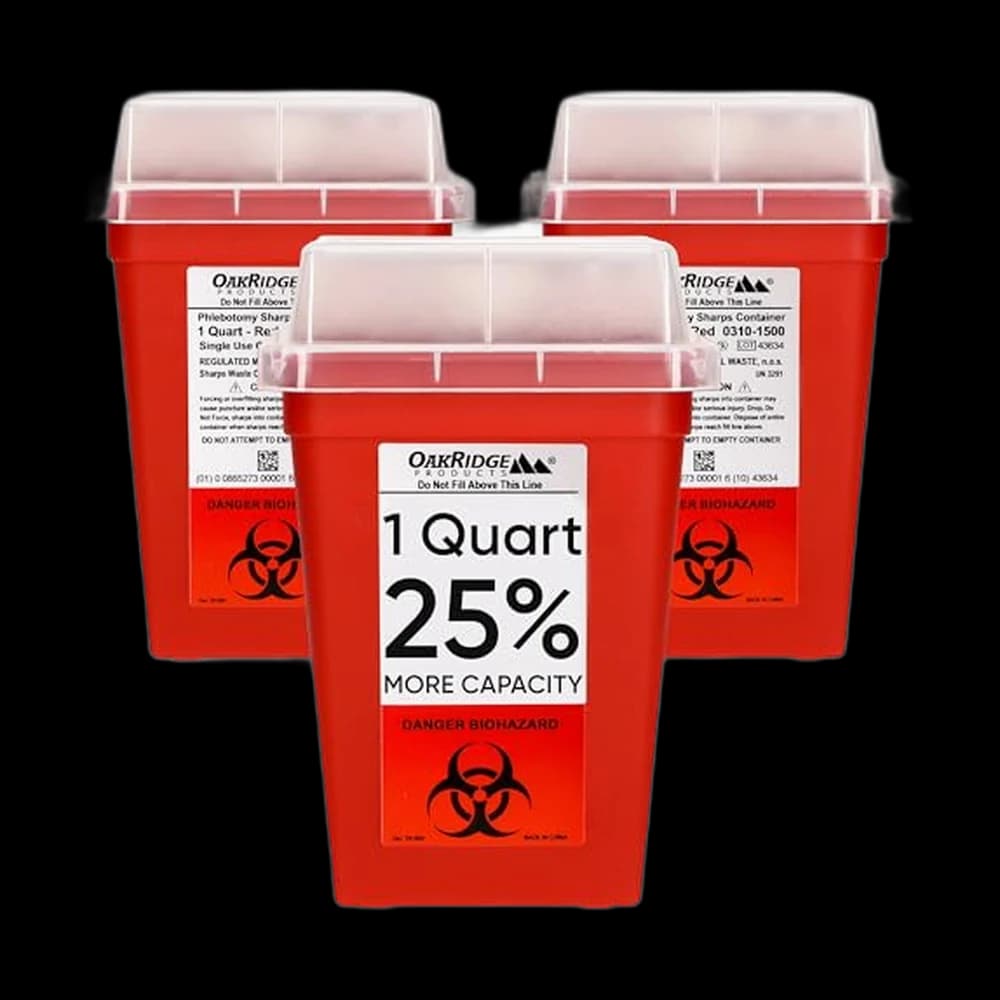
Oakridge Products Sharps Container for Home Use and Professional 1…- Small enough for a bag or a bathroom counter, and you get three.
- You inject more than once a week — a quart fills faster than you expect.
Ask your pharmacy for a free one first. Then: what FDA clearance really means, why most listings never claim it, and how disposal rules differ.
Key takeaways
- Ask your pharmacy, prescriber, county programme or the manufacturer for a free container before you buy one. Across the GLP-1 subreddits this is the most repeated answer to “where do I buy one”.
- FDA recommends FDA-cleared containers — rigid plastic, marked with a fill line. Most retailer listings do not state clearance at all; “hospital-grade” and “CDC certified” are not FDA clearance.
- Stop at about three-quarters full. FDA says overfilling raises the risk of an accidental needle-stick injury, and never reuse a container.
- Disposal rules are local, not national. Safe Needle Disposal publishes them state by state.
- Buy the smallest container that lasts a few months and add a travel-size — FDA advises always carrying one away from home. Whole pens fill a container much faster than bare needles.
Pick by your situation
| If your situation is… | Pick | Why |
|---|---|---|
| You inject weekly and want one container in the bathroom | Oakridge 1 quart 3-pack | A quart lasts a long time at one sharp a week, and you get spares for a bag and a suitcase. |
| You want to see how full it is without opening it | Alcedo 1 quart 3-pack | A clear lid shows the fill level, which is what the three-quarters rule needs. |
| You want a lid that cannot be reopened once it is full | Ever Ready split-lid container | A split lid that locks permanently is the closure that makes disposal safe. |
| You dispose of whole pens rather than bare needles | Oakridge 5 quart | Pen bulk is the real capacity problem; a five-quart container is a countertop object rather than a bag object. |
Each pick is one of the products compared below — a shortcut by situation, not a separate recommendation.
Sharps Containers: our picks
| Pick | Best for | Rating | Price | LeanScore | Buy |
|---|---|---|---|---|---|
| №1Oakridge Products Sharps Container for Home Use and Professional 1… | The travel-sized quart most people start with. | ★ 4.6 | $14.49 | 80 | Buy on Amazon |
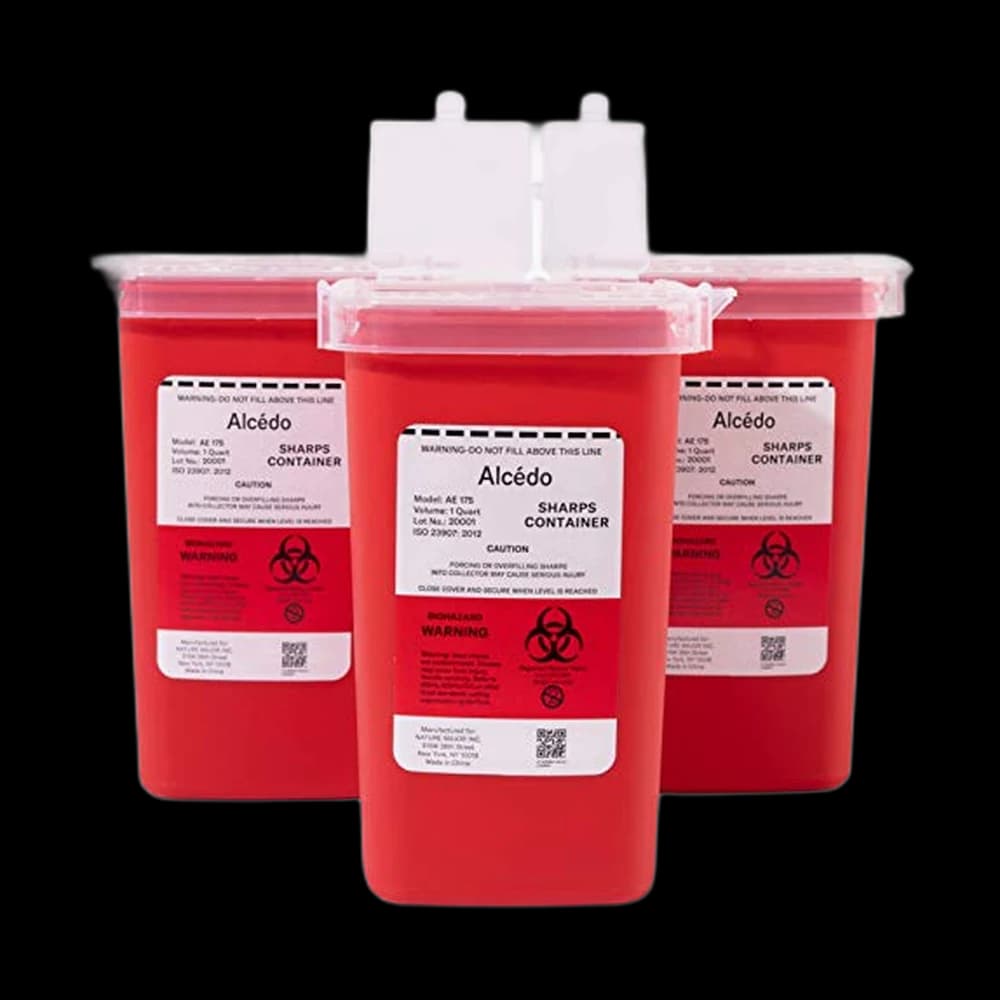 Alcedo 1 Quart Sharps Container (3-Pack) for Needle & Syringe Disposal Alcedo 1 Quart Sharps Container (3-Pack) for Needle & Syringe Disposal | Three quarts for the price of one branded unit. | ★ 4.6 | $15.95 | 83 | Buy on Amazon |
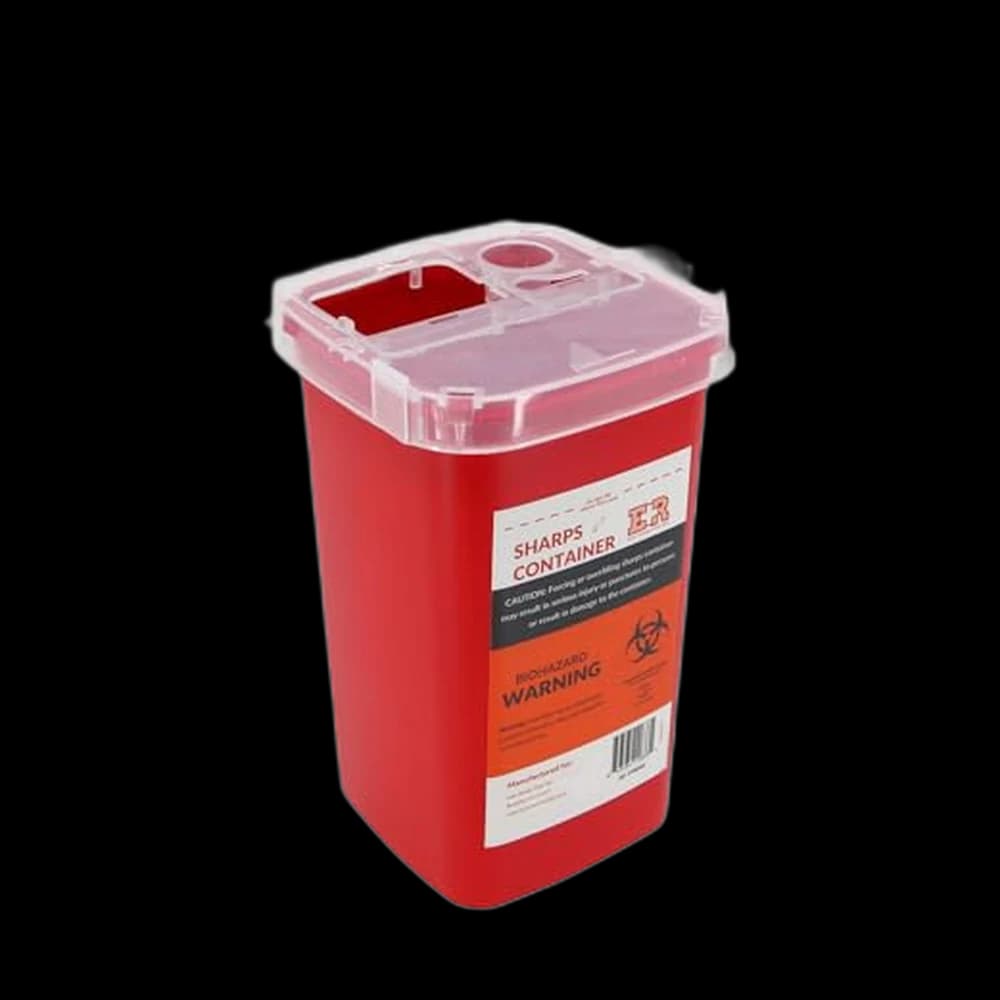 Ever Ready First Aid Sharps Container with Split Lid Design and… Ever Ready First Aid Sharps Container with Split Lid Design and… | Plain, cheap, and it locks. | ★ 4.6 | $6.95 | 79 | Buy on Amazon |
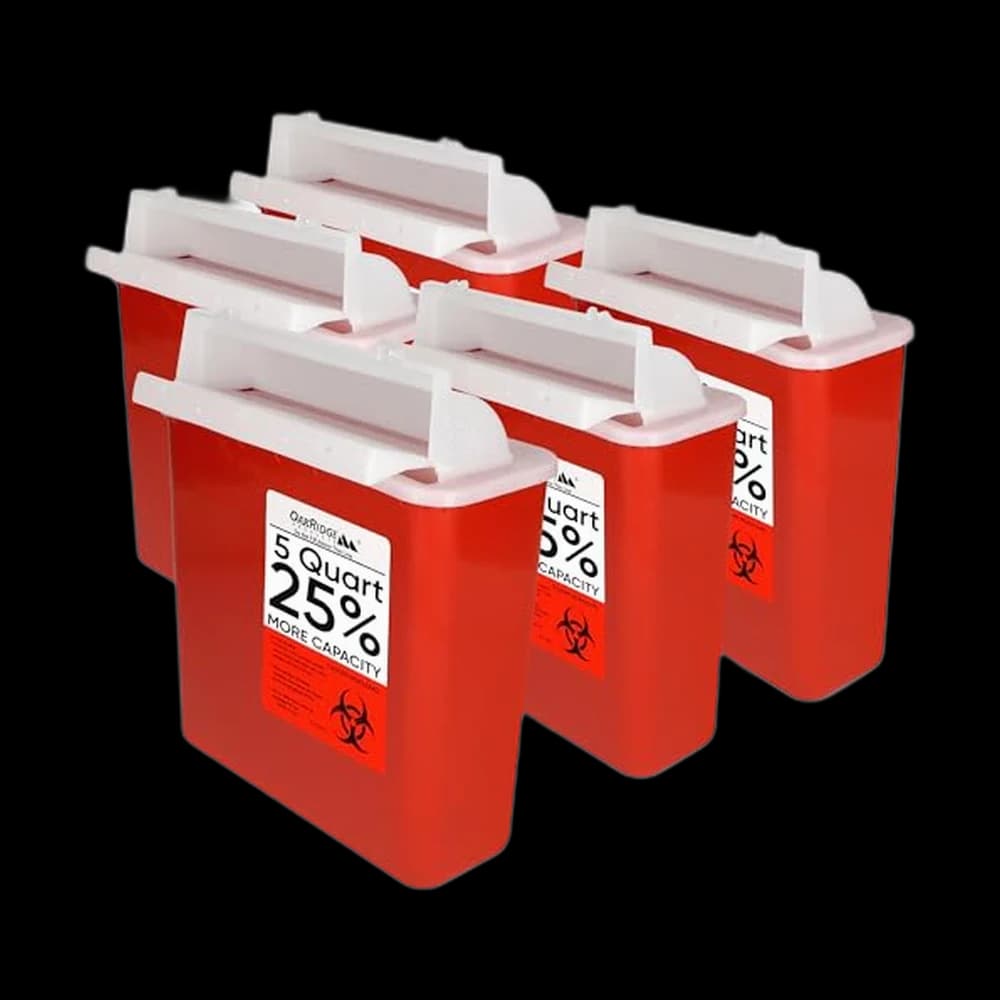 Oakridge Products Sharps Container for Home Use and Professional 5… Oakridge Products Sharps Container for Home Use and Professional 5… | The one that lives under the bathroom sink for a year. | ★ 4.4 | $38.97 | 76 | Buy on Amazon |
A used pen is a sharp. It goes in a rigid container, not the kitchen bin, not a coffee tin, and never loose in a hotel wastebasket. That much is settled. Almost everything else — which container, what "FDA-cleared" means, and where the full one goes afterwards — is less settled than the listings suggest.
Worth raising at your next visitFrom this guide
Talk to your prescriber first, not a product page. Sharps handling and disposal are clinical and municipal questions. If you have had a needle-stick injury, or you are unsure how to dispose of a used pen where you live, ask your pharmacist, prescriber or local health department before you improvise. Nothing on this page is medical advice.
Can a local program provide a sharps container?
The single most repeated piece of advice in r/Zepbound, r/Mounjaro, r/Ozempic and r/WegovyWeightLoss is not a product recommendation. It is do not buy one yet. People report getting containers free from pharmacies, prescribers, fire departments, county programmes and the medication manufacturers themselves. Newcomers asking where to buy are frequently told not to.
Ask about availability, eligibility and fees before relying on a program. A free container is not guaranteed.
What "FDA-cleared" actually means — and what these listings say
FDA recommends that used needles and other sharps go immediately into FDA-cleared sharps disposal containers. FDA has evaluated those containers for safety and effectiveness for use by health care professionals and the public. They are made from rigid plastic and come marked with a line showing when the container should be considered full.
Here is the honest part: most retailer sharps listings do not state FDA clearance at all. We record what each listing says, not what we would like it to say.
| Container | Capacity | What the listing states about clearance | Closure |
|---|---|---|---|
| Oakridge 1 quart, 3-pack | 1 quart | Says hospital-grade; no FDA clearance stated | Slide lid |
| Alcedo 1 quart, 3-pack | 1 quart | No FDA clearance stated on listing | Clear lid with needle-removal port |
| Ever Ready split-lid | 1 quart | No FDA clearance stated on listing | Split lid, permanently lockable |
| Oakridge 5 quart | 5 quart | Claims CDC certified; no FDA clearance stated | Mailbox-style lid, locking slot |
"Hospital-grade" and "CDC certified" are marketing phrases, not FDA clearance. If clearance matters to you — and it should if you plan to use a mail-back programme, since FDA notes that certain FDA-cleared containers can be mailed to a collection site for a fee — check FDA's own published list of cleared products rather than the product page.
FDA also publishes a fallback, which is more permissive than most people expect. If a cleared container is not available, some organizations and community guidelines recommend a heavy-duty plastic household container instead: leak-resistant, upright and stable in use, with a tight-fitting puncture-resistant lid — a plastic laundry detergent container is FDA's own example. Any container should be properly labelled to warn of hazardous waste inside. That is exactly what a lot of people online describe doing, and where local rules allow it, it is an acknowledged fallback rather than a hack.
Capacity: the trap is buying too big
Container capacity depends on the device being discarded: whole autoinjector pens occupy more space than bare needles. Choose a size that fits the device without forcing it through the opening, and check any time-based collection requirements with your disposal program.
Rule of thumb: buy the smallest size that still lasts a few months, and buy a travel-size alongside it. FDA advises always carrying a small, travel-size sharps disposal container in case other options are not available when you are away from home.
The practical complication, and it comes up constantly in r/Mounjaro and r/Zepbound, is that whole autoinjector pens are bulky. A quart that would hold months of bare needles fills far faster when you are dropping in whole pens. Whether you can dispose of only part of a pen is a question for the manufacturer's instructions and your local rules, not for us.
Closure, and the two lids you want
There are two jobs, and good containers do both:
- A temporary closure while the container is in use, so nothing comes back out between injections.
- A permanent lock for disposal, so the full container cannot be reopened.
The split-lid and locking-slot designs above are built around that distinction. Whatever you buy, the container should be rigid, close with a tight-fitting puncture-resistant lid, stay upright and stable during use, be leak-resistant, and be labelled.
When it is full
FDA's guidance here is specific and easy to get wrong:
What to do:
- Stop at about three-quarters full. Overfilling increases the risk of an accidental needle-stick injury.
- Seal the container, label it properly, and follow your community's guidelines for getting rid of it. The routes that may exist near you are in the next section.
What not to do:
- Do not reuse a sharps disposal container. FDA is explicit about this.
- Do not put loose sharps in the trash or the recycling, and do not flush them.
- Do not assume the rules are national. They are not, and people find that out late — threads comparing state and city rules are a genre of their own in these subs.
Where the full container goes
FDA's instruction is to check with your local trash removal service or health department, because sharps disposal guidelines and programmes vary depending on where you live. These are the routes FDA and Safe Needle Disposal describe. Your area may offer several of them, one of them, or none — which is why this page does not try to tell you which applies to you.
| Route | How it works | Check before you go |
|---|---|---|
| Pharmacy, hospital or other take-back site | FDA calls these drop boxes or supervised collection sites: doctors' offices, hospitals, pharmacies, health departments, medical waste facilities, and police or fire stations. FDA says services may be free or carry a nominal fee. | Call first. Not every pharmacy or hospital near you takes sharps, and a site may only accept certain containers. |
| Mail-back programme | FDA says certain FDA-cleared containers can be mailed to a collection site, usually for a fee that varies with the size of the container. | The programme's own packing and labelling rules. FDA says to follow the container manufacturer's instructions, and a container that states no FDA clearance may not qualify. |
| Household hazardous waste site | A local public household hazardous waste site — the kind that takes paints, cleaners and motor oil — may accept sealed sharps containers. | Safe Needle Disposal's advice is to check with your local waste provider that sharps are collected there before you go. |
| Residential special waste pick-up | Some communities send trained handlers to collect containers from your home. FDA says these services are typically fee-based, some on request and some on a schedule. | Which container types they collect. FDA notes many have special requirements. |
| Household trash, only where local rules allow | Safe Needle Disposal's guidance is to seal a cleared container, or a strong plastic one such as a laundry detergent or bleach bottle, and put it in household trash if your state or community permits it. FDA's version is to seal it, label it properly, and check your community guidelines. | Whether your state or city permits it at all. Loose sharps never go in the trash or the recycling. |
The fastest way to a real answer for your address: Safe Needle Disposal, a project of NeedyMeds, publishes guidance state by state with a ZIP-code search for drop-off locations. FDA points readers to its phone line (1-800-643-1643) for state-specific questions, including what containers can be used, how to label one, how to secure the lid, and whether a container can go in the common trash where you live. FDA also suggests asking your pharmacist, prescriber or local hospital whether they take sharps or know of a programme nearby, and asking the maker of your medication whether it offers containers.
Travelling with it
Travel disposal is the live, unresolved question in these communities. What people actually describe doing is carrying a pocket-sized travel container and bringing a used sharp home rather than leaving it in a hotel bin.
FDA's own travel advice is short and useful: carry a small travel-size container; if you are flying, check the TSA website for current rules on sharps; and make the airport easier on yourself by keeping medicines labelled with the type of medicine and the manufacturer's or pharmacy's name, and bringing a letter from your doctor.
For the rest of the packing problem — insulated cases, thermometers, and the storage rules that differ by brand — see storing and travelling with GLP-1 pens and build a list with the travel kit tool.
The short version
Ask your pharmacy about available containers and costs. If you are buying, choose a container that fits your device, check its clearance status and confirm local collection rules. FDA advises a small travel container and community disposal guidance when a container is about three-quarters full. Browse the full sharps containers comparison for the specifications side by side.
Your next step
The bin is one half of shot day. The carton is the other.
Frequently asked
The questions that keep coming up
Does a sharps container have to be FDA-cleared?
FDA recommends FDA-cleared containers, which it has evaluated for safety and effectiveness for use by the public. It also states that if a cleared container is not available, some organizations and community guidelines recommend a heavy-duty plastic household container instead — leak-resistant, upright and stable during use, with a tight-fitting puncture-resistant lid, such as a plastic laundry detergent container. Your local rules decide what is acceptable where you live.
Why do so few listings mention FDA clearance?
We can only report what a listing states, and most of the ones we compared state nothing about clearance. Some use phrases like hospital-grade or CDC certified, which are not the same thing. If clearance matters to you, check FDA's published list of cleared sharps disposal products rather than the product page.
What size should I get for a weekly injection?
Choose a sharps container with an opening and capacity suited to the device you discard. Whole autoinjector pens take more room than bare needles, so injection frequency alone does not determine the size. Follow the marked fill line and your local disposal program’s instructions. FDA advises following community disposal guidance when a container is about three-quarters full.
Where does the full container go?
That depends entirely on where you live. FDA lists the options that may be available: drop boxes and supervised collection sites such as pharmacies and hospitals, household hazardous waste sites, mail-back programmes for certain FDA-cleared containers, and residential special waste pick-up. Some communities also allow a sealed container in household trash. Safe Needle Disposal maps this state by state, and your local trash service or health department is the authority.
Can a full sharps container go in the household trash?
Only where your state or community allows it. Safe Needle Disposal's guidance is to seal the container and place it in household trash if your state or community permits it, and FDA's advice is to seal it, label it properly and check your community guidelines first. Loose needles never go in the trash or the recycling bin, and never down the toilet.
What do I do with a used pen in a hotel?
FDA advises always carrying a small travel-size sharps container for exactly this. What people in these communities describe doing is using a pocket-sized container and carrying the used sharp home rather than leaving it in a hotel bin. If you are flying, check TSA's current guidance before you travel.
Sources & further reading
We research from primary and authoritative sources. Where our guidance rests on a fact, here's where it comes from.
- FDA — Sharps Disposal Containers — What FDA-cleared means, the features every container should have, the heavy-duty household container fallback, and the three-quarters-full rule.
- FDA — Best Way to Get Rid of Used Needles and Other Sharps — The two-step guidance, the do-not-reuse rule, the list of community disposal options, and the travel advice about carrying a travel-size container and labelling medicines.
- Safe Needle Disposal — state-by-state disposal locator (a NeedyMeds project) — State-by-state disposal guidance and community drop-off locations, searchable by ZIP code.
- FDA — DOs and DON'Ts of Proper Sharps Disposal — Source for sealing and labelling a container before disposal and checking community guidelines, for asking a pharmacist, provider or hospital about disposal programmes, and for never putting loose sharps in the trash or recycling or flushing them.
- Safe Needle Disposal — Disposal Options — Source for household trash disposal of a sealed container only where a state or community permits it, and for checking with a local waste provider before using a household hazardous waste site.
LeanFed is not medical advice and is not a substitute for your prescriber, pharmacist or dietitian. We do not test products hands-on — we compare labels, specifications and owner reviews. Prices and LeanScores reflect our most recent research and refresh on a cycle; confirm the current price and read the product's own label before buying. We may earn a commission from affiliate retailers — it never changes our recommendations. See how we score.