Medication Travel CasesDeep dive7 min
Storing and Traveling With GLP-1 Pens: Label by Label
TL;DR
LeanFed may earn a commission from links on this page; it never changes a ranking. Full disclosure.
The short answer
Our pick
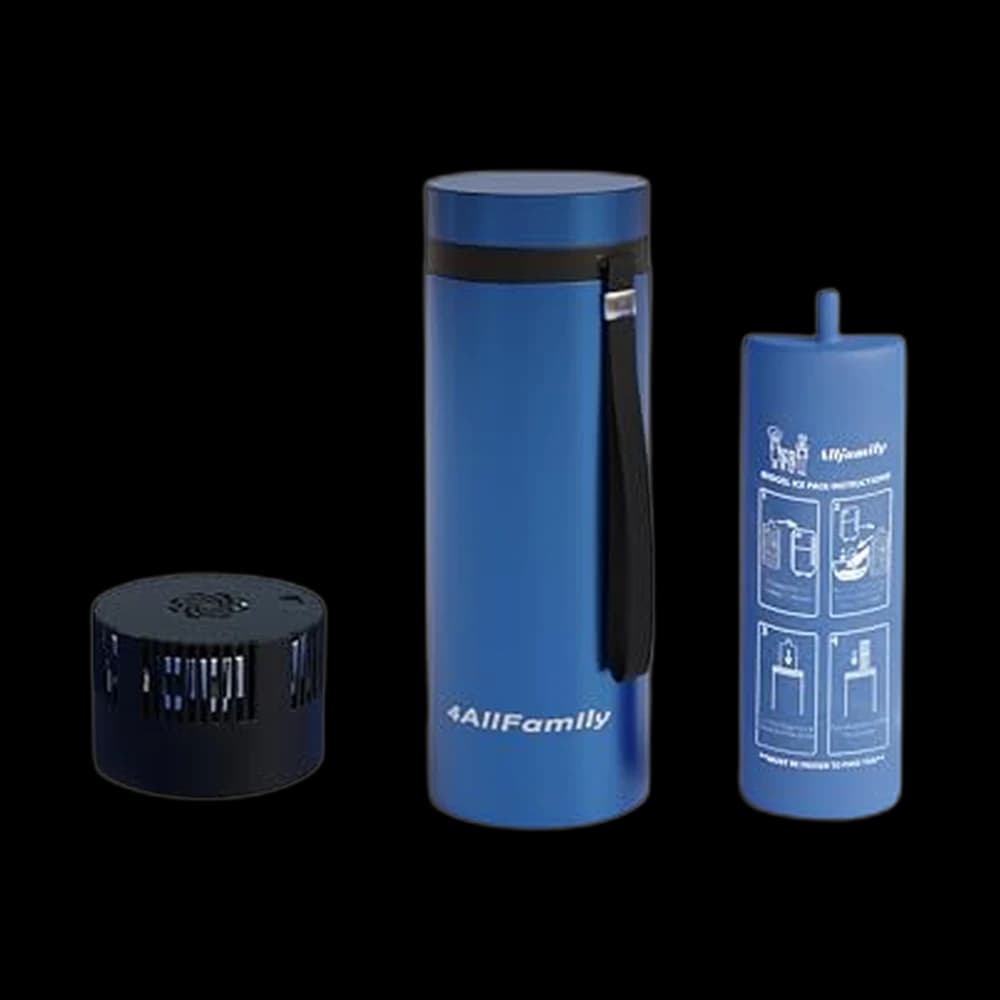
4ALLFAMILY Explorer Insulin Cooler Travel Case 3-In-1- Long trips and places you cannot count on a fridge.
- You only ever travel overnight — this is a lot of case to carry.
Ozempic allows 56 days out of the fridge after first use. A Zepbound single-dose pen allows 21 days total. The full label table, plus travel rules.
Key takeaways
- There is no one rule for GLP-1 pens. Storage is brand and presentation specific — an Ozempic pen allows 56 days at room temperature after first use; a Zepbound single-dose pen allows a total of 21 days.
- Never pack medication against a frozen gel pack. Almost every injectable label in the table says do not freeze, and a good case keeps the medication in a separate pocket from the cold source.
- A case manages temperature; it does not certify potency. A small thermometer or temperature indicator is what tells you what actually happened.
- TSA allows larger amounts of medically necessary liquids in reasonable quantities, but you must declare them at the checkpoint for inspection. Carry-on only, pharmacy label on, prescriber letter in the bag.
- Compounded products carry no FDA label, so none of these windows apply. Follow the storage instructions your compounding pharmacy gave you.
Storage instructions by product and presentation
This is the same source used by the pen-storage lookup and travel-kit builder.
semaglutide
Ozempic — Single-patient-use pen (multiple weekly doses)
- Before first use
- Refrigerate at 2°C to 8°C (36°F to 46°F) until the expiration date. Do not store in the freezer or directly next to the refrigerator's cooling element. Keep the pen in its original carton until you use it.
- After first use
- The pen can be kept for 56 days, either at controlled room temperature 15°C to 30°C (59°F to 86°F) or refrigerated at 2°C to 8°C (36°F to 46°F). Keep the pen cap on when it is not in use, and store it with no needle attached.
- Room-temperature window
- 56 days after first use, at 15°C to 30°C (59°F to 86°F)
- Freezing
- Do not freeze. If it has been frozen, do not use it — ask your pharmacist what to do with it.
- Light and moisture
- Protect from excessive heat and sunlight. Keep in the original carton until the time of administration.
- Label date
- Revised 5/2026
semaglutide
Ozempic — Single-dose prefilled syringe
- Before first use
- Refrigerate at 2°C to 8°C (36°F to 46°F). If needed, the syringe can be kept from 8°C to 30°C (46°F to 86°F) for up to 28 days. Keep it in the original carton until the time of administration.
- After first use
- Single use only. Discard the syringe after use.
- Room-temperature window
- Up to 28 days at 8°C to 30°C (46°F to 86°F)
- Freezing
- Do not freeze. If it has been frozen, do not use it — ask your pharmacist what to do with it.
- Light and moisture
- Protect from light; keep in the original carton until use.
- Label date
- Revised 5/2026
semaglutide
Wegovy — Single-dose pen or single-dose prefilled syringe
- Before first use
- Refrigerate at 2°C to 8°C (36°F to 46°F). If needed, before the cap is removed, it can be kept from 8°C to 30°C (46°F to 86°F) for up to 28 days. Keep it in the original carton until the time of administration.
- After first use
- Single use only. Discard the pen or syringe after use.
- Room-temperature window
- Up to 28 days at 8°C to 30°C (46°F to 86°F), before the cap is removed
- Freezing
- Do not freeze. If it has been frozen, do not use it — ask your pharmacist what to do with it.
- Light and moisture
- Protect the injection from light. Do not store in the freezer or directly next to the refrigerator's cooling element.
- Label date
- Revised 6/2026
semaglutide
Wegovy — FlexTouch single-patient-use pen (4 weekly doses of 2.4 mg)
- Before first use
- Refrigerate at 2°C to 8°C (36°F to 46°F) before first use. Do not store in the freezer or directly next to the refrigerator's cooling element.
- After first use
- After first use the pen can be stored for 56 days, either between 15°C to 30°C (59°F to 86°F) or refrigerated at 2°C to 8°C (36°F to 46°F). Keep the pen cap on when not in use and store it with no needle attached.
- Room-temperature window
- 56 days after first use, at 15°C to 30°C (59°F to 86°F)
- Freezing
- Do not freeze. If it has been frozen, do not use it — ask your pharmacist what to do with it.
- Light and moisture
- Protect from excessive heat and light.
- Label date
- Revised 6/2026
semaglutide
Wegovy — Tablets (oral)
- Before first use
- Store at 20°C to 25°C (68°F to 77°F); excursions permitted to 15°C to 30°C (59°F to 86°F). No refrigeration.
- After first use
- Store and dispense in the original bottle. Keep tablets in the original bottle until use to protect them from moisture.
- Room-temperature window
- Room temperature always: 20°C to 25°C (68°F to 77°F), excursions 15°C to 30°C (59°F to 86°F)
- Light and moisture
- The label sets controlled room temperature and gives no refrigeration or freezing instruction. Keep the tablets in the original bottle, in a dry place away from moisture.
- Label date
- Revised 6/2026
tirzepatide
Mounjaro — Single-dose pen
- Before first use
- Refrigerate at 2°C to 8°C (36°F to 46°F). If needed, each single-dose pen can be stored unrefrigerated at temperatures not to exceed 30°C (86°F) for up to a total of 21 days.
- After first use
- Single use only. Discard the pen after use, and discard it after a total of 21 days at room temperature even if unused.
- Room-temperature window
- Up to a total of 21 days, not exceeding 30°C (86°F)
- Freezing
- Do not freeze. If it has been frozen, do not use it — ask your pharmacist what to do with it.
- Light and moisture
- Protect from heat and light; store in the original carton to protect from light.
- Label date
- Revised 8/2026
tirzepatide
Mounjaro — Single-dose vial
- Before first use
- Refrigerate at 2°C to 8°C (36°F to 46°F). If needed, each single-dose vial can be stored unrefrigerated at temperatures not to exceed 30°C (86°F) for up to a total of 21 days.
- After first use
- Single use only. Discard the vial after use, and discard it after a total of 21 days at room temperature even if unused.
- Room-temperature window
- Up to a total of 21 days, not exceeding 30°C (86°F)
- Freezing
- Do not freeze. If it has been frozen, do not use it — ask your pharmacist what to do with it.
- Light and moisture
- Protect from heat and light; store in the original carton to protect from light.
- Label date
- Revised 8/2026
tirzepatide
Mounjaro — KwikPen single-patient-use pen, or multi-dose vial
- Before first use
- Unopened: refrigerate at 2°C to 8°C (36°F to 46°F), where it can be used until the expiration date on the label. If instead stored at room temperature up to 30°C (86°F), throw it away after 30 days.
- After first use
- Once opened, store in the original carton either refrigerated at 2°C to 8°C (36°F to 46°F) or at room temperature up to 30°C (86°F). Throw it away after a total of 30 days at room temperature, 30 days after first use, or after 4 weekly doses, whichever comes first, even if medicine is left in it.
- Room-temperature window
- 30 days total at room temperature, up to 30°C (86°F); 30 days after first use either way
- Freezing
- Do not freeze. If it has been frozen, do not use it — ask your pharmacist what to do with it.
- Light and moisture
- Protect from heat and light; keep the opened device in the original carton.
- Label date
- Revised 8/2026
tirzepatide
Zepbound — Single-dose pen
- Before first use
- Refrigerate at 2°C to 8°C (36°F to 46°F). If needed, each single-dose pen can be stored unrefrigerated at temperatures not to exceed 30°C (86°F) for up to a total of 21 days.
- After first use
- Single use only. Discard the pen after use, and discard it after a total of 21 days at room temperature even if unused.
- Room-temperature window
- Up to a total of 21 days, not exceeding 30°C (86°F)
- Freezing
- Do not freeze. If it has been frozen, do not use it — ask your pharmacist what to do with it.
- Light and moisture
- Protect from heat and light; store in the original carton to protect from light.
- Label date
- Revised 8/2026
tirzepatide
Zepbound — Single-dose vial
- Before first use
- Refrigerate at 2°C to 8°C (36°F to 46°F). If needed, each single-dose vial can be stored unrefrigerated at temperatures not to exceed 30°C (86°F) for up to a total of 21 days.
- After first use
- Single use only. Discard the vial after use, and discard it after a total of 21 days at room temperature even if unused.
- Room-temperature window
- Up to a total of 21 days, not exceeding 30°C (86°F)
- Freezing
- Do not freeze. If it has been frozen, do not use it — ask your pharmacist what to do with it.
- Light and moisture
- Protect from heat and light; store in the original carton to protect from light.
- Label date
- Revised 8/2026
tirzepatide
Zepbound — KwikPen single-patient-use pen, or multi-dose vial
- Before first use
- Unopened: refrigerate at 2°C to 8°C (36°F to 46°F), where it can be used until the expiration date on the label. If instead stored at room temperature up to 30°C (86°F), throw it away after 30 days.
- After first use
- Once opened, store in the original carton either refrigerated at 2°C to 8°C (36°F to 46°F) or at room temperature up to 30°C (86°F). Throw it away after a total of 30 days at room temperature, 30 days after first use, or after 4 weekly doses, whichever comes first, even if medicine is left in it.
- Room-temperature window
- 30 days total at room temperature, up to 30°C (86°F); 30 days after first use either way
- Freezing
- Do not freeze. If it has been frozen, do not use it — ask your pharmacist what to do with it.
- Light and moisture
- Protect from heat and light; keep the opened device in the original carton.
- Label date
- Revised 8/2026
semaglutide
Rybelsus — Tablets (oral)
- Before first use
- Store at 20°C to 25°C (68°F to 77°F); excursions permitted to 15°C to 30°C (59°F to 86°F). No refrigeration.
- After first use
- Store and dispense in the original bottle. Keep tablets in the original bottle until use to protect them from moisture.
- Room-temperature window
- Room temperature always: 20°C to 25°C (68°F to 77°F), excursions 15°C to 30°C (59°F to 86°F)
- Light and moisture
- The label sets controlled room temperature and gives no refrigeration or freezing instruction. Store the product in a dry place away from moisture.
- Label date
- Revised 1/2026
liraglutide
Saxenda — Single-patient-use pen (daily doses)
- Before first use
- Refrigerate at 2°C to 8°C (36°F to 46°F) before first use. Do not store in the freezer or directly next to the refrigerator's cooling element.
- After first use
- After initial use the pen can be stored for 30 days, either at controlled room temperature 15°C to 30°C (59°F to 86°F) or refrigerated at 2°C to 8°C (36°F to 46°F). Keep the pen cap on when not in use and store it with no needle attached.
- Room-temperature window
- 30 days after first use, at 15°C to 30°C (59°F to 86°F)
- Freezing
- Do not freeze. If it has been frozen, do not use it — ask your pharmacist what to do with it.
- Light and moisture
- Protect from excessive heat and sunlight.
- Label date
- Revised 6/2026
liraglutide
Victoza — Single-patient-use pen (daily doses)
- Before first use
- Refrigerate at 2°C to 8°C (36°F to 46°F) before first use. Do not store in the freezer or directly next to the refrigerator's cooling element.
- After first use
- After first use the pen can be stored for 30 days, either at controlled room temperature 15°C to 30°C (59°F to 86°F) or refrigerated at 2°C to 8°C (36°F to 46°F). Keep the pen cap on when not in use and store it with no needle attached.
- Room-temperature window
- 30 days after first use, at 15°C to 30°C (59°F to 86°F)
- Freezing
- Do not freeze. If it has been frozen, do not use it — ask your pharmacist what to do with it.
- Light and moisture
- Protect from excessive heat and sunlight.
- Label date
- Revised 10/2025
Pharmacy instructions
Compounded semaglutide / tirzepatide — Pharmacy-compounded product
- Before first use
- No FDA-approved label exists; follow the storage instructions from the pharmacy that compounded it and ask them.
- After first use
- Follow the storage instructions from the pharmacy that compounded it; ask that pharmacy if anything is unclear.
- Room-temperature window
- Set by the compounding pharmacy; no FDA-approved label exists.
- Instructions checked
- 2026-09-04
No FDA-approved label exists. The compounding pharmacy's instructions are the source.
Pick by your situation
| If your situation is… | Pick | Why |
|---|---|---|
| A weekend away with a fridge at the other end | 4ALLFAMILY Nomad | Pocketable passive cooling with nothing to charge, which is all a short trip needs. |
| Somewhere with a tap but no freezer | FRIO cooling wallet | Evaporative cooling recharges in water, so it does not depend on finding a freezer. |
| You want to see the temperature rather than assume it | DISONCARE Odyssey | A readable display on the outside of the case, which is what people say made them trust one. |
| A long journey with no reliable refrigeration | 4ALLFAMILY Explorer | USB cooling plus a gel pack, for the trips a passive case cannot cover. |
| You need everything in one bag rather than active cooling | CURMIO insulated case | An organiser with insulation — room for wipes, a travel sharps container and a testing kit. |
Each pick is one of the products compared below — a shortcut by situation, not a separate recommendation.
Medication Travel Cases: our picks
| Pick | Best for | Rating | Price | LeanScore | Buy |
|---|---|---|---|---|---|
| №14ALLFAMILY Explorer Insulin Cooler Travel Case 3-In-1 | USB-powered cooling plus a gel pack for long trips. | ★ 4.5 | $139.99 | 73 | Buy on Amazon |
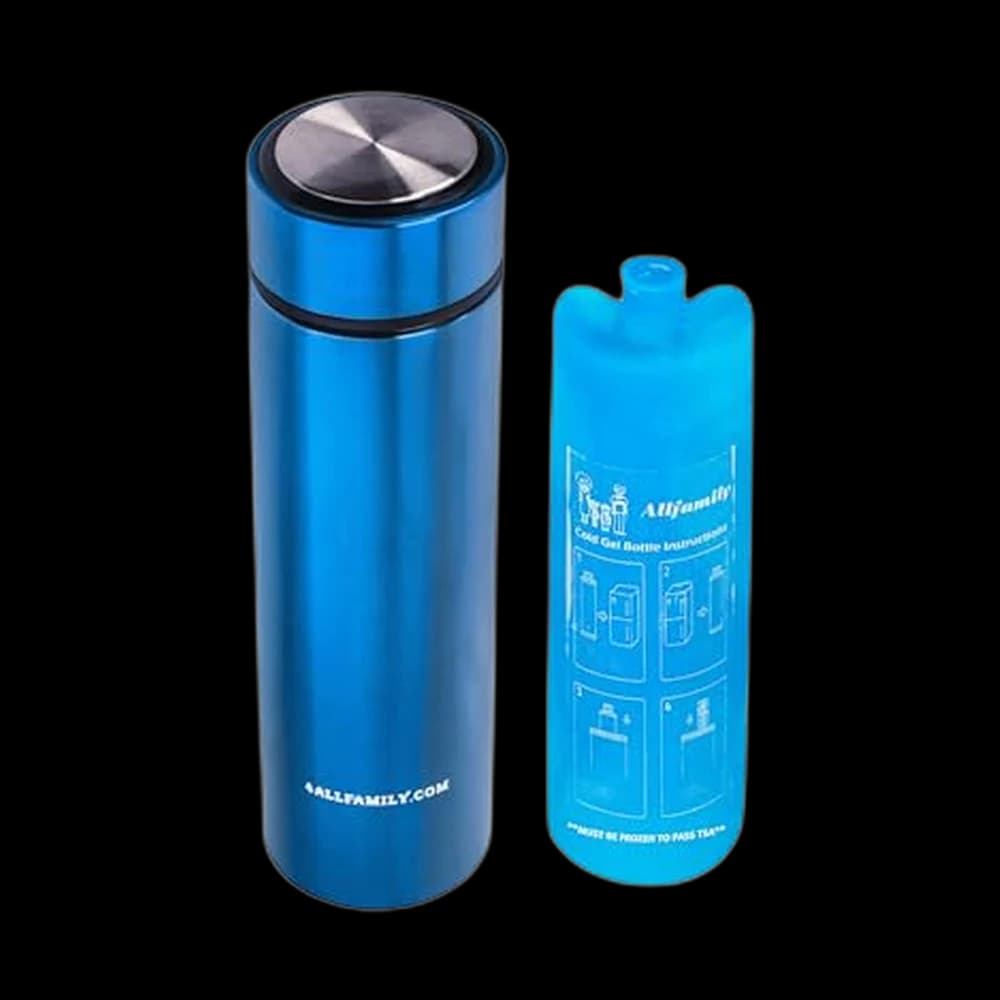 4ALLFAMILY Nomad Insulin Travel Case Cooler 4ALLFAMILY Nomad Insulin Travel Case Cooler | Passive cooling in a case that fits a jacket pocket. | ★ 4.6 | $39.99 | 85 | Buy on Amazon |
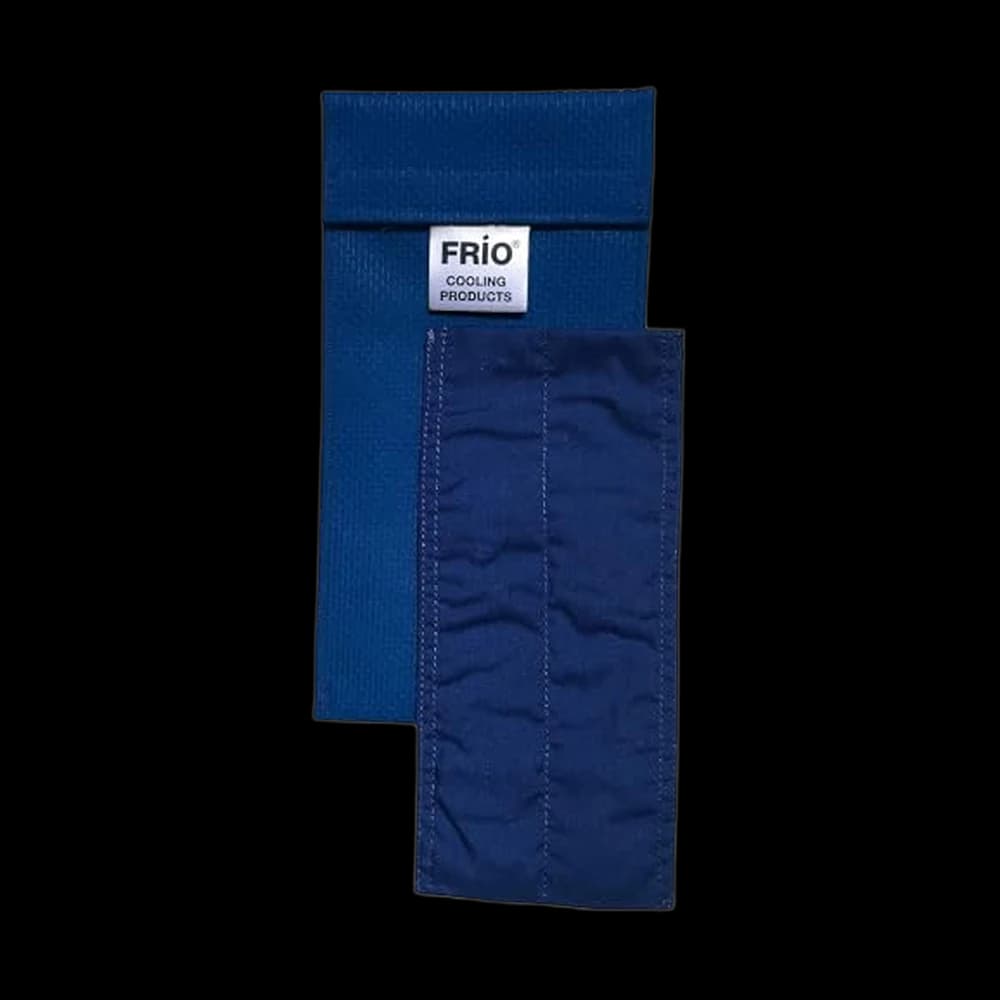 FRIO Cooling Wallet Insulin & GLP-1 Cooler for 45+ Hours FRIO Cooling Wallet Insulin & GLP-1 Cooler for 45+ Hours | Evaporative, so it recharges anywhere there is tap water. | ★ 4.2 | $35.95 | 71 | Buy on Amazon |
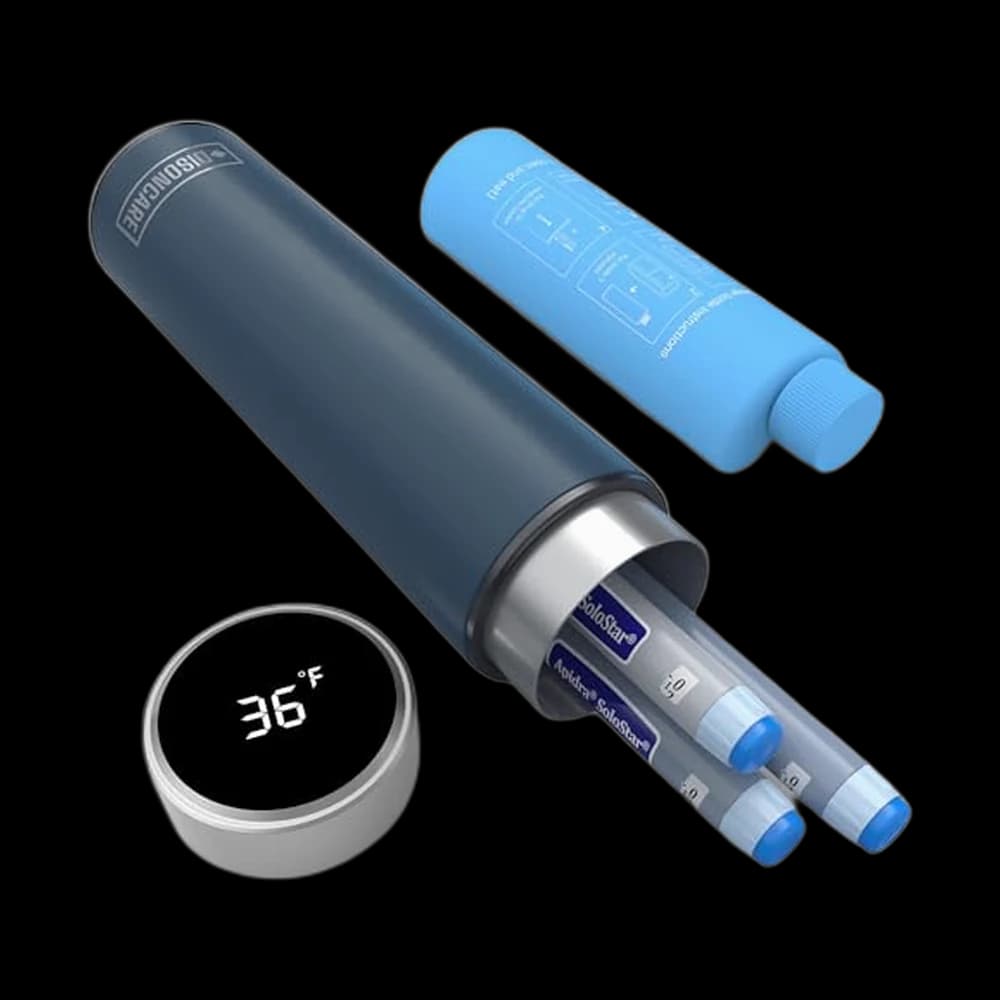 DISONCARE Odyssey 60H Insulin Cooler Travel case Digital Display… DISONCARE Odyssey 60H Insulin Cooler Travel case Digital Display… | The budget insulated case with a built-in thermometer. | ★ 4.3 | $36.99 | 70 | Buy on Amazon |
There is no single storage rule for pens, and any page that gives you one is guessing. The window differs by brand and by presentation — an Ozempic pen allows 56 days out of the refrigerator after first use, while a Zepbound single-dose pen allows a total of 21 days, refrigerated or not. Same class of medication, completely different number.
So this page does one thing: it puts the label text side by side, dated, so you can find your own row. Your carton and your own Instructions for Use are the authority. This page contains no dosing information of any kind.
The storage table
Transcribed from the current FDA prescribing information on DailyMed for each product. Every cell is summarised from the label linked at the foot of this post.
| Brand | Presentation | Before first use | After first use / room-temp window | Do not freeze | Label date |
|---|---|---|---|---|---|
| Ozempic | Single-patient-use pen (multiple weekly doses) | Refrigerate 2–8°C (36–46°F) until expiry, in the carton | 56 days after first use, at 15–30°C (59–86°F) or refrigerated | Yes | Revised 5/2026 |
| Ozempic | Single-dose prefilled syringe | Refrigerate 2–8°C; if needed, 8–30°C (46–86°F) for up to 28 days | Single use — discard after use | Yes | Revised 5/2026 |
| Wegovy | Single-dose pen or single-dose prefilled syringe | Refrigerate 2–8°C; if needed, 8–30°C for up to 28 days before the cap is removed | Single use — discard after use | Yes | Revised 6/2026 |
| Wegovy | FlexTouch single-patient-use pen (4 weekly doses of 2.4 mg) | Refrigerate 2–8°C before first use | 56 days after first use, at 15–30°C or refrigerated | Yes | Revised 6/2026 |
| Wegovy | Tablets (oral) | 20–25°C (68–77°F), excursions 15–30°C; no refrigeration | Keep in the original bottle to protect from moisture | Label gives no freeze statement | Revised 6/2026 |
| Mounjaro | Single-dose pen | Refrigerate 2–8°C; if needed, up to 30°C (86°F) for a total of 21 days | Single use — discard after use, and after 21 days at room temperature even if unused | Yes | Revised 8/2026 |
| Mounjaro | Single-dose vial | Refrigerate 2–8°C; if needed, up to 30°C for a total of 21 days | Single use — discard after use, and after 21 days at room temperature even if unused | Yes | Revised 8/2026 |
| Mounjaro | KwikPen single-patient-use pen, or multi-dose vial | Unopened: refrigerated until expiry, or 30 days if kept at room temperature up to 30°C | 30 days after first use, or 4 weekly doses, whichever comes first | Yes | Revised 8/2026 |
| Zepbound | Single-dose pen | Refrigerate 2–8°C; if needed, up to 30°C for a total of 21 days | Single use — discard after use, and after 21 days at room temperature even if unused | Yes | Revised 8/2026 |
| Zepbound | Single-dose vial | Refrigerate 2–8°C; if needed, up to 30°C for a total of 21 days | Single use — discard after use, and after 21 days at room temperature even if unused | Yes | Revised 8/2026 |
| Zepbound | KwikPen single-patient-use pen, or multi-dose vial | Unopened: refrigerated until expiry, or 30 days if kept at room temperature up to 30°C | 30 days after first use, or 4 weekly doses, whichever comes first | Yes | Revised 8/2026 |
| Rybelsus | Tablets (oral) | 20–25°C (68–77°F), excursions 15–30°C; no refrigeration | Keep in the original bottle to protect from moisture | Label gives no freeze statement | Revised 1/2026 |
| Saxenda | Single-patient-use pen (daily doses) | Refrigerate 2–8°C before first use | 30 days after first use, at 15–30°C or refrigerated | Yes | Revised 6/2026 |
| Victoza | Single-patient-use pen (daily doses) | Refrigerate 2–8°C before first use | 30 days after first use, at 15–30°C or refrigerated | Yes | Revised 10/2025 |
The travel kit tool reads this same data and will print your brand's full label wording for a trip.
Why the rules differ
Three things drive the differences, and once you see them the table stops looking arbitrary.
- Single-dose versus multi-dose. A single-dose pen or is used once and discarded, so its window is about how long the sealed device can sit out before it is used at all. A multi-dose pen has to survive weeks of being carried, capped and re-used, which is why its clock starts at first use.
- Injection versus tablet. The oral tablets are stored at controlled room temperature and are not refrigerated at all. Their labels do not carry a freeze statement; they carry a moisture instruction, which is why they stay in the original bottle.
- Total time versus time after opening. Mounjaro and Zepbound single-dose devices count a total of 21 days at room temperature, used or not. Ozempic and Wegovy multi-dose pens count 56 days from first use. Those are different kinds of clock and they are easy to conflate.
Never decant. Do not move medication out of its own pen, vial or bottle into another container. Storage windows, light protection and the label itself all belong to the original packaging.
Never pack it against an ice pack
This is the one that matters most and the one insulated-case marketing is quietest about. Almost every injectable row in the table above says do not freeze, and freezing is exactly what direct contact with a frozen gel pack risks.
A good case keeps the medication in a separate inner pocket, away from the cold source. If your case does not, wrap the cold source, not the pen. And a case manages temperature — it does not certify that the medication is unaffected, and no product can make that claim.
Which is why a small thermometer or temperature indicator earns its place: it tells you what actually happened rather than what you assume happened. That is also what people who bought cases with a built-in readout say made them trust the case.
Choosing a case for the trip you are actually taking
Read the full medication travel cases comparison for the specifications, but the shortcut is trip length and whether there is a fridge at the other end.
| Trip | Case type | Watch for |
|---|---|---|
| A weekend, fridge on arrival | Passive gel-pack case | Whether your boxes fit — measure first |
| Anywhere with a tap, several days | Evaporative wallet | Needs dry air; humidity blunts it |
| Long journey, no reliable fridge | USB-powered cooler | Weight and charging, and a separate inner pocket |
| You want proof, not a guess | A case with a temperature readout | The display battery is one more thing to check |
Capacity claims are stated in pens, but you will often be carrying boxes, not bare devices. Fit is the recurring frustration in r/Zepbound: a case marketed for insulin pens is not necessarily the right shape for yours.
Flying
TSA states that it allows larger amounts of medically necessary liquids, gels and aerosols in reasonable quantities for your trip, but that you must declare them to TSA officers at the checkpoint for inspection. Its insulin page adds the practical version: tell the officers you have medically necessary liquids and place them in a bin separately for X-ray screening.
What makes screening uneventful:
- Carry-on, always. Never checked baggage — that is one of the few points in these communities with essentially no dissent, and the reasoning is lost luggage plus an unheated hold.
- Keep the pharmacy label on the box.
- Bring a letter from your prescriber. It costs nothing and removes most friction.
- Declare it before the bag goes through, not after.
Pack a travel-size too — see sharps containers for home and travel and the guide to them.
Compounded products
and have no FDA prescribing information, so none of the rows above apply to them. There is no label to quote. Follow the storage instructions your compounding pharmacy gave you, and if you do not have them in writing, ask for them in writing before you travel.
Re-check the label once a year
Labels get revised. The dates in the table are the label's own revision dates as we read them, and DailyMed is where the current version lives. If your carton disagrees with this page, your carton wins.
Your next step
Your row is on the carton. The case is what carries it, and the ones worth comparing keep the pen away from the cold pack.
Frequently asked
The questions that keep coming up
How long can my pen stay out of the refrigerator?
It depends on the brand and the presentation, which is why this page is a table rather than a sentence. An Ozempic single-patient-use pen can be kept for 56 days after first use at 15 to 30 degrees Celsius. A Zepbound or Mounjaro single-dose pen can be stored unrefrigerated for up to a total of 21 days, not exceeding 30 degrees Celsius. Find your own row, and check it against your carton.
Can I put my pen next to an ice pack in a cooler bag?
Not in direct contact. Nearly every injectable label here says do not freeze, and direct contact with a frozen gel pack is how freezing happens in practice. Use a case that keeps the medication in a separate inner pocket from the cold source, or wrap the cold source. If you suspect a pen has frozen, ask your pharmacist before using it.
Do I have to declare my medication at airport security?
TSA states that it allows larger amounts of medically necessary liquids, gels and aerosols in reasonable quantities for your trip, but that you must declare them to TSA officers at the checkpoint for inspection. Its insulin guidance adds that you should tell officers you have medically necessary liquids and place them in a bin separately for X-ray screening. Keep the pharmacy label on the box and carry a letter from your prescriber.
Can I pack it in my checked bag?
The advice in the GLP-1 communities is unanimous against it, and the reasoning is straightforward: the cargo hold is neither temperature-controlled nor reliably reunited with you. Carry-on only.
What about compounded semaglutide or tirzepatide?
Compounded products have no FDA prescribing information, so nothing in this table applies to them. Your compounding pharmacy sets the storage rules for what it dispensed. Ask for those instructions in writing before you travel.
Sources & further reading
We research from primary and authoritative sources. Where our guidance rests on a fact, here's where it comes from.
- DailyMed — Ozempic (semaglutide) prescribing information — Source of the Ozempic pen and prefilled-syringe rows, including the 56-day after-first-use window. Label revised 5/2026.
- DailyMed — Wegovy (semaglutide) prescribing information — Source of the Wegovy single-dose, FlexTouch and oral tablet rows. Label revised 6/2026.
- DailyMed — Zepbound (tirzepatide) prescribing information — Source of the Zepbound single-dose pen, single-dose vial and KwikPen rows, including the 21-day total window. Label revised 8/2026; storage text re-read 2026-09-27 and unchanged.
- DailyMed — Mounjaro (tirzepatide) prescribing information — Source of the Mounjaro single-dose pen, single-dose vial and KwikPen rows, including the 21-day total window and the 30-day KwikPen rules. Label revised 8/2026; storage text re-read 2026-09-27.
- DailyMed — Rybelsus and Ozempic tablets (oral semaglutide) prescribing information — Source of the Rybelsus tablet row: 20°C to 25°C with excursions to 15°C to 30°C, kept in the original bottle to protect from moisture. Label revised 1/2026.
- DailyMed — Saxenda (liraglutide) prescribing information — Source of the Saxenda row, including the 30 days after initial use. Label revised 6/2026.
- DailyMed — Victoza (liraglutide) prescribing information — Source of the Victoza row, including the 30 days after first use. Label revised 10/2025.
- TSA — What Can I Bring: Medications (liquid) — TSA allows larger amounts of medically necessary liquids, gels and aerosols in reasonable quantities, but they must be declared to officers at the checkpoint for inspection.
- TSA — What Can I Bring: Insulin — Tell officers you have medically necessary liquids and place them in a bin separately for X-ray screening. Allowed in both carry-on and checked bags.
LeanFed is not medical advice and is not a substitute for your prescriber, pharmacist or dietitian. We do not test products hands-on — we compare labels, specifications and owner reviews. Prices and LeanScores reflect our most recent research and refresh on a cycle; confirm the current price and read the product's own label before buying. We may earn a commission from affiliate retailers — it never changes our recommendations. See how we score.