Adjustable DumbbellsDeep dive7 min
Sarcopenia and Muscle Loss on a GLP-1: What It Actually Means
TL;DR
LeanFed may earn a commission from links on this page; it never changes a ranking. Full disclosure.
The short answer
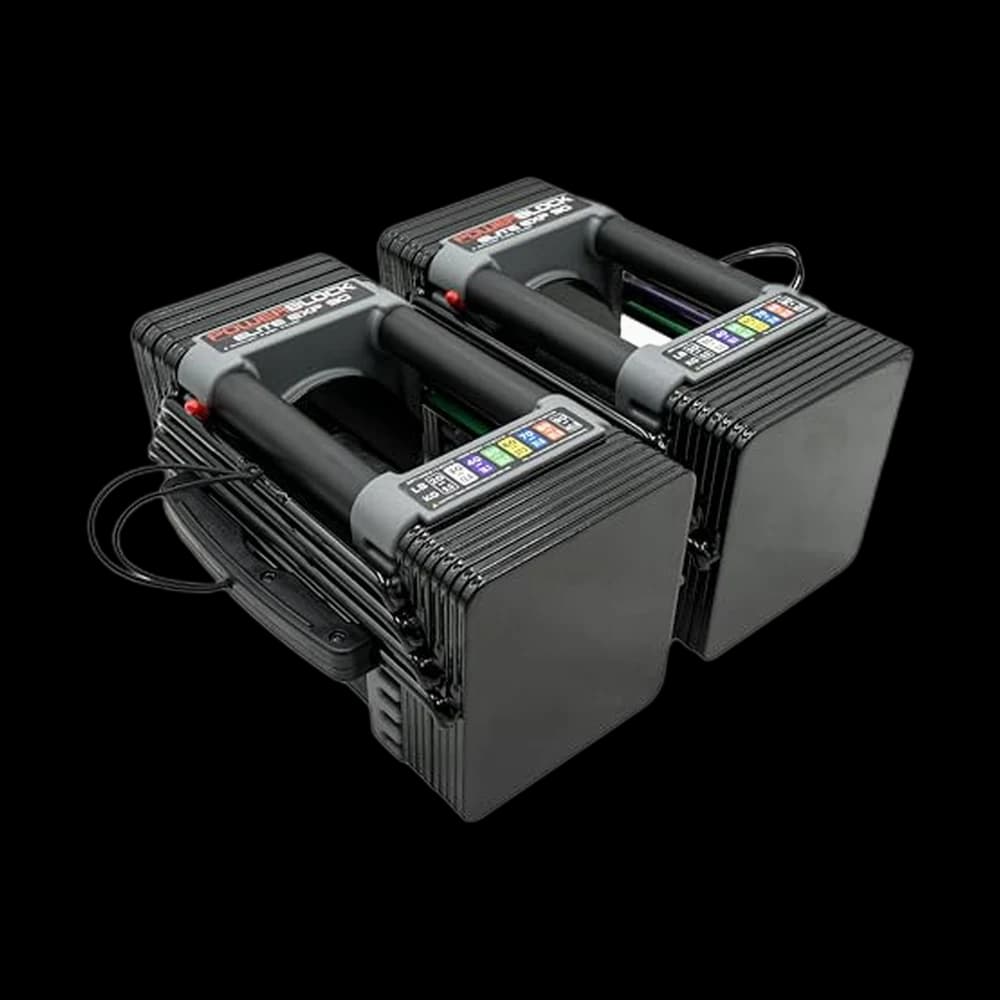
Our pick
PowerBlock Elite EXP Adjustable Dumbbells, Sold in Pairs, Stage 1,…- The smallest footprint of any pair, and it expands later instead of being replaced.
- You dislike the block shape — it sits differently in the hand than a bar.
What sarcopenia is, why fast weight loss pulls on lean mass, what a home scale can honestly tell you, and the two levers your clinician can set with you.
Key takeaways
- Sarcopenia is diagnosed from three traits — muscle strength, muscle quantity or quality, and physical performance. Mass is one of the three, and a clinician's route to it starts with grip strength, not a scale.
- Across pharmacologic weight-loss trials, reductions in fat-free mass typically account for roughly 20 to 40 percent of total weight lost — comparable to other hypocaloric interventions, not unique to these medications.
- A body-composition scale is a trend line, not a measurement of muscle loss. Read it monthly in the same conditions, or not at all.
- The research range for protein is about 1.2 to 1.6 g/kg/day, spread as roughly 25 to 35 g per eating occasion. Kidney involvement changes it. Your clinician sets yours.
- Resistance training 2 to 3 times a week is the structure the guidelines and the review both land on. Clear it with a clinician, then start smaller than feels impressive.
Pick by your situation
| If your situation is… | Pick | Why |
|---|---|---|
| You are not yet sure you will train regularly | Bodyweight movements, nothing bought | NIA lists squats, pushups, planks and lunges as muscle-strengthening activity, and tells beginners to start without weights. |
| You want the cheapest real equipment, or you travel | A resistance band set | NIA names bands as a beginner starting point, they need no floor space, and they pack into a carry-on. |
| Small apartment, and you know you will keep going | One adjustable dumbbell that starts at 5 lb | The bottom of the range decides your first month; a single unit covers most beginner movements one arm at a time. |
| You want small, repeatable jumps in load | A pair with 2.5 lb increments | Progression becomes a number you can log rather than a feel, which is what band resistance cannot give you. |
| You want to track whether the loss is the good kind | The monthly progress tracker, not a weekly scale reading | Strength and function are closer to how sarcopenia is actually assessed than any home body-composition estimate. |
Each pick is one of the products compared below — a shortcut by situation, not a separate recommendation.
Adjustable Dumbbells: our picks
| Pick | Best for | Rating | Price | LeanScore | Buy |
|---|---|---|---|---|---|
| №1PowerBlock Elite EXP Adjustable Dumbbells, Sold in Pairs, Stage 1,… | Squarest footprint on the market and expandable later. | ★ 4.8 | $399.99 | 84 | Buy on Amazon |
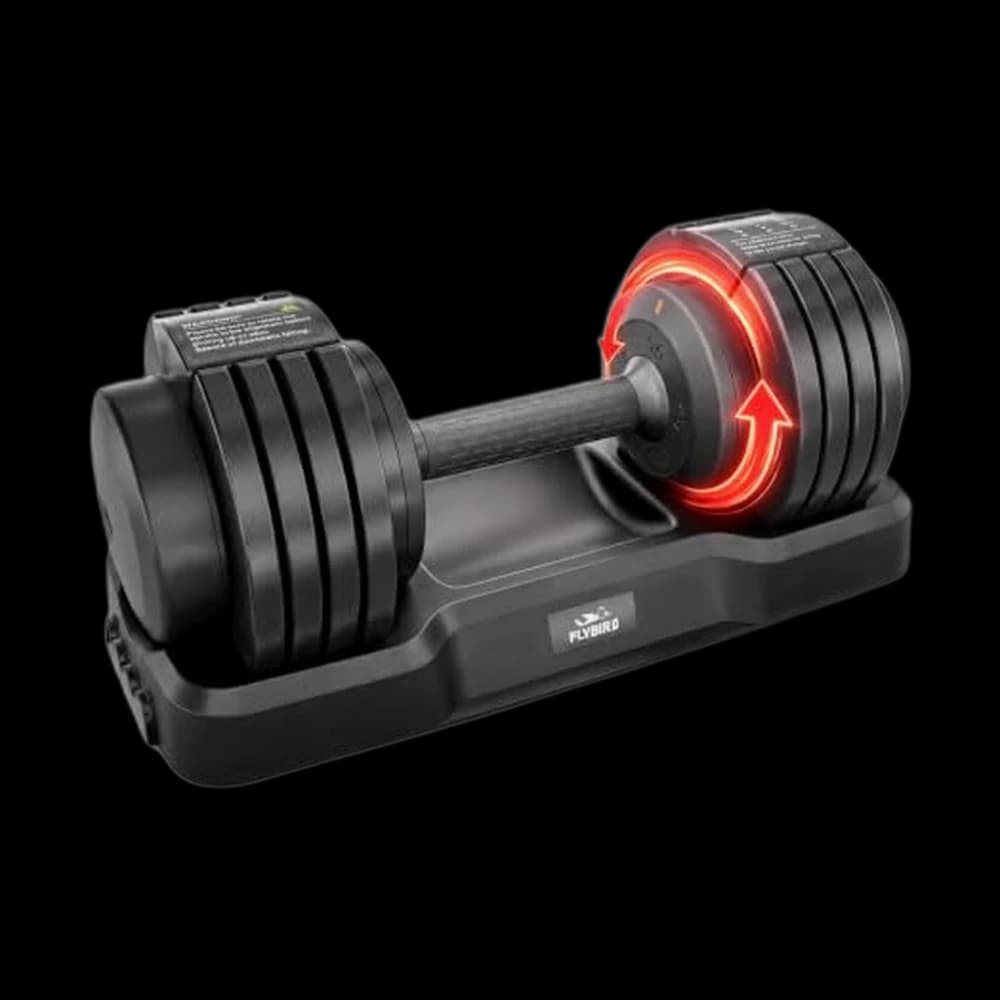 FLYBIRD DB2 Adjustable Dumbbell, 55LB Single, 5-in-1 Quick… FLYBIRD DB2 Adjustable Dumbbell, 55LB Single, 5-in-1 Quick… | One dial takes a single dumbbell from 5 to 55 lb, which is most of a beginner's first year. | ★ 4.5 | $159.99 | 75 | Buy on Amazon |
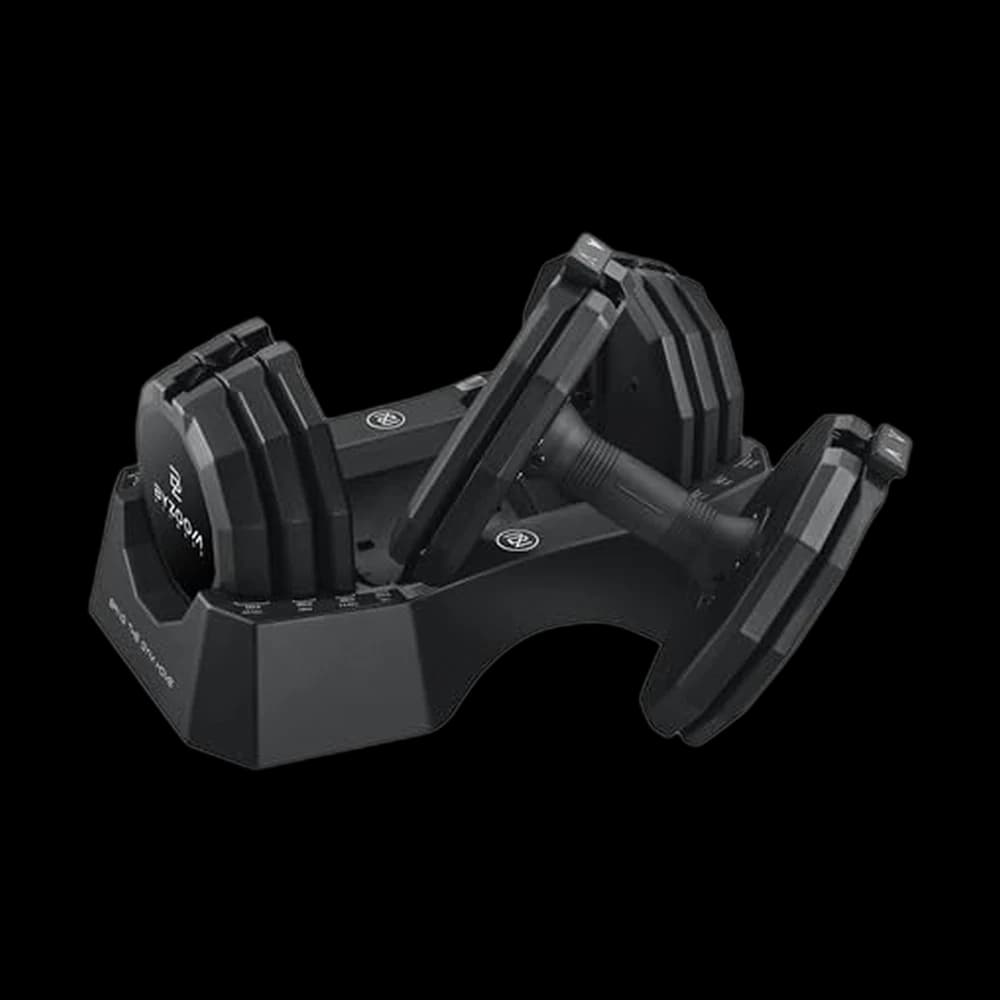 BYZOOM FITNESS Classic Series 50LB Adjustable Dumbbell Single Unit,… BYZOOM FITNESS Classic Series 50LB Adjustable Dumbbell Single Unit,… | A single 5-50 lb cast-iron dumbbell with an anti-roll base, at half the price of a pair. | ★ 4.5 | $123.49 | 71 | Buy on Amazon |
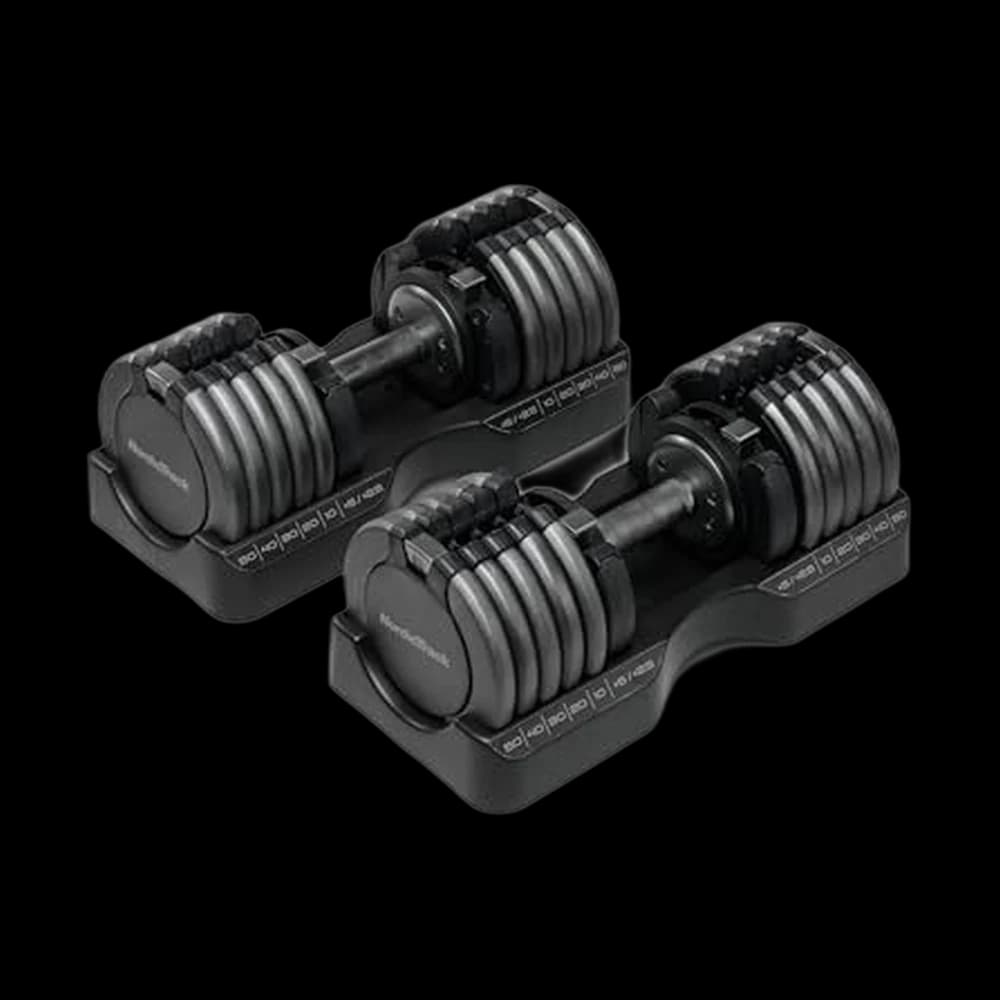 NordicTrack 55 lb Select-a-Weight Dumbbell Pair NordicTrack 55 lb Select-a-Weight Dumbbell Pair | Good top end for the money, with a real stand. | ★ 4.5 | $399.00 | 72 | Buy on Amazon |
is the word people meet in a forum thread at midnight and then cannot stop thinking about. It has a real clinical definition, and that definition is not "the number my bathroom scale calls muscle mass went down this week." Those are two different things, and confusing them is how a manageable worry turns into a frightening one.
This guide separates them: what sarcopenia actually is, why losing weight quickly pulls on the lean side of the ledger at all, what a home scale can honestly tell you, and the two levers you have.
Worth raising at your next visitFrom this guide
Before you change anything: the two levers below — how much protein you eat and how you train — are both things to set with your prescriber, a dietitian or a physical therapist rather than from a website. Kidney involvement changes the protein answer. Heart, joint, back and blood-pressure considerations change the training answer. Bring this page to the appointment; do not use it instead of one.
What sarcopenia actually is
Sarcopenia is a musculoskeletal disease defined by the progressive loss of muscle mass and strength, most commonly in older and sedentary populations and in people whose other conditions limit physical activity. The part worth holding onto is how it is diagnosed: the diagnosis takes in three traits — muscle strength, muscle quantity or quality, and physical performance. Mass is one of the three.
That is why a clinician's route to it looks nothing like stepping on a scale. The European working group's algorithm runs find, assess, confirm, severity. Finding starts with a short questionnaire about strength, walking, rising from a chair, climbing stairs and falls. Assessment usually starts with a handgrip test, because grip strength correlates with strength elsewhere in the body. Muscle quantity, measured by scan, comes after the strength question, not before it.
Rapid weight loss is not the same condition as age-related sarcopenia, and nothing on this page should be read as saying you have it. The reason the two conversations meet is that the risk factors overlap: inadequate protein intake and inactivity appear in both.
Why fast weight loss pulls on the lean side
Some lean-mass loss happens in every weight-loss method, and it is not unique to these medications. A 2026 narrative review in Nutrients on nutrition-first support during and dual therapy puts a number on it: across pharmacologic weight-loss trials, reductions in fat-free mass typically account for roughly 20 to 40 percent of total weight lost, a proportion comparable to other hypocaloric interventions. Incretin-specific body-composition data suggest the loss is driven predominantly by fat mass, with declining as part of the total.
What makes this medication class its own conversation is intake. Appetite suppression compresses eating windows and shrinks portions, which the review describes as increasing the likelihood of falling below the intake needed for lean-mass preservation. Its blunt sentence is worth reading twice: rapid or profound caloric reduction without structured protein intake and resistance training may predispose someone to disproportionate loss of fat-free mass, particularly in older adults or people starting with low muscle reserves.
The review also notes that obesity guidance commonly manages the rate of loss — favouring a moderate energy deficit over an aggressive one — precisely to reduce that risk. Pace is a prescriber conversation, and it is a legitimate one to open.
Trend, not diagnosis: what a home scale is for
A body-composition scale estimates. It sends a small current through the body and infers composition from the result, and that inference moves with hydration, food, time of day and where you last drank water. It is a trend line, not a measurement of muscle loss, and no scale on this site is described any other way.
Set against the three-trait diagnosis above, a scale covers a fraction of one trait, at a precision that does not survive being read weekly. Read monthly, in the same conditions, the direction of travel is genuinely informative. Read on a Tuesday against a Thursday, it is noise you will lose sleep over.
The more useful home signal is the one a clinic would actually ask about — strength and function. That is what the progress tracker is for: a lift, a measurement and a capability test, logged once a month. If strength holds while inches drop, the shape of your loss is the shape you wanted.
Lever one: protein, spread across the day
The review's practical framework puts total protein for adults in active weight reduction at approximately 1.2 to 1.6 g per kg of body weight per day, adjusted for age, renal function and comorbidities — and it is explicit that in chronic kidney disease or any condition requiring protein restriction, higher targets should not be applied without individual clinical and dietetic assessment. There is no universal number and we do not publish one. Your clinician sets yours.
Distribution matters as much as the total. Muscle protein synthesis is optimised when protein is spread across meals rather than taken as one large bolus, and intakes of roughly 25 to 35 g of high-quality protein per eating occasion are generally sufficient to maximally stimulate it in most adults, particularly from -rich sources. The review flags its own limits here: these figures are extrapolated from caloric-restriction, ageing and exercise-nutrition literature rather than validated as incretin-specific thresholds.
Protein and training work on each other. A meta-analysis of 49 randomised trials of prolonged found protein supplementation added to the training effect — a mean difference of 0.30 kg in fat-free mass and 2.49 kg in one-repetition-maximum strength over training alone — with diminishing extra benefit above about 1.6 g/kg/day. More is not better past a point.
The practical shape of this on a small appetite is covered in protein-first eating on a GLP-1, and the protein powders shelf exists for the eating occasions where solid food is not happening.
Lever two: resistance training, two to three times a week
The federal Physical Activity Guidelines for Americans set the floor in one sentence: adults should do muscle-strengthening activities of moderate or greater intensity involving all major muscle groups on 2 or more days a week. The Nutrients review's own framework lists resistance training 2 to 3 times a week to support strength, physical function and the attenuation of excessive fat-free-mass loss — again labelled as extrapolated from the broader literature rather than incretin-specific.
The National Institute on Aging describes what a beginner session looks like: at least two days a week across the major muscle groups, never the same group two days running, effort heavy enough that another repetition would be difficult, and one set of eight to twelve repetitions — with two or three sets possibly better. Beginners are told to try the exercises without weights or resistance bands until the movements feel comfortable. NIA also says plainly that this kind of exercise is key to maintaining existing strength and slowing the loss of muscle mass.
Two sessions. Four movements. Twenty minutes. Clear it with your clinician, then start smaller than you think you should. The full beginner version is in beginner strength training on a GLP-1.
Choosing the equipment for it
| Set | Range per hand | Increment | Sold as |
|---|---|---|---|
| PowerBlock Elite EXP | 5–50 lb | 2.5 lb adder, then 5 lb steps | Pair |
| FLYBIRD DB2 | 15–55 lb, 5 settings | 10 lb steps | Single |
| BYZOOM Classic | Up to 50 lb | Plate-based steps | Single |
| NordicTrack Select-a-Weight | Up to 55 lb | 2.5, 5 and 10 lb | Pair |
Specifications are the manufacturer's own; we research and compare from specifications, labels and owner reviews rather than lifting anything ourselves. The number that decides a first purchase is the bottom of the range, not the top — a set starting at 15 lb removes most beginner shoulder work in the exact week you need the easy version. If you are not yet sure you will train at all, resistance bands cost a fraction and NIA names them as a legitimate beginner starting point.
What we are not saying
No dumbbell, powder or scale can promise you keep your lean mass, and nothing on this site treats or reverses a diagnosis. What the sources support is narrower and more useful: enough protein, spread out, plus resistance work two or three times a week, is the part of the response you hold — and the part every one of these documents keeps pointing back at.
Your next step
If your clinician has set a protein target, compare options by the serving size you can finish.
Frequently asked
The questions that keep coming up
Does a GLP-1 cause sarcopenia?
Sarcopenia is a clinical diagnosis made from muscle strength, muscle quantity or quality, and physical performance together — it is not the same thing as the lean-mass loss that accompanies weight loss. What the evidence supports is narrower: fat-free mass typically accounts for roughly 20 to 40 percent of total weight lost across pharmacologic weight-loss trials, a proportion comparable to other hypocaloric interventions. Whether that matters for you is a question about your starting muscle, your age and your intake, and it is one to ask your clinician.
Can my smart scale tell me if I am losing muscle?
No, and no scale on this site is described that way. Home body-composition scales estimate from a small electrical current, and the estimate moves with hydration, food and time of day. It is a trend line. Read monthly under the same conditions the direction of travel is informative; read week to week it is noise. Strength and function are the more useful home signals, which is what the progress tracker at /tools#progress is built around.
How much protein should I be eating?
There is no universal number and we do not publish one. For context, the 2026 Nutrients review of nutrition support during incretin therapy cites roughly 1.2 to 1.6 g per kg of body weight per day for adults in active weight reduction, adjusted for age, renal function and comorbidities, and it states that anyone with chronic kidney disease or a protein restriction should not apply a higher target without individual clinical and dietetic assessment. Ask your clinician for your number.
Why 25 to 35 grams per meal rather than one big serving?
Muscle protein synthesis is optimised when protein is distributed across eating occasions rather than taken as a single large bolus, and roughly 25 to 35 g of high-quality protein per occasion is generally enough to maximally stimulate it in most adults. The review that cites those figures is explicit that they come from caloric-restriction, ageing and exercise-nutrition literature rather than from trials in people on these medications.
Is walking enough, or do I need to lift?
They count separately. The Physical Activity Guidelines for Americans set an aerobic target and, in addition, muscle-strengthening activity involving all major muscle groups on 2 or more days a week. Walking does not substitute for the strengthening half. The National Institute on Aging suggests beginners try the strengthening movements without weights or resistance bands until they feel comfortable.
Do I need to buy dumbbells to start?
No. The National Institute on Aging suggests beginners try the movements without weights or resistance bands until they feel comfortable, and bodyweight exercises like squats, pushups and planks appear in its own list of muscle-strengthening activities. Equipment is what you buy when progression stops being guesswork, not what you buy to begin.
Sources & further reading
We research from primary and authoritative sources. Where our guidance rests on a fact, here's where it comes from.
- Sarcopenia — StatPearls, NCBI Bookshelf (National Library of Medicine) — Definition and diagnosis: a musculoskeletal disease of progressive loss of muscle mass and strength, diagnosed across muscle strength, muscle quantity or quality and physical performance. Source of the EWGSOP2 find-assess-confirm-severity algorithm, the SARC-F screening questionnaire and handgrip strength as the first strength measure. Also states that resistance training attenuates muscle loss and improves strength in sarcopenia.
- Zambrano-Villacres et al., Nutrition-First Support for GLP-1 and Dual Incretin Therapy in Obesity, Nutrients (2026), PMC13258902 — Open-access narrative review. Source of: fat-free mass typically accounting for approximately 20 to 40 percent of total weight lost across pharmacologic weight-loss trials; protein of approximately 1.2 to 1.6 g/kg/day adjusted for renal function; roughly 25 to 35 g of high-quality protein per eating occasion; resistance training 2 to 3 times a week; the 49-trial meta-analysis on protein plus resistance training (0.30 kg fat-free mass, 2.49 kg one-repetition maximum); and the review's own statement that these targets are extrapolated rather than incretin-specific.
- Physical Activity Guidelines for Americans, 2nd edition (ODPHP) — Page 8, Key Guidelines for Adults: adults should also do muscle-strengthening activities of moderate or greater intensity and that involve all major muscle groups on 2 or more days a week.
- National Institute on Aging — Three Types of Exercise Can Improve Your Health and Physical Ability — Muscle-strengthening section: at least two days a week across the major muscle groups, avoiding the same group on two days in a row; moderate or greater effort to the point another repetition would be difficult; one set of eight to 12 repetitions is effective, two or three sets may be more so; beginners should try exercises without weights or resistance bands until comfortable with the movements. Also the statement that this exercise is key to maintaining existing strength and slowing the loss of muscle mass.
LeanFed is not medical advice and is not a substitute for your prescriber, pharmacist or dietitian. We do not test products hands-on — we compare labels, specifications and owner reviews. Prices and LeanScores reflect our most recent research and refresh on a cycle; confirm the current price and read the product's own label before buying. We may earn a commission from affiliate retailers — it never changes our recommendations. See how we score.