Kitchen ScalesGuide5 min
Should You Weigh Food Raw or Cooked? The Protein Math
TL;DR
LeanFed may earn a commission from links on this page; it never changes a ranking. Full disclosure.
The short answer
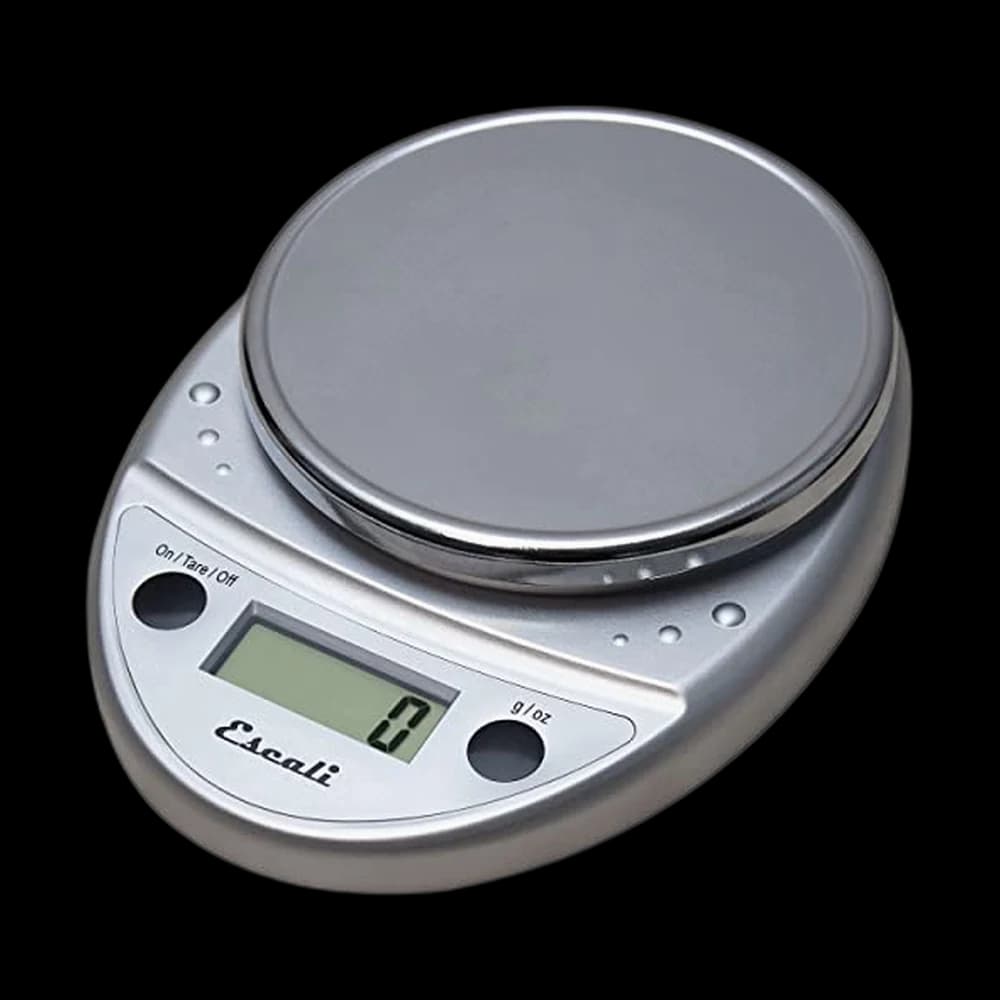
Our pick
Escali Primo Digital Food Scale Multi-Functional Kitchen Scale and…- Two buttons, a sealed panel, and a reputation for lasting years.
- You want unit options beyond the basics.
Weigh raw and log raw, or weigh cooked and log cooked. USDA records show how far protein per 100 g moves, and what food labels are allowed to assume.
Key takeaways
- Match the state, not the habit. Raw weight belongs with a raw entry and cooked weight with a cooked entry. Mixing them is the real error.
- Meat and starch move in opposite directions. In USDA records, chicken breast rises 38% per 100 g when roasted, while oats fall 81% when cooked in water.
- Labels are not always raw. Federal rules let whole raw meat and poultry cuts be declared as consumed, so read the words beside the serving size.
- Starch mistakes flatter you. Logging 150 g of cooked oats as dry records about 16 g of protein that is not there.
Pick by your situation
| If your situation is… | Pick | Why |
|---|---|---|
| You cook single portions at home | Weigh raw, log the raw entry | Cooked weight changes with heat and time, while the raw weight does not. |
| You batch-cook for the week | Weigh the batch raw and cooked, then divide | It gives you protein per cooked gram for that batch, so each serving can be weighed from the fridge. |
| The food is already cooked | Weigh cooked, log a cooked entry | Using a raw or dry entry here is the mismatch this guide is about. |
| You are eating out | Pick a cooked entry and accept a rough figure | You cannot get a raw weight, and a scale at the table is rarely worth it. |
Each pick is one of the products compared below — a shortcut by situation, not a separate recommendation.
Kitchen Scales: our picks
| Pick | Best for | Rating | Price | LeanScore | Buy |
|---|---|---|---|---|---|
| №1Escali Primo Digital Food Scale Multi-Functional Kitchen Scale and… | A kitchen-standard scale with a long warranty. | ★ 4.6 | $25.00 | 84 | Buy on Amazon |
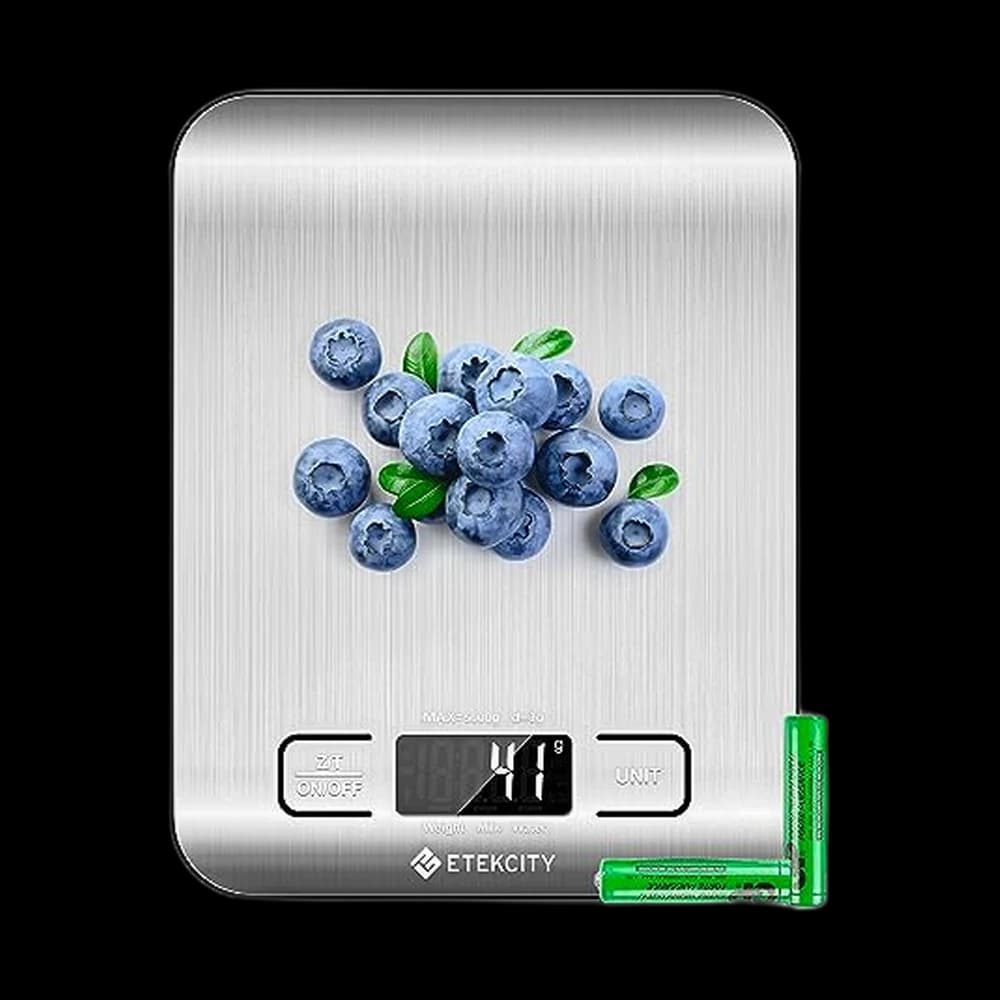 Etekcity Food Kitchen Scale, Digital Grams and Ounces, 11lb | The cheap one that is accurate enough for portions. | ★ 4.6 | $13.99 | 83 | Buy on Amazon |
 Greater Goods Food Scale with Nutrition Calculator, 2,000 Codes… | Reads out macros per food code, not just weight. | ★ 4.6 | $34.99 | 81 | Buy on Amazon |
Weigh food raw when you can, and log it against a raw entry. If you can only weigh it cooked, log it against a cooked entry. Neither state is more correct; the error comes from mixing them. USDA records put roasted chicken breast 38% above raw per 100 g, and cooked oats 81% below dry.
One food, two very different numbers
Each figure comes from the linked USDA FoodData Central record. Those pages block automated fetchers, so we read the same records through FoodData Central's own data feed on November 1, 2026 and calculated the change ourselves.
| Food | Protein per 100 g, uncooked | Protein per 100 g, cooked | Change |
|---|---|---|---|
| Chicken breast, meat only | 22.5 g raw | 31.0 g roasted | +38% |
| Lean ground beef, 93/7 | 20.8 g raw | 28.9 g pan-browned | +39% |
| Atlantic salmon, farmed | 20.4 g raw | 22.1 g dry heat | +8% |
| White rice, long grain | 7.13 g dry | 2.69 g cooked | −62% |
| Lentils | 24.6 g dry | 9.02 g boiled | −63% |
| Oats | 13.2 g dry | 2.54 g cooked in water | −81% |
Reading the table: meat usually concentrates as it loses water. Grains and legumes dilute as they absorb it. The chicken records drop from 73.9% to 65.3% water; the oats climb from 10.8% to 83.6%.
These are separate reference records, not one fillet measured before and after. That is why salmon looks so flat: its two records list nearly identical water, 64.9% and 64.8%. Your own pan will differ, so use the direction and rough size, not the decimal.
What the package is allowed to assume
"Labels are always raw" is too simple, and federal rules show why.
- Most packaged food: FDA's labeling rule bases the panel on the food as packaged or purchased. Dry oats and rice are therefore labeled dry unless a second, as-prepared column is added.
- Whole raw poultry cuts: USDA's poultry rule lets single-ingredient raw products be declared "as consumed", which means cooked numbers can appear on a raw pack.
- Whole raw meat cuts: USDA's meat rule allows the same thing.
- Ground meat and poultry: those same rules exclude ground or chopped products from that exception, so they are declared as packaged.
- Raw fish: FDA sends it to a separate provision, so read the wording rather than assuming.
So read the words beside the serving size. "Cooked", "as prepared" or "dry" tells you which weight the protein number belongs to. Our label guide covers the serving math that comes next.
The mistake, measured at small-portion size
Here is what a state mismatch does to the protein you record, using only the table above.
| What you did | You logged | The matching record says | Error |
|---|---|---|---|
| Weighed 60 g cooked chicken, logged raw | 13.5 g | 18.6 g | 5.1 g too low |
| Weighed 60 g raw chicken, logged cooked | 18.6 g | 13.5 g | 5.1 g too high |
| Weighed 100 g cooked rice, logged dry | 7.1 g | 2.7 g | 4.4 g too high |
| Weighed 100 g cooked lentils, logged dry | 24.6 g | 9.0 g | 15.6 g too high |
| Weighed 150 g cooked oats, logged dry | 19.8 g | 3.8 g | 16.0 g too high |
Starches are where the log flatters you. When you are eating very little, a phantom 16 g can make a thin day look complete, and that is the number you might carry into an appointment. The meat error runs both ways and is smaller, but it can still change which meal you think did the work.
The useful habit: check the entry's name before you check its number. Search results often offer raw and cooked versions of the same food side by side.
Batch cooking: weigh the whole pot twice
Weighing every raw portion stops working when you cook for the week. This method keeps the raw number and still lets you serve by cooked weight.
- Weigh all the raw meat, and calculate total protein from its label or raw record.
- Cook it, then weigh the whole cooked batch without the pan.
- Divide total protein by cooked weight to get protein per cooked gram.
- Weigh each serving cooked and multiply.
An illustration, with a made-up cooked weight: 500 g raw chicken breast at 22.5 g per 100 g is 112.5 g of protein. If it cooks down to 370 g, that is about 0.30 g per cooked gram, so a 60 g serving holds about 18 g. This assumes the protein stays in the meat and ignores whatever runs into the pan, so treat it as an estimate. The recipe scaler helps when the batch has several ingredients.
Which scale, and when to skip it
You need tare and single-gram readings, nothing elaborate. The Escali Primo and Etekcity kitchen scale are both in our kitchen scale comparison, which explains why those features matter more than the rest.
Skip the scale when it costs more than it gives:
- Restaurant food can't be weighed raw. It is cooked by definition, so choose a cooked entry and accept a rough figure, or use our menu questions.
- Foods you have calibrated can go back to the drawer once you know the portion by eye.
- If weighing is raising your anxiety around food, stop and raise that with your care team. Accuracy is not worth that trade.
None of this sets a protein target. That number depends on your history and labs, and with kidney disease especially, it belongs to your clinician or a registered dietitian.
Your next step
Where most people go from here
Frequently asked
The questions that keep coming up
Is it better to weigh meat raw or cooked?
Raw is usually more repeatable, because cooked weight depends on how long and how hot you cook it. Weighing cooked is fine if you log a cooked entry. Check whether the package itself states cooked numbers.
Do you weigh rice and oats dry or cooked?
Dry is more consistent, since water absorption varies from pot to pot. Use the dry entry for a dry weight. If you only have the cooked food, weigh that and use a cooked entry.
Does cooking destroy the protein in chicken?
The rise in protein per 100 g mainly reflects lost water, as the USDA records show water falling from 73.9% to 65.3%. Some juices do leave the meat, so these comparisons are estimates, not a measure of your pan.
How much protein should I aim for at each meal?
This guide does not set a target. Your clinician or a registered dietitian can set one around your history and labs, particularly if you have kidney disease.
Sources & further reading
We research from primary and authoritative sources. Where our guidance rests on a fact, here's where it comes from.
- USDA FoodData Central — Chicken breast, meat only, raw (record 171077) — Read through FoodData Central's data feed on 2026-11-01.
- USDA FoodData Central — Chicken breast, meat only, roasted (record 171477) — Read through FoodData Central's data feed on 2026-11-01.
- USDA FoodData Central — Beef, ground, 93% lean, raw (record 173110) — Read through FoodData Central's data feed on 2026-11-01.
- USDA FoodData Central — Beef, ground, 93% lean, crumbles, pan-browned (record 174755) — Read through FoodData Central's data feed on 2026-11-01.
- USDA FoodData Central — Salmon, Atlantic, farmed, raw (record 175167) — Read through FoodData Central's data feed on 2026-11-01.
- USDA FoodData Central — Salmon, Atlantic, farmed, dry heat (record 175168) — Read through FoodData Central's data feed on 2026-11-01.
- USDA FoodData Central — Rice, white, long-grain, raw (record 169756) — Read through FoodData Central's data feed on 2026-11-01.
- USDA FoodData Central — Rice, white, long-grain, cooked (record 169757) — Read through FoodData Central's data feed on 2026-11-01.
- USDA FoodData Central — Lentils, raw (record 172420) — Read through FoodData Central's data feed on 2026-11-01.
- USDA FoodData Central — Lentils, cooked, boiled (record 172421) — Read through FoodData Central's data feed on 2026-11-01.
- USDA FoodData Central — Oats, regular and quick, dry (record 173904) — Read through FoodData Central's data feed on 2026-11-01.
- USDA FoodData Central — Oats, regular and quick, cooked with water (record 173905) — Read through FoodData Central's data feed on 2026-11-01.
- 21 CFR 101.9 — Nutrition labeling of food — Paragraph (b)(9) sets the as-packaged basis and points raw fish to 101.45; paragraph (e) allows as-prepared columns.
- 9 CFR 381.409 — Nutrition label content (poultry products) — Whole single-ingredient raw products may be declared as consumed; ground or chopped products may not.
- 9 CFR 317.309 — Nutrition label content (meat products) — Whole single-ingredient raw products may be declared as consumed; ground or chopped products may not.
LeanFed is not medical advice and is not a substitute for your prescriber, pharmacist or dietitian. We do not test products hands-on — we compare labels, specifications and owner reviews. Prices and LeanScores reflect our most recent research and refresh on a cycle; confirm the current price and read the product's own label before buying. We may earn a commission from affiliate retailers — it never changes our recommendations. See how we score.