Tools
Recipe converter: scale a recipe up or down
By LeanFed Editors · Updated October 2026
To scale a recipe, divide the servings you want by the servings it makes and multiply every amount by that number: 4 servings to 2 is ×½, so 1½ cups becomes ¾ cup. Paste a recipe below and the converter does it line by line, in fractions you can measure (16 tablespoons to a cup, 3 teaspoons to a tablespoon), with grams from King Arthur Baking’s weight chart.
This is kitchen arithmetic for a recipe you already have. It changes amounts, not what is in the dish, and nothing on this page is diet or nutrition advice.
One ingredient per line, as the recipe writes it. Lines with no amount stay as written.
2 · Servings
Multiplier: × 0.5
Your scaled recipe
4 → 2 servings · 7 lines scaled
- Pancakes (example, paste your own)
- Serves 2
¾ cup all-purpose flour
175 mL · 90 g by King Arthur's chart
Was: 1½ cups all-purpose flour
1¾ tsp baking powder
8.5 mL · 7 g by King Arthur's chart
Was: 3½ tsp baking powder
1½ tsp granulated sugar
7.5 mL · 6 g by King Arthur's chart
Was: 1 tbsp granulated sugar
⅛ tsp table salt
0.5 mL · 1 g by King Arthur's chart
Was: ¼ tsp table salt
½ cup + 2 tbsp milk
150 mL
Was: 1¼ cups milk
½ large egg
Beat 1 egg and use about 25 g of it (King Arthur's chart lists a large egg at 50 g, so weigh it if you can).
Was: 1 large egg
1½ tbsp butter, melted
22 mL · 21 g by King Arthur's chart
Was: 3 tbsp butter, melted
Runs in your browser. Nothing you type here is sent anywhere, and copying, printing or saving happens on your own device.
Sends each scaled ingredient and amount to the grocery list maker on this device, sorted into a best-guess aisle you can change.
Cups, tablespoons, teaspoons and mL
US measuring cups and spoons, with the exact metric volume from NIST’s conversion factors (1 cup = 236.5882 mL) and the rounded kitchen figure from NIST’s Metric Kitchen table, which NIST marks as approximate. A dash means that table has no row for the measure.
| Measure | Teaspoons | Tablespoons | Cups | Exact mL | Kitchen mL (NIST) |
|---|---|---|---|---|---|
| ⅛ tsp | 0.13 | 0 | 0 | 0.62 mL | — |
| ¼ tsp | 0.25 | ⅛ | 0 | 1.23 mL | 1.25 mL |
| ½ tsp | 0.5 | 1/6 | 1/96 | 2.46 mL | 2.5 mL |
| 1 tsp | 1 | ⅓ | 1/48 | 4.93 mL | 5 mL |
| 1 tbsp | 3 | 1 | 1/16 | 14.8 mL | 15 mL |
| 2 tbsp (1 fl oz) | 6 | 2 | ⅛ | 29.6 mL | 30 mL |
| ¼ cup | 12 | 4 | ¼ | 59.1 mL | 60 mL |
| ⅓ cup | 16 | 5.33 | ⅓ | 78.9 mL | 80 mL |
| ½ cup | 24 | 8 | ½ | 118.3 mL | 120 mL |
| ⅔ cup | 32 | 10.67 | ⅔ | 157.7 mL | — |
| ¾ cup | 36 | 12 | ¾ | 177.4 mL | 180 mL |
| 1 cup | 48 | 16 | 1 | 236.6 mL | 240 mL |
| 2 cups (1 pint) | 96 | 32 | 2 | 473.2 mL | 480 mL |
| 4 cups (1 quart) | 192 | 64 | 4 | 946.4 mL | 950 mL |
| 16 cups (1 gallon) | 768 | 256 | 16 | 3.79 L | 3.84 L |
Ounces and pounds to grams
| Weight | Exact grams | Kitchen figure (NIST) |
|---|---|---|
| 1 oz | 28.3 g | 28 g |
| ¼ lb (4 oz) | 113.4 g | 114 g |
| 1 lb (16 oz) | 453.6 g | 454 g |
| 2.2 lb | 997.9 g | 1 kg |
Ounces here are weight. A US fluid ounce is a volume (29.57353 mL), and only weighs about an ounce for water-like liquids. Exact figures: 1 oz = 28.34952 g, 1 lb = 453.5924 g.
Common ingredient weights: cups to grams
A cup of flour and a cup of sugar do not weigh the same, so cups to grams needs a per-ingredient figure. These are King Arthur Baking’s ingredient weight chart, copied as King Arthur prints them. The “per cup” column is our arithmetic from that row, and it is what the converter uses. King Arthur notes its gram figures are rounded and recommends using the weight a recipe itself gives where it gives one.
| Ingredient (King Arthur) | Volume | Grams | Per cup (calculated) |
|---|---|---|---|
| Bread flour | 1 cup | 120 g | 120 g |
| Whole wheat pastry flour / graham flour | 1 cup | 96 g | 96 g |
| Whole wheat flourKing Arthur's row is its own Premium 100% whole wheat flour | 1 cup | 113 g | 113 g |
| All-purpose flour | 1 cup | 120 g | 120 g |
| Confectioners' sugar (unsifted) | 1 cup | 113 g | 113 g |
| Brown sugar (dark or light, packed) | 1 cup | 213 g | 213 g |
| Sugar (granulated white) | 1 cup | 198 g | 198 g |
| Peanut butter | 1/2 cup | 135 g | 270 g |
| Butter | 8 tablespoons (1/2 cup) | 113 g | 226 g |
| Honey | 1 tablespoon | 21 g | 336 g |
| Maple syrup | 1/2 cup | 156 g | 312 g |
| Oats (rolled)King Arthur's row is its own rolled oats | 1 cup | 113 g | 113 g |
| Rice (long grain, dry) | 1/2 cup | 99 g | 198 g |
| Cocoa (unsweetened) | 1/2 cup | 42 g | 84 g |
| Chocolate chips | 1 cup | 170 g | 170 g |
| Cornstarch | 1/4 cup | 28 g | 112 g |
| Baking powder | 1 teaspoon | 4 g | 192 g |
| Baking soda | 1/2 teaspoon | 3 g | 288 g |
| Salt (Kosher, Diamond Crystal) | 1 tablespoon | 8 g | 128 g |
| Salt (Kosher, Morton's) | 1 tablespoon | 16 g | 256 g |
| Salt (table) | 1 tablespoon | 18 g | 288 g |
| Sour cream | 1 cup | 227 g | 227 g |
| Yogurt | 1 cup | 227 g | 227 g |
| Egg (fresh) | 1 large | 50 g | — |
| Egg yolk (fresh) | 1 large | 14 g | — |
| Egg white (fresh) | 1 large | 30 to 35 g | — |
Liquids (water, milk, cream, oil, broth) are converted by volume in mL, not to grams. Kosher salt is the classic trap: King Arthur’s chart lists 1 tablespoon at 8 g for Diamond Crystal and 16 g for Morton’s, so the converter only gives grams when the brand is named.
How the converter rounds
- Each line is read as an amount, a unit and the rest. It understands 1½, 1 1/2, 1.5, ranges like 2–3, and pairs like “1 cup plus 2 tablespoons” or “1 lb 4 oz”. Lines with no amount, such as “salt to taste”, are shown as written.
- Volumes are converted to teaspoons with NIST’s exact factors, multiplied, then written back as the measures in a standard set: under 1 tsp to the nearest ⅛ tsp, up to 1 tbsp to the nearest ¼ tsp, up to ¼ cup as tablespoons plus teaspoons, and above that as ¼, ⅓, ½, ⅔ or ¾ cup plus any leftover spoons to the nearest teaspoon (under 4% off). From 4 cups up it rounds to the nearest ¼ cup. So ⅓ cup + 1 tbsp + 1 tsp rather than 0.42 cup.
- Weights round to the nearest ¼ oz (with pounds from 16 oz), or to whole grams, and to 5 g above 100 g. Millilitres round the same way.
- Counted things (eggs, cloves, cans) round to the nearest ¼ or ⅓, and the line says when it rounded. A part egg gets a note in grams from King Arthur’s egg weights; a part can tells you how much of it to use.
- “Serves 4” or “Makes 12” in the pasted text sets the original servings for you, and is scaled in the result.
- It changes amounts only. Pan size, oven temperature and cooking time stay as the recipe wrote them, so check the dish rather than the clock when you have scaled a long way.
- Nothing you paste leaves your browser. “Add to grocery list” saves the ingredients to the grocery list maker on this device only, and the What LeanFed stores page lists and erases it.
For the most accurate scaled recipe, weigh. NIST’s culinary measurement tips call measuring by weight on a kitchen scale best practice for recipe accuracy, and note that using a dry cup for liquids, or the reverse, is a common way errors creep in.
Questions people ask
- How do I scale a recipe up or down?
- Divide the servings you want by the servings the recipe makes to get a multiplier, then multiply every amount by it. Taking a holiday side from 8 servings to 12 is 12 ÷ 8 = 1.5, so 2 cups becomes 3 cups. The converter above does the multiplying and turns awkward results like 0.375 cup into ⅓ cup + 2 tsp.
- How do you cut a recipe in half or in thirds?
- Multiply each amount by ½ or ⅓. Spoons are where it gets awkward: a third of ¼ cup is 4 teaspoons, which you measure as 1 tbsp + 1 tsp, and half of 3 tbsp is 1½ tbsp. Press ½ or ⅓ above and the converter writes every line that way.
- How do you halve an egg?
- Beat the egg and use half of it by weight. King Arthur Baking's ingredient weight chart lists a large egg at 50 g, so half is about 25 g; a large yolk is listed at 14 g and a large white at 30 to 35 g. A kitchen scale makes this exact.
- How many tablespoons are in a cup?
- 16 tablespoons, or 48 teaspoons. A tablespoon is 3 teaspoons, ¼ cup is 4 tablespoons and ⅓ cup is 5 tablespoons plus 1 teaspoon. By NIST's conversion factors, one US cup is 236.588 mL and one tablespoon is 14.787 mL.
- How many grams are in a cup of flour?
- King Arthur Baking's chart puts 1 cup of all-purpose flour at 120 g. There is no single cups-to-grams number, because ingredients differ in density: the same chart lists 1 cup of granulated sugar at 198 g and 1 cup of packed brown sugar at 213 g. The full list is in the weights table on this page.
- Is a cup 240 mL or 236.6 mL?
- Both appear, and NIST publishes both. Its exact conversion factor makes a US cup 236.588 mL; its Metric Kitchen equivalency table rounds a cup to 240 mL for cooking and marks the table as approximate. This converter calculates with the exact figure and rounds the result to a measure you can pour.
Sources
Last checked: October 26, 2026. Each page was opened and read for the figures it supports.
- NIST — Guide to the SI (SP 811), Appendix B.9: conversion factors by kind of quantityThe factors every conversion here uses: 1 US cup = 236.5882 mL, 1 tablespoon = 14.78676 mL, 1 teaspoon = 4.928922 mL, 1 US fluid ounce = 29.57353 mL, 1 ounce = 28.34952 g, 1 pound = 453.5924 g.
- NIST — Metric Kitchen: Cooking Measurement EquivalenciesThe rounded kitchen equivalents in the reference table (1 teaspoon ≈ 5 mL, 1 tablespoon ≈ 15 mL, 1 cup ≈ 240 mL, 1 ounce ≈ 28 g), which NIST marks as approximate.
- NIST — Metric Kitchen: Culinary Measurement TipsWeighing ingredients on a kitchen scale is the best practice for recipe accuracy, and using a dry cup for liquids (or the reverse) is a common source of measuring error.
- King Arthur Baking — Ingredient Weight ChartEvery ingredient weight on this page, including a large egg at 50 g, a large yolk at 14 g and a large white at 30 to 35 g. King Arthur recommends weighing with a digital scale and notes its gram figures are rounded.
In the kitchen: Kitchen scales · Small-meal containers · Grocery list maker · Recipes for a small appetite
Read next
LeanFed may earn a commission from links on this page; it never changes a ranking. Full disclosure.
For measuring by weight
A scale that reads in 1 g steps turns a scaled recipe, and half an egg, into numbers you can hit. Compared from specs, labels and owner reviews; we do not test them.
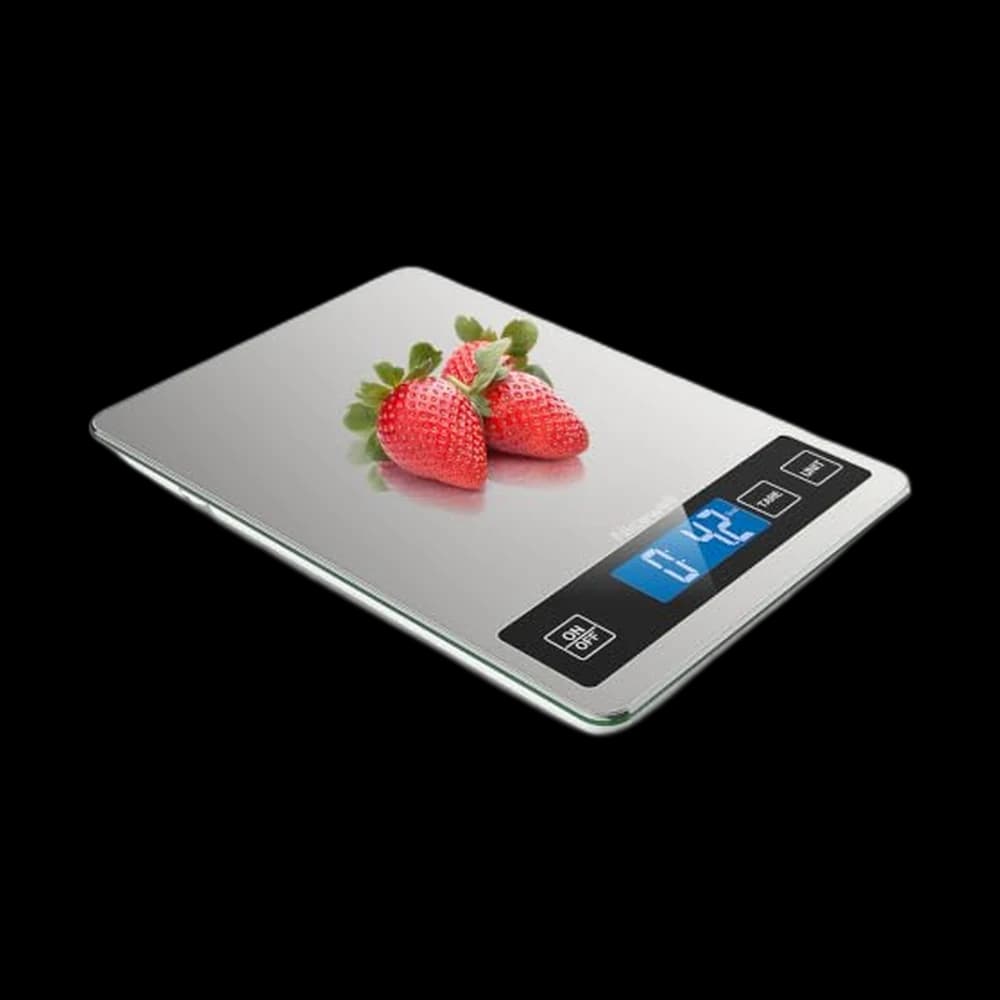
- Nicewell Digital Food Scale, 22 lb4.7$25.99
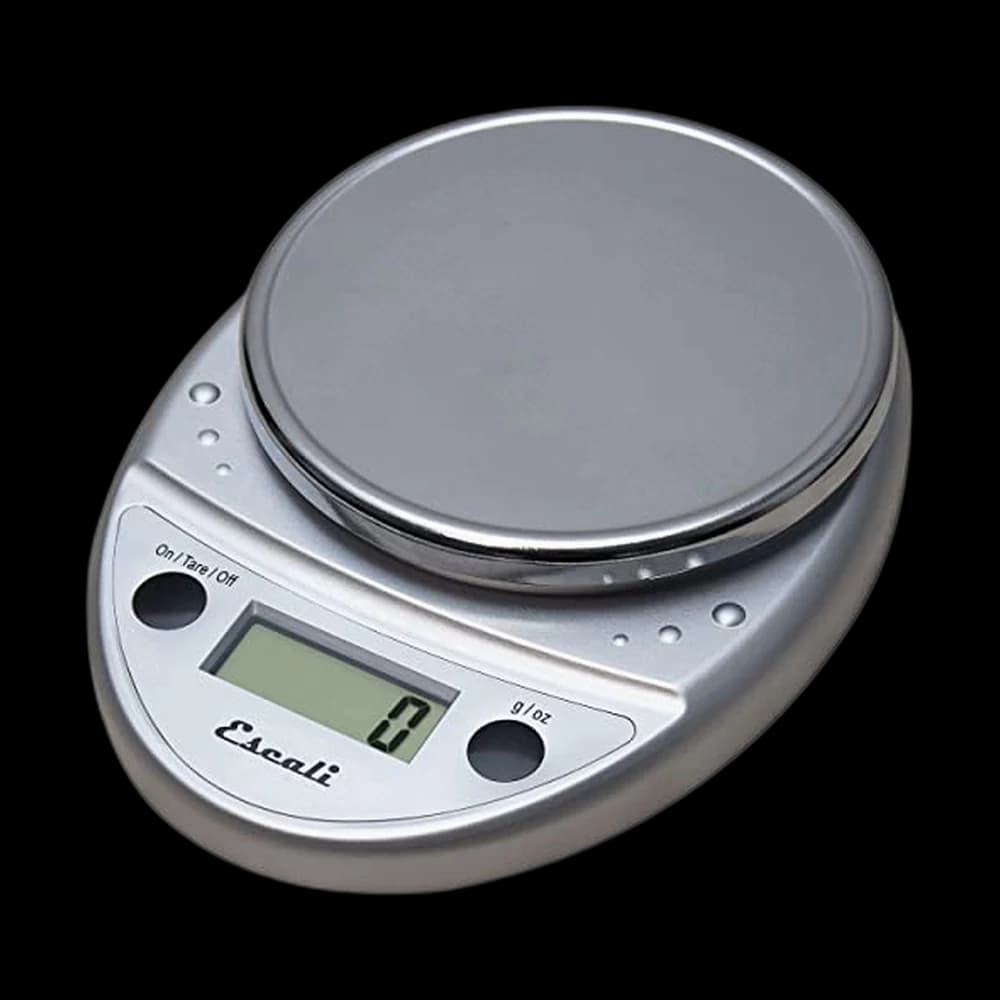
- Escali Primo Digital Food Scale4.6$25.00
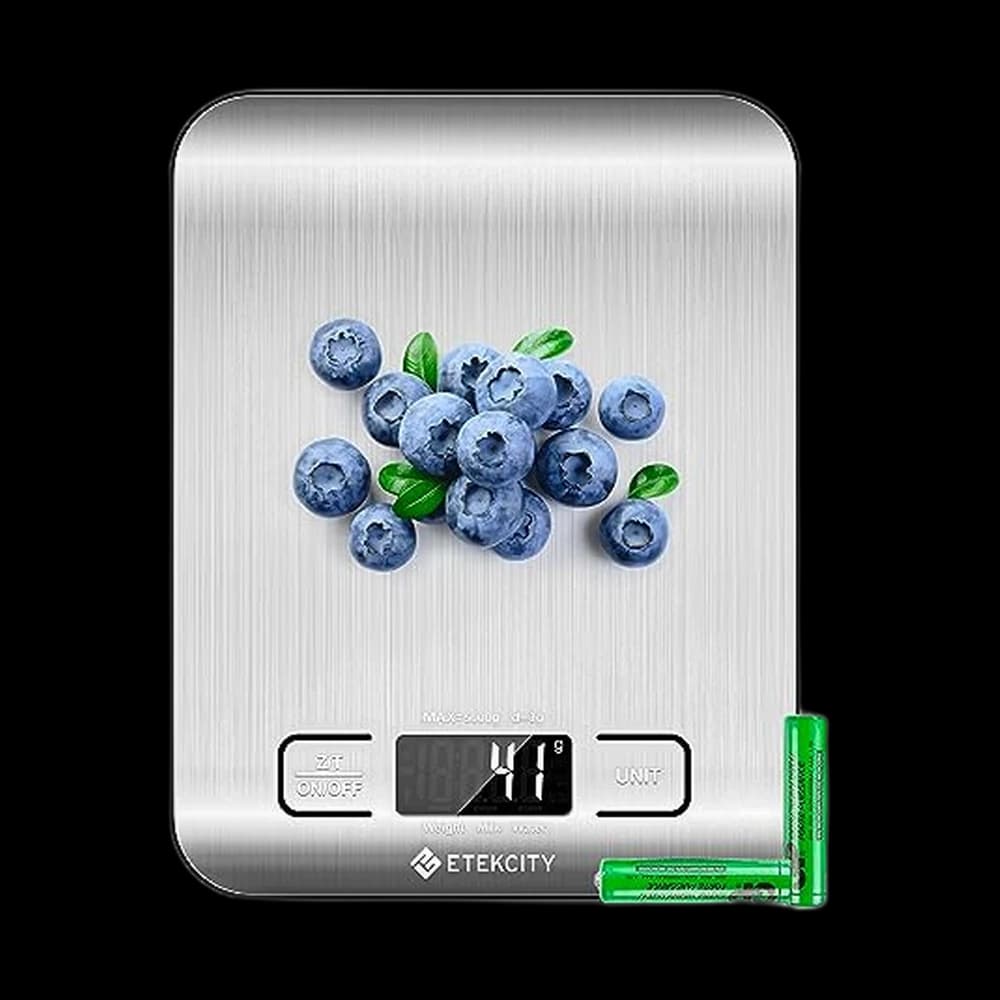
- Etekcity Digital Food Scale, 11 lb4.6$13.99