Medication Travel CasesDeep dive7 min
Wegovy vs Zepbound: The Practical Differences
TL;DR
LeanFed may earn a commission from links on this page; it never changes a ranking. Full disclosure.
Call your prescriber todayBefore any product on this page
Call your prescriber, not a search engine. Severe or persistent abdominal pain, especially pain that radiates to your back. Vomiting you cannot keep ahead of, or signs of dehydration. Symptoms that could be gallbladder or pancreas trouble. Any allergic symptom. A change in vision. These are on both labels as warnings, and none of them is a thing to manage with a product.
The short answer
Our pick
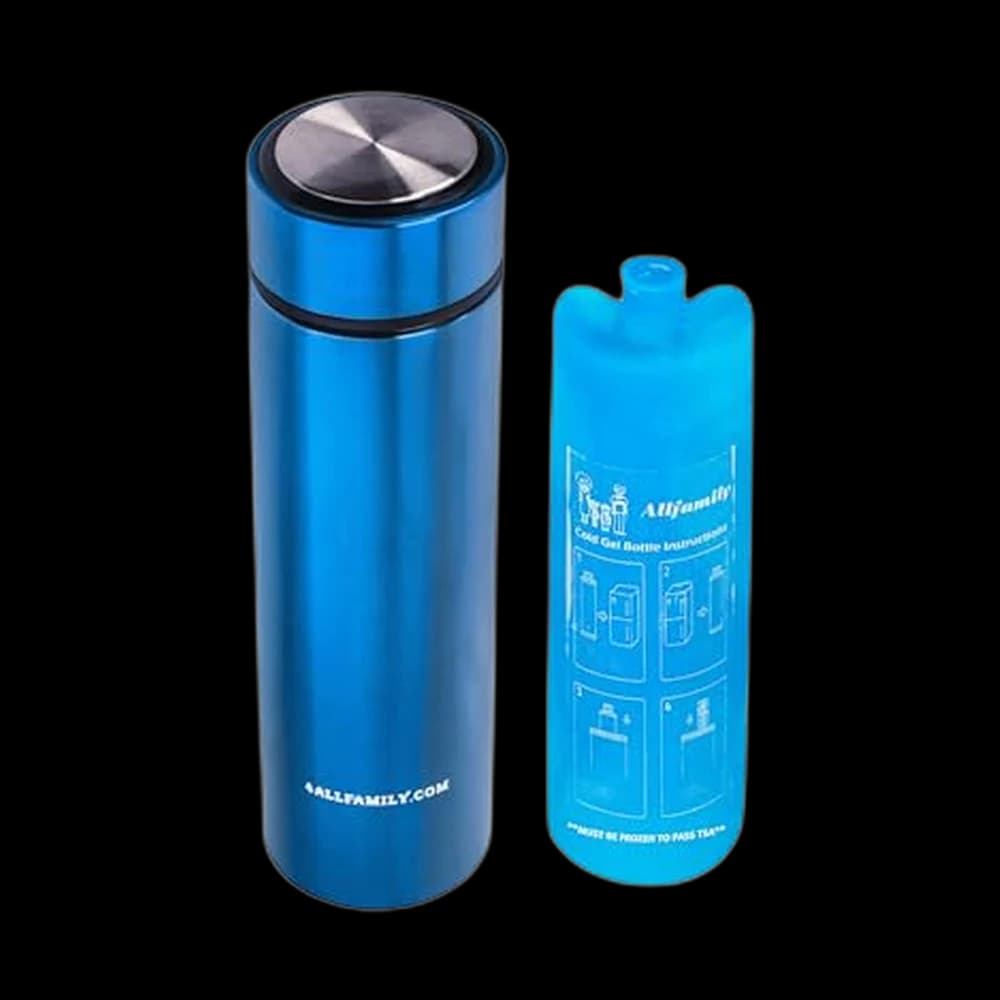
4ALLFAMILY Nomad Insulin Travel Case Cooler- Pocketable passive cooling for a weekend, with no batteries to charge.
- You are away longer than the gel pack lasts and cannot refreeze it.
Two brands, two devices, two storage rules and one head-to-head trial. What actually differs in the fridge, the suitcase and the sharps bin.
Key takeaways
- Different molecules, and the labels say so. The Wegovy label describes semaglutide as a GLP-1 receptor agonist; the Zepbound label describes tirzepatide as a GIP receptor and GLP-1 receptor agonist. Both labels say not to use either alongside another GLP-1 receptor agonist.
- The approved uses are not the same list. Wegovy carries a cardiovascular indication, an adolescent indication from age 12, and an accelerated approval in noncirrhotic MASH. Zepbound carries obstructive sleep apnea. That list is often what a coverage decision turns on.
- One head-to-head trial exists. SURMOUNT-5, published in the New England Journal of Medicine in 2025, randomized 751 adults with obesity and without type 2 diabetes; mean weight change at week 72 was −20.2% with tirzepatide and −13.7% with semaglutide. It was funded by the maker of tirzepatide.
- The out-of-fridge allowances differ — by brand and by presentation. A single-dose pen and a four-dose pen of the same brand follow different rules. Our storage guides carry the label numbers so a label revision only has to be corrected in one place.
- Switching is a logistics change as well as a clinical one. New device, possibly a vial and syringe, a different storage rule, a different sharps volume, and a different manufacturer program.
Pick by your situation
| If your situation is… | Pick | Why |
|---|---|---|
| You have documented obstructive sleep apnea | Raise it explicitly with your prescriber | Zepbound's label carries an OSA indication in adults with obesity; Wegovy's does not. Indications drive coverage decisions. |
| You have established cardiovascular disease | Raise that explicitly instead | Wegovy's label carries a cardiovascular risk-reduction indication and Zepbound's does not. |
| You travel often and hate planning around a fridge | Ask which presentation you are being prescribed, not just which brand | Out-of-fridge allowances are presentation-specific. A single-dose device and a four-dose device of the same brand follow different rules. |
| Dexterity or eyesight makes fiddly steps hard | Ask for a pen rather than a vial, and say why | A single-dose vial is drawn with a syringe. A pen hides that step; a vial does not. |
| You are switching brands next month | Re-check storage, sharps and the savings program before the box arrives | None of the three transfers. The rule you memorised for the old brand does not apply to the new one. |
| Your prescription is unavailable or unaffordable | Your prescriber's office and the manufacturer program | FDA maintains a standing page on counterfeit and unapproved versions of these drugs. A supply gap is exactly the moment that market targets. |
Each pick is one of the products compared below — a shortcut by situation, not a separate recommendation.
Medication Travel Cases: our picks
| Pick | Best for | Rating | Price | LeanScore | Buy |
|---|---|---|---|---|---|
| №14ALLFAMILY Nomad Insulin Travel Case Cooler | Passive cooling in a case that fits a jacket pocket. | ★ 4.6 | $39.99 | 85 | Buy on Amazon |
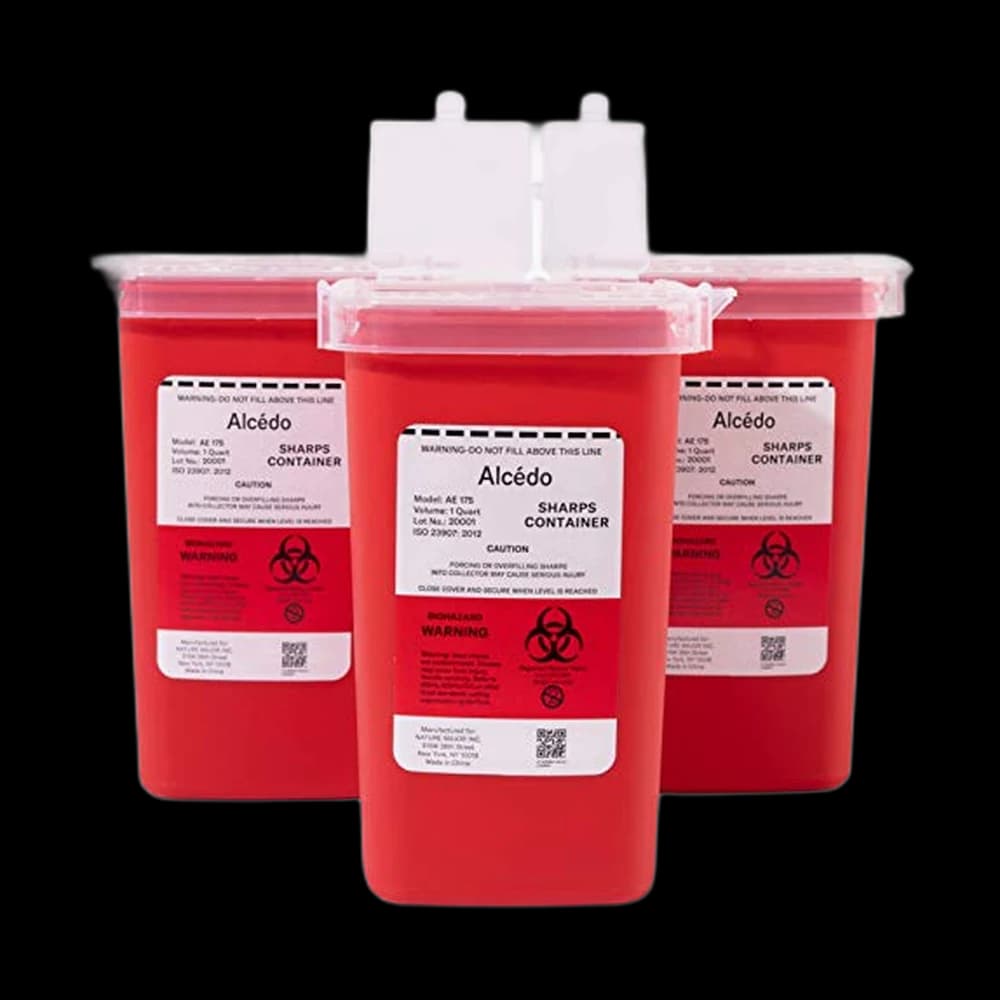 Alcedo 1 Quart Sharps Container (3-Pack) for Needle & Syringe Disposal Alcedo 1 Quart Sharps Container (3-Pack) for Needle & Syringe Disposal | Three quarts for the price of one branded unit. | ★ 4.6 | $15.95 | 83 | Buy on Amazon |
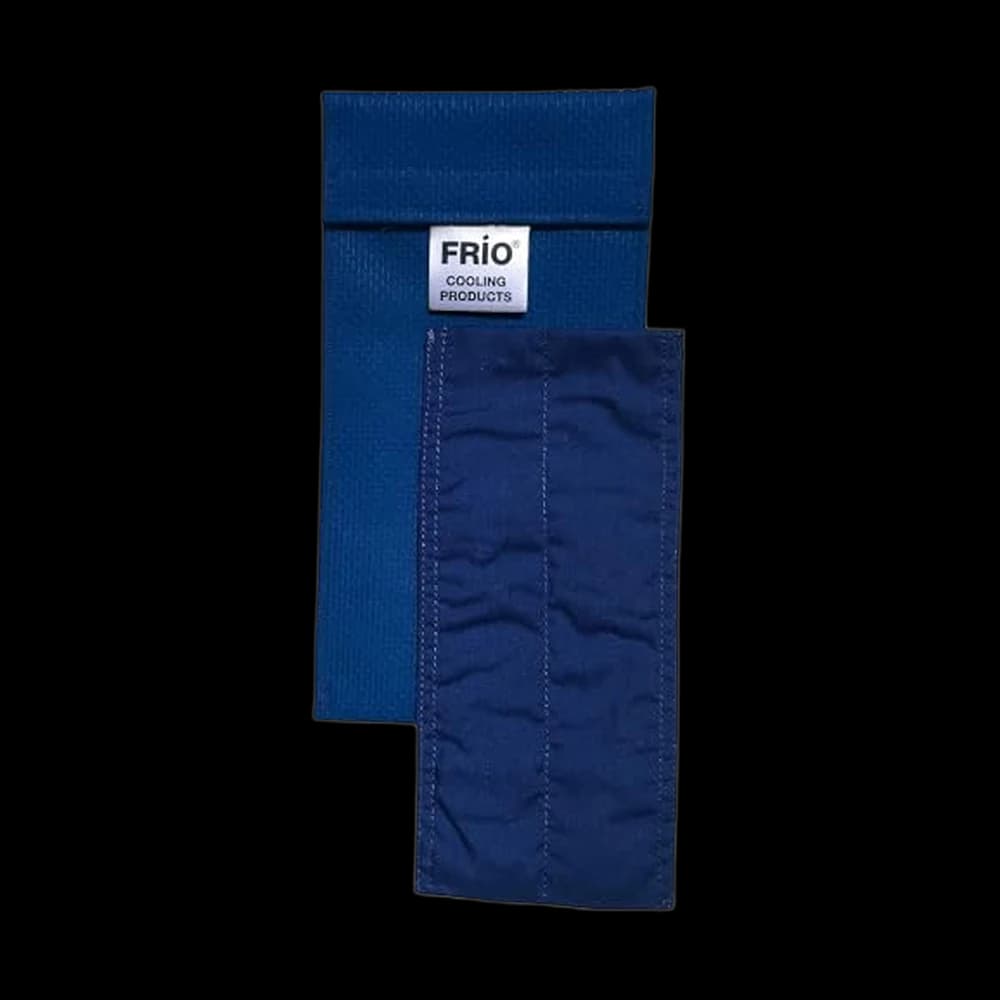 FRIO Cooling Wallet Insulin & GLP-1 Cooler for 45+ Hours FRIO Cooling Wallet Insulin & GLP-1 Cooler for 45+ Hours | Evaporative, so it recharges anywhere there is tap water. | ★ 4.2 | $35.95 | 71 | Buy on Amazon |
Two people can leave the same appointment holding different boxes. From that moment on, most of what you actually do — where it lives in the fridge, what goes in the suitcase, what you throw away and how — is decided by which box it was.
Which of these two is right for you is a clinical decision, and it belongs to you and your prescriber. Nothing here changes that. This page is the other half of the question, the half nobody hands you at the pharmacy counter: what living with each one looks like, week to week.
Two molecules, two labels
Wegovy is . Zepbound is . Both are given by injection once a week, and they are not the same class of thing.
The Wegovy prescribing information describes semaglutide as "a glucagon-like peptide-1 () receptor agonist." The Zepbound prescribing information describes tirzepatide as "a receptor and GLP-1 receptor agonist" — it acts at a second receptor as well.
Both labels carry the same limitation, and it is worth reading once: neither is intended to be used alongside another GLP-1 receptor agonist.
What each one is approved for
This is the part that gets skipped in the comparisons, and it is often the part a coverage decision actually turns on. The two labels do not carry the same list.
| Wegovy (semaglutide) | Zepbound (tirzepatide) | |
|---|---|---|
| Weight | Reduce excess body weight in adults with obesity, or overweight with at least one weight-related condition | Reduce excess body weight and maintain the reduction long term, in the same population |
| Adolescents | Also indicated from age 12 in obesity | Adults only |
| Heart | Reduce the risk of major adverse cardiovascular events in adults with established cardiovascular disease and obesity or overweight | Not on the label |
| Liver | Noncirrhotic MASH with moderate to advanced fibrosis, under accelerated approval | Not on the label |
| Sleep | Not on the label | Moderate to severe obstructive sleep apnea in adults with obesity |
| Formats | Injection and tablets | Injection |
Read that table as a coverage document rather than a scoreboard. If you have documented sleep apnea, or a cardiovascular history, the indication your plan is reading may matter more than any efficacy number on this page.
The devices are genuinely different objects
Both brands ship in more than one presentation, and the presentation — not the brand — is what dictates your week.
| Wegovy | Zepbound | |
|---|---|---|
| Single-use | Single-dose pen, or single-dose prefilled syringe | Single-dose pen, or single-dose vial |
| Multi-dose | FlexTouch pen holding four weekly doses | KwikPen holding four doses, or a multi-dose vial |
| Oral | Tablets | None |
The practical fork is the . A Zepbound single-dose vial is not a pen — it is a vial you draw from with a syringe, which is a different set of dexterity and eyesight demands and a different conversation with your prescriber or pharmacist about technique. A pen hides that step; a vial does not.
The other fork is single-dose versus multi-dose. Four separate single-dose devices generate four times the sharps volume of one four-dose pen, and that is the whole difference between a small bin lasting a quarter and a bin you are replacing constantly. FDA's page on safely using sharps at home, at work and on travel is the plain-language reference for what to do with them, and it is explicit that disposal rules vary by state and locality.
What the one head-to-head trial found
There is exactly one randomized trial that put these two against each other, and it is worth naming rather than paraphrasing.
SURMOUNT-5, published in The New England Journal of Medicine in 2025, was a phase 3b, open-label trial in 751 adults with obesity and without type 2 diabetes. Participants received the maximum tolerated dose of tirzepatide or the maximum tolerated dose of semaglutide, once weekly, for 72 weeks. The least-squares mean change in weight at week 72 was −20.2% with tirzepatide and −13.7% with semaglutide. Waist circumference fell by a mean of 18.4 cm and 13.0 cm respectively. The trial was funded by Eli Lilly, which makes tirzepatide.
Worth raising at your next visitFrom this guide
One trial, in one population, at maximum tolerated doses. It does not tell you which drug suits your history, your other medications, your side effects or your coverage — and those are the variables your prescriber is actually weighing.
Side effects, and the ones that are not side effects
Both labels list gastrointestinal reactions as the most common: nausea, diarrhea, vomiting, constipation and abdominal pain lead the list on Wegovy and on Zepbound alike. In SURMOUNT-5 the most common adverse events in both groups were gastrointestinal, mostly mild to moderate, and mostly during dose escalation.
Day to day, the manageable end of that list is mostly logistics: eating earlier in the day, spacing fluid instead of gulping it, and ramping fiber slowly, with fluid, which is the single most common reason people go shopping in the first place.
Storage and travel, where the brands really diverge
This is the difference nobody mentions until the first trip.
Shot-day essentials can be simple: a case sized for the exact device, a small , and the label lookup before packing. Those products may help with organization and convenience; they do not change the storage rule, protect potency, or replace a pharmacist's answer when the trip falls outside the label.
The out-of-fridge allowances are not the same between these two brands, and they are not even the same between presentations of one brand. A Zepbound single-dose pen and a Zepbound carry different rules; so do a Wegovy single-dose pen and a Wegovy FlexTouch. One is counted as a total allowance whether or not you have used it; another starts when the cap comes off.
We keep those numbers in one place rather than restating them, because a label revision has to change in one place:
- Storing and traveling with GLP-1 pens — every brand and presentation, transcribed from the current labels.
- How long can Ozempic stay out of the fridge and the Zepbound and Mounjaro rules for the two questions people ask most.
- The travel-kit builder, which reads the same source and prints a packing list for your brand and presentation.
What both labels agree on: do not freeze these injections, and do not use one that has been frozen. That single line is why an insulated pen case and a frozen brick are a bad pairing, and why a travel case is a temperature-stable container rather than a cooler. No case can promise potency — it can only keep the carton out of direct sun and stop the box getting crushed in a bag.
What switching actually involves
Switching between them is a prescriber's decision, and both labels describe a stepwise escalation rather than a like-for-like swap. Assume nothing carries over.
What changes on your side, all at once:
- The device. New shape, new cap, possibly a vial and syringe instead of a pen.
- The storage rule. The allowance you memorised for the old brand does not transfer.
- The sharps math. More or fewer devices per month changes the sharps container you need.
- The program. The savings and supply programs are manufacturer-specific — Novo Nordisk runs the Wegovy offer, Lilly runs the Zepbound one. Eligibility, self-pay pricing and which pharmacy fills it change with the brand, and all of it changes over time, so read the page rather than a forum post.
- The side-effect clock. Gastrointestinal effects cluster around escalation on both labels, so a switch can feel like starting over for a few weeks even if you have been on treatment for a year.
One thing that should never change: where you get it. FDA maintains a standing page on unapproved GLP-1 drugs used for weight loss covering counterfeit product, product labelled with pharmacies that do not exist, and the adverse-event reports that came with them. A supply gap is the moment that market is designed for.
What does not change
Neither drug decides what you eat or whether you keep your muscle. Both labels put diet and physical activity in the indication itself, and that part is identical on each.
- Protein first, at whatever meals you manage — the intake decision that matters most once total volume drops.
- Why muscle is the thing to defend, and two sessions a week to defend it.
Keep your muscle. Feed yourself well. Let the medication do its job — whichever one your prescriber picked.
Your next step
Whichever box you left with, shot day needs the same two things.
Frequently asked
The questions that keep coming up
Which is better, Wegovy or Zepbound?
The only randomized head-to-head comparison is SURMOUNT-5, published in the New England Journal of Medicine in 2025. In 751 adults with obesity and without type 2 diabetes, the mean change in weight at week 72 was −20.2% with tirzepatide and −13.7% with semaglutide, and waist circumference fell by a mean of 18.4 cm versus 13.0 cm. The trial was funded by Eli Lilly, which makes tirzepatide. That is one trial, in one population, at maximum tolerated doses — it does not account for your history, your other medications, your side effects or your coverage. Which drug suits you is a decision for you and your prescriber.
Can I switch from one to the other?
That is a prescriber's decision, and both labels describe a stepwise escalation rather than a like-for-like swap. What we can tell you is what changes on your side: the device shape, possibly a vial and syringe instead of a pen, the storage allowance you had memorised, how many sharps you generate a month, and which manufacturer program you enroll in. Gastrointestinal effects cluster around escalation on both labels, so a switch can feel like starting over for a few weeks even after a year of treatment.
Do they have the same storage rules?
No, and the difference is not only between the brands — it is between presentations of the same brand. A single-dose pen and a four-dose pen of one brand follow different out-of-fridge rules, and one brand counts its allowance as a total whether or not the device has been used. We keep every brand and presentation transcribed from the current labels in one guide rather than restating temperatures in each article, because a label revision then only has to be fixed once. Both labels do agree on one thing: do not freeze these injections, and do not use one that has been frozen.
Why would insurance cover one and not the other?
Often because of what is written in the indication. The Wegovy label carries a cardiovascular indication, an adolescent indication from age 12, and an accelerated approval in noncirrhotic MASH with moderate to advanced fibrosis. The Zepbound label carries moderate to severe obstructive sleep apnea in adults with obesity. Neither carries the other's. If you have a documented condition that appears on one label and not the other, that is worth raising explicitly with your prescriber's office when they submit.
Are the side effects different between them?
Both labels lead with the same family: nausea, diarrhea, vomiting, constipation and abdominal pain are the most commonly reported reactions on each. In SURMOUNT-5 the most common adverse events in both groups were gastrointestinal, mostly mild to moderate, and mostly during dose escalation. The symptoms that warrant a call rather than a purchase are the same on both labels too — severe or persistent abdominal pain, vomiting you cannot stay ahead of, signs of dehydration, allergic symptoms, or a change in vision.
Sources & further reading
We research from primary and authoritative sources. Where our guidance rests on a fact, here's where it comes from.
- DailyMed — WEGOVY (semaglutide) injection and tablets, prescribing information — Source for the GLP-1 receptor agonist description, the indications (weight, cardiovascular risk reduction, adolescents from age 12, noncirrhotic MASH under accelerated approval), the dosage forms and strengths (single-dose pens, single-dose syringes, the FlexTouch four-dose pen, tablets), the limitation on concomitant GLP-1 use, the most common adverse reactions, and the boxed warning. Label revised 6/2026.
- DailyMed — ZEPBOUND (tirzepatide) injection, prescribing information — Source for the GIP and GLP-1 receptor agonist description in sections 11 and 12.1, the weight and obstructive sleep apnea indications, the limitation of use, the presentations (single-dose pens, single-dose vials, KwikPen, multi-dose vials), and the adverse reactions reported in at least 5% of patients. Label revised 4/2026.
- Aronne LJ et al. — Tirzepatide as Compared with Semaglutide for the Treatment of Obesity (SURMOUNT-5), New England Journal of Medicine 2025;393:26-36 — Source for the head-to-head result: phase 3b open-label trial, 751 adults with obesity and without type 2 diabetes, 72 weeks, least-squares mean weight change −20.2% with tirzepatide versus −13.7% with semaglutide, waist circumference −18.4 cm versus −13.0 cm, gastrointestinal events most common in both groups and clustered during escalation, funded by Eli Lilly. Record confirmed via the EuropePMC REST API (PMID 40353578, NCT05822830).
- FDA — Safely Using Sharps (Needles and Syringes) at Home, at Work and on Travel — Source for the statement that sharps disposal rules vary by state and locality, and for the plain-language disposal guidance we point readers to rather than restating.
- NovoCare — Wegovy savings offer and coverage page — The manufacturer-run savings and coverage page for Wegovy. Linked as the current source of eligibility and self-pay terms rather than quoted, because those terms change.
- Lilly — Zepbound coverage and savings page — The manufacturer-run savings and coverage page for Zepbound. Linked as the current source of eligibility and self-pay terms rather than quoted, because those terms change.
- FDA — FDA's Concerns with Unapproved GLP-1 Drugs Used for Weight Loss — Source for counterfeit product, fraudulent compounded semaglutide and tirzepatide, and the associated adverse-event reports — the risk a supply gap exposes people to.
LeanFed is not medical advice and is not a substitute for your prescriber, pharmacist or dietitian. We do not test products hands-on — we compare labels, specifications and owner reviews. Prices and LeanScores reflect our most recent research and refresh on a cycle; confirm the current price and read the product's own label before buying. We may earn a commission from affiliate retailers — it never changes our recommendations. See how we score.