High-Protein SnacksDeep dive6 min
Food Noise on GLP-1: Why It Goes Quiet, and Why It Returns
TL;DR
LeanFed may earn a commission from links on this page; it never changes a ranking. Full disclosure.
Call your prescriber todayBefore any product on this page
Some changes are not a food-noise question at all. Severe or persistent abdominal pain, vomiting you cannot get on top of, signs of dehydration, vision changes, or symptoms suggesting pancreatitis or a gallbladder problem go to your prescriber or urgent care right away, not to a meal plan. Bring returning food noise to your prescriber too — as an observation, not a request. What you take and how much is a clinical decision, and this site never makes it.
The short answer
Our pick
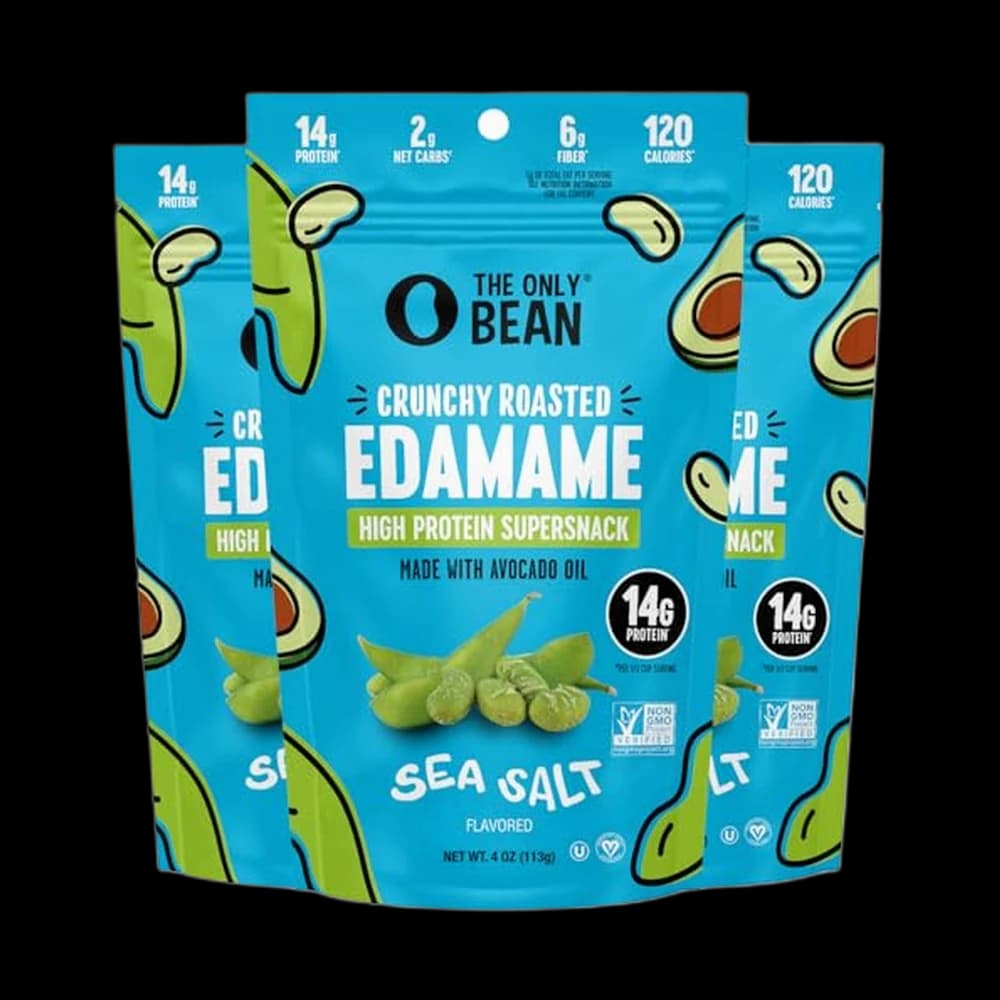
The Only Bean Crunchy Roasted Edamame Beans (Sea Salt)- The crunchy-salty craving, answered with 14 g of plant protein and real fiber.
- You are increasing fiber slowly — a whole bag is a big jump at once.
Food noise has a formal definition now and a two-phase arc. What the research supports about the quiet, the return, and the day-five theory.

Key takeaways
- Food noise has a published definition, and it is not hunger. A 2025 Nutrition & Diabetes paper defines it as persistent thoughts about food the person experiences as unwanted or dysphoric, separated from ordinary food thinking by intensity and intrusiveness — closer to rumination than to appetite.
- The arc has two described phases, not one. In 31 interviews published in Clinical Obesity, the dynamic phase carried profound appetite suppression and reduced food noise; in the stable phase, portion control persisted as a behaviour while some people described a perceived loss of efficacy.
- The dose does not clear between weekly injections. Semaglutide's elimination half-life is about one week and tirzepatide's about five to six days, so the popular day-five explanation is not what the labels describe — and no published study measures food noise across a dosing week.
Pick by your situation
| If your situation is… | Pick | Why |
|---|---|---|
| The quiet has arrived and you want to know whether it lasts | Read the first months as the dynamic phase, not as the new normal | The Clinical Obesity interviews concentrate profound appetite suppression and reduced food noise in the dynamic phase of weight loss, not across the whole arc. |
| Food noise has partly returned several months in | Audit which behaviour is still standing before you question the medication | Portion control was the one change that persisted across both phases in that study, while the appetite suppression that produced it did not stay equally strong. |
| You are convinced the dose wears off before the next injection | Check the elimination half-life on your own product label | About one week for semaglutide and five to six days for tirzepatide means a weekly injection does not clear the body between doses, so the pharmacology does not carry that explanation. |
| You want to raise it at your next appointment | Bring an observation, not a request | What you notice, when it started and what changed around it is information a clinician can use. What you take and how much is their decision. |
| The change arrived with pain, vomiting or signs of dehydration | Contact your prescriber or urgent care, not a meal plan | Those are red-flag symptoms that need clinical assessment and they are not a food-noise question at all. |
Each pick is one of the products compared below — a shortcut by situation, not a separate recommendation.
High-Protein Snacks: our picks
| Pick | Best for | Rating | Price | Cost per 20 g protein | LeanScore | Buy |
|---|---|---|---|---|---|---|
| №1The Only Bean Crunchy Roasted Edamame Beans (Sea Salt) | Crunchy plant protein with real fiber attached. | ★ 4.5 | $13.97 | — | 85 | Buy on Amazon |
 StarKist Tuna Creations Herb and Garlic, 2.6oz Pouch, 24-Pack StarKist Tuna Creations Herb and Garlic, 2.6oz Pouch, 24-Pack | A no-drain pouch that turns any salad into a meal. | ★ 4.6 | $21.80 | $1.21 / 20 g | 80 | Buy on Amazon |
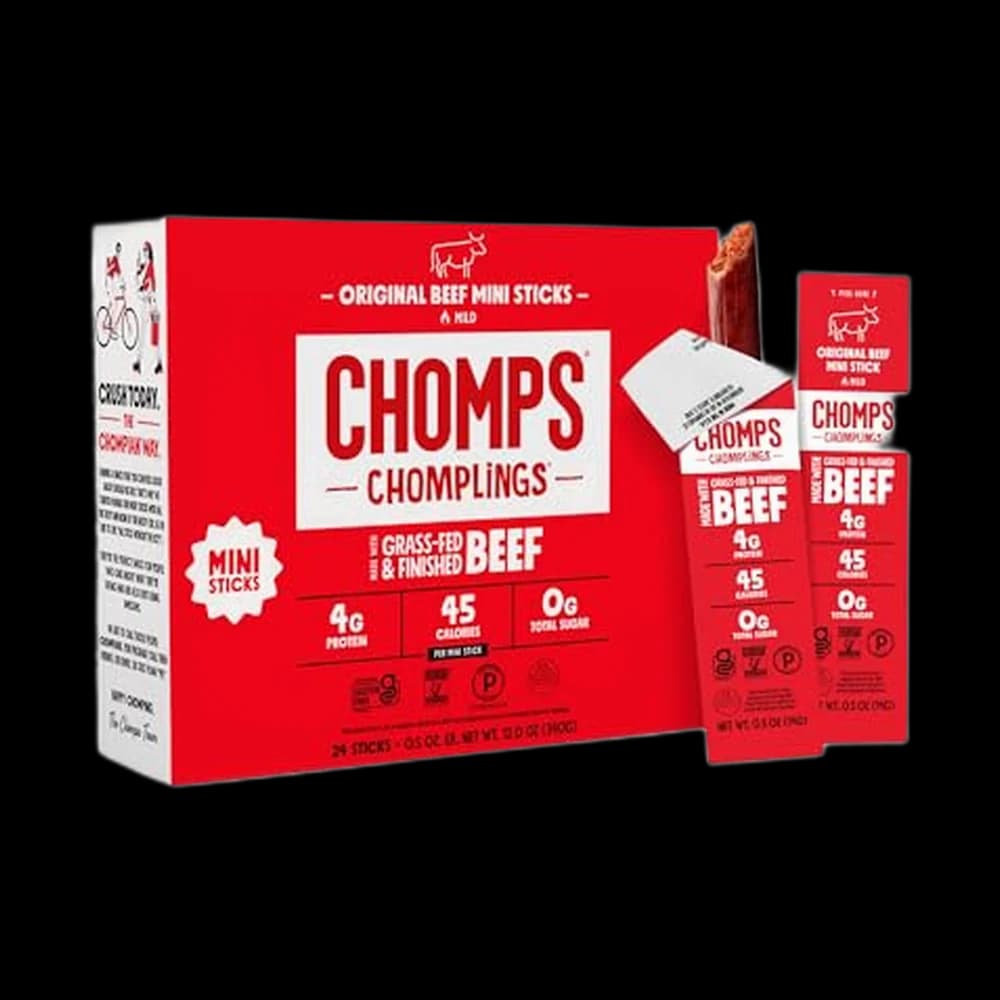 Chomps Original Beef Chomplings, Grass-Fed & Finished, 24ct,… Chomps Original Beef Chomplings, Grass-Fed & Finished, 24ct,… | Shelf-stable protein that needs no plate and no appetite. | ★ 4.6 | $26.58 | $5.54 / 20 g | 76 | Buy on Amazon |
Somewhere in the first weeks, a lot of people on a notice an absence. The running commentary about food — what is in the fridge, what you said you would not eat, what you will probably eat anyway — stops running. Then, months in, some of it comes back, and the question that follows is almost always the same: has this stopped working?
Here is what the published research supports, and the exact point where it runs out.
The phrase came from patients, not from journals
"" reached clinics through the people using it. A formal definition arrived only in 2025, when a paper in Nutrition & Diabetes defined it as persistent thoughts about food that the individual perceives as unwanted or dysphoric and that may cause social, mental or physical harm. The line that paper draws is the one that matters: food noise is separated from ordinary food thinking by intensity and intrusiveness, and it resembles rumination more than appetite.
Three different experiences get filed under one complaint.
| What you would describe | What it is | What moves it |
|---|---|---|
| An empty stomach, a physical pull | Hunger | Eating something |
| Planning dinner at three in the afternoon | An ordinary food thought | Nothing. This is how anyone with a kitchen thinks |
| The same food arriving unbidden, again, and unpleasantly | Food noise | The subject of this page |
The measurement side is younger than the phrase. That paper describes a new inventory built to score food noise, and is candid that prevalence, mechanism and clinical usefulness are all still open.
The labels describe appetite. None of them says "food noise"
Read the prescribing information and the phrase is simply absent. What is there is narrower. Wegovy's label describes GLP-1 as a physiological regulator of appetite and caloric intake, and notes that GLP-1 receptors sit in several areas of the brain involved in appetite regulation. Zepbound's label says the same of GLP-1 and adds that receptors are found in those regions too.
The labels measure appetite and caloric intake from the outside. The quiet is the inside view of what may be the same event. That gap is why an appointment goes better when you describe what you notice — when it started, what changed around it — instead of reaching for the term.
Two phases, described by the people who were in them
The most useful published account of the arc is a 2026 qualitative study in Clinical Obesity, built from 31 semi-structured interviews with people on obesity medications, split between what the researchers call the dynamic phase of weight loss and the stable phase.
| Dynamic phase | Stable phase | |
|---|---|---|
| What the interviews reported | Profound appetite suppression, early fullness, reduced food noise, diminished cravings, smaller portions | Portion control persisting as a behaviour, goals shifting from losing weight to holding it, and some people describing a perceived loss of efficacy |
| How people put it | It went quiet | Something changed and I cannot name it |
Two details there deserve more attention than they get. The authors describe the move between phases as a spectrum rather than a switch. And portion control was the one change that persisted across both phases — the behaviour outlasted the feeling that produced it.
A separate 2026 study in JAMA Network Open interviewed 30 people taking or recently off these medications. Reduced food noise, psychological hunger or appetite was one of its eight themes. So was a blunter one: these medications are not a standalone weight-loss solution.
The day-five story, and what the labels actually support
The most repeated explanation for returning food noise is that the dose wears off before the next one arrives. Worth checking against the pharmacology, because the labels do not describe a drug that leaves.
What the prescribing information states
- 's elimination half-life is approximately one week, and Wegovy's label states the drug is present in the circulation for about five to seven weeks after a last dose.
- 's elimination half-life is approximately five to six days in people with overweight or obesity.
- On either profile, a weekly injection does not clear the body between doses. Concentrations vary across the week; they do not empty.
What nobody has published
- A search of the Europe PMC index for food-noise research returns definition papers, a measurement inventory, qualitative interviews and a social-media content analysis — and nothing measuring day-by-day variation in food noise across a dosing week.
- The day-five experience is therefore widely reported and, as far as the literature goes, unstudied. Unstudied is not the same as unreal.

If the medication has not left, the remaining candidates are less satisfying, and not one of them has been tested against a food-noise measure:
- The phase shift those interviews describe.
- Expectation. The quiet was startling once and is now the baseline you compare against.
- Sleep, stress, and a week that simply carried more food cues than usual.
- A that feels like failure and gets narrated as one.
Anyone who tells you which of these it is, is guessing.
When quiet-then-loud belongs in a clinic conversation
What food-first looks like in the meantime
The clearest published framework for eating on these medications is a 2026 narrative review in Nutrients proposing a nutrition-first approach: protein prioritisation, structured meal patterns, hydration and fibre management, and resistance-training support. The review is unusually honest about its own footing — direct trials of structured nutrition interventions in people on GLP-1 or dual- therapy remain limited, and several recommendations are extrapolated from the wider obesity and body-composition literature.
Which is to say: reasonable defaults, not proven interventions for food noise specifically. What they have going for them is that they remove decisions, and decisions are the fuel food noise runs on.
Portioned options such as roasted edamame, tuna pouches and meat sticks can make protein available without turning the afternoon into another meal decision.
- Decide the protein before you are hungry. Meal order survives a small appetite better than a daily total does — protein-first eating on a GLP-1 covers why.
- Own something that needs no decision at all. A shelf of high-protein snacks chosen once beats a choice made at four in the afternoon; the snack guide is the researched version of that shelf.
- Give the meal a container instead of a plate. Small meal containers in the four-to-eight-ounce range make a portion a decided thing rather than a judged one; the sizing guide walks the range.
- Watch what the protein costs you. The protein-per-dollar tool exists because the stable phase is where the grocery bill starts to bite.
If you are between the quiet and the return, the adjusting stage of the LeanFed Path is written for that stretch.
The reframe worth carrying
The quiet was never the medication doing your thinking for you. It was the volume coming down on a signal you still live alongside. When some of it returns, the useful question is not whether the medication has failed but which of the things carrying you is still standing. The portion size that persisted through both phases in the Clinical Obesity interviews is the clue in plain sight: the behaviour outlasted the feeling. That part was always yours.
Your next step
When the pull toward food comes back, a portioned protein snack can make the planned option the convenient one.
Frequently asked
The questions that keep coming up
Is food noise an actual medical term?
It is a patient term that now has a formal research definition. A 2025 paper in Nutrition & Diabetes defines food noise as persistent thoughts about food that the individual perceives as unwanted or dysphoric and that may cause social, mental or physical harm, distinguished from ordinary food thinking by intensity and intrusiveness. It is not a diagnosis, and the same paper is explicit that prevalence, mechanism and clinical usefulness are still open questions.
Why does food noise come back after a few months?
The best-supported published account is a phase shift rather than a failure. A 2026 qualitative study in Clinical Obesity describes a dynamic phase with profound appetite suppression and reduced food noise, and a later stable phase in which portion control persists as a behaviour, goals move from losing weight to holding it, and some people report a perceived loss of efficacy. The authors describe the transition as a spectrum rather than a switch. What no study has done is measure food noise day by day, so the specific timing anyone experiences is not something the literature can currently explain.
Does food noise returning mean the medication has stopped working?
Not on its own, and it is not something this page can answer for you. It is worth knowing that the pharmacology does not support the common explanation that a weekly dose runs out before the next one: semaglutide's elimination half-life is approximately one week and tirzepatide's approximately five to six days, so concentrations vary across a week rather than emptying. Whether anything about your treatment should change is a conversation with your prescriber, and this site publishes no dosing guidance.
Do protein and structured meals quiet food noise?
No published trial shows that, and we are not going to claim it. A 2026 narrative review in Nutrients proposes protein prioritisation, structured meal patterns, hydration and fibre management as a nutrition-first framework alongside these medications, and states plainly that direct trials in this population remain limited and that several recommendations are extrapolated from the wider obesity literature. What those habits reliably do is remove decisions from the day, which is a practical benefit rather than a treatment effect.
Do the drug labels mention food noise?
No. The prescribing information for these medications does not contain the phrase. Wegovy's label describes GLP-1 as a physiological regulator of appetite and caloric intake with receptors in several areas of the brain involved in appetite regulation, and Zepbound's label says the same of GLP-1 while adding GIP. Those are outside measures of appetite and intake. Food noise is the inside description, which is why it can be worth describing what you notice rather than naming it.
Sources & further reading
We research from primary and authoritative sources. Where our guidance rests on a fact, here's where it comes from.
- Nutrition & Diabetes — Food noise: definition, measurement, and future research directions (2025) — Source for the formal definition of food noise as persistent thoughts about food perceived as unwanted or dysphoric that may cause social, mental or physical harm, for the distinction from ordinary food thinking by intensity and intrusiveness and its resemblance to rumination, and for the RAID-FN Inventory and the open questions on prevalence and mechanism.
- Clinical Obesity — Changes in Eating Behaviour During Treatment With Obesity Medications (2026) — Qualitative study of 31 semi-structured interviews. Source for the dynamic phase findings of profound appetite suppression, early fullness, reduced food noise, diminished cravings and smaller portion size; for portion control persisting across both phases; for the goal shift from weight loss to maintenance; for the perceived loss of efficacy reported by some in the stable phase; and for the transition being described as a spectrum rather than a dichotomy.
- JAMA Network Open — Patient Experiences With GLP-1 Receptor Agonists (2026) — Qualitative study of 30 adults taking or previously taking GLP-1 receptor agonists. Source for reduction in food noise, psychological hunger or appetite being one of eight extracted themes, and for the theme that these medications are not a standalone weight-loss solution.
- DailyMed — WEGOVY (semaglutide) prescribing information — Source for the elimination half-life of approximately one week, for semaglutide being present in the circulation about five to seven weeks after a last dose, and for the mechanism statement that GLP-1 is a physiological regulator of appetite and caloric intake with receptors in several areas of the brain involved in appetite regulation. Also the source for the absence of the phrase food noise in the label.
- DailyMed — ZEPBOUND (tirzepatide) prescribing information — Source for the elimination half-life of approximately five to six days in patients with overweight or obesity, and for the statement that both GIP and GLP-1 receptors are found in areas of the brain involved in appetite regulation.
- Nutrients — Nutrition-First Support for GLP-1 and Dual Incretin Therapy in Obesity (2026) — Narrative review. Source for the nutrition-first framework of protein prioritisation, structured meal patterns, hydration and fibre management and resistance-training support, and for the review's own statement that direct trials of structured nutrition interventions in this population remain limited and several recommendations are extrapolated from the broader obesity and body-composition literature.
- Nutrition & Diabetes — a content analysis of TikTok videos on food noise (2026) — Content analysis of 99 TikTok videos under the food noise hashtag. Cited as an example of the kind of food-noise research that exists, in support of the statement that the literature contains definition, measurement, interview and social-media work but nothing measuring day-by-day variation across a dosing week.
LeanFed is not medical advice and is not a substitute for your prescriber, pharmacist or dietitian. We do not test products hands-on — we compare labels, specifications and owner reviews. Prices and LeanScores reflect our most recent research and refresh on a cycle; confirm the current price and read the product's own label before buying. We may earn a commission from affiliate retailers — it never changes our recommendations. See how we score.