Small-Meal ContainersDeep dive7 min
A 7-Day GLP-1 Meal Plan Built for a Small Appetite
TL;DR
LeanFed may earn a commission from links on this page; it never changes a ranking. Full disclosure.
Call your prescriber todayBefore any product on this page
Severe or persistent abdominal pain that sometimes radiates to the back, with or without nausea or vomiting, is what the WEGOVY and ZEPBOUND labels tell patients to report promptly, because it can signal pancreatitis. Both labels also instruct patients to report persistent or extended nausea, vomiting and diarrhea, because dehydration has led to acute kidney injury. None of that is a food question — call, do not re-plan.
The short answer
Our pick
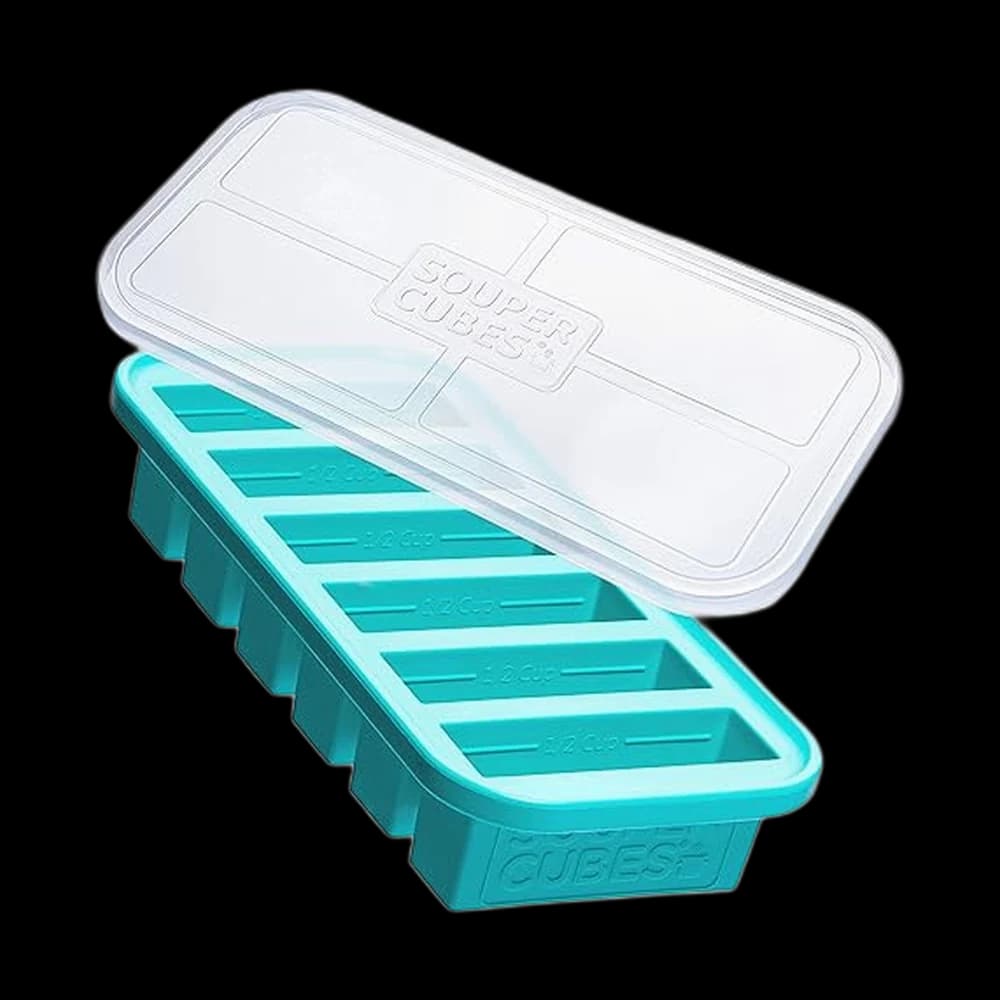
Souper Cubes 1/2 Cup Silicone Freezer Mold with Lid, Aqua, 1-Pack- Freezing leftovers in the exact portion you can finish, instead of a full container you will not.
- You have no freezer space — that is the whole point of it.
Seven days of small, protein-dense meals with USDA-checkable figures, container-sized portions and a queasy-day swap you can pull on any day.
Key takeaways
- The proportion survives; the total does not. A 2026 review in Advances in Therapy found that trials of liraglutide generally held protein at roughly 13.9% to 17.5% of total energy — so a day that shrinks to 1,200 calories in the same proportions lands at about 42 to 53 g of protein.
- Nobody can hand you a gram target honestly. A 2026 systematic review of 16 randomised trials and 7,096 participants concluded that further trials are needed to clarify protein requirements. Your number comes from your clinician, not from a plan.
- Protein per 100 grams is the axis that matters when volume is the limit, not calories per gram. USDA puts roasted chicken breast at 31.0 g and cooked lentils at 9.0 g in the same 100 grams.
- Do not pin a bland day to the shot. Zepbound's label places the majority of nausea, vomiting and diarrhea events during dose escalation, decreasing over time — so this week carries a swap you can pull on any day instead.
- Severe or persistent abdominal pain, or nausea and vomiting that will not settle, is a call rather than a menu change. Both labels tell patients to report those promptly.
Pick by your situation
| If your situation is… | Pick | Why |
|---|---|---|
| You have just started, and everything tastes wrong | Run the swap column, not the plan | Zepbound's label places the majority of nausea, vomiting and diarrhea events during dose escalation and describes them as decreasing over time. |
| You can only finish about 100 grams of food at a sitting | Spend it at the top of the density table | USDA puts roasted chicken breast at 31.0 g of protein per 100 g against 9.0 g for cooked lentils, so the food you pick moves the number more than anything else in the week. |
| You eat the plan but keep landing short by evening | Add the two snack slots before changing any meal | They add roughly 20 g between them without asking you to make a single meal larger. |
| Mornings are the part that never happens | Make day four's breakfast the default | A ready-to-drink shake carries a label protein figure with no preparation at all, which is the failure point most meal plans ignore. |
| You want one number to aim at | Ask your prescriber or dietitian for it | A 2026 systematic review of 16 randomised trials concluded that protein requirements in this population are still unclarified, so any single figure published online is ahead of the evidence. |
Each pick is one of the products compared below — a shortcut by situation, not a separate recommendation.
Small-Meal Containers: our picks
| Pick | Best for | Rating | Price | LeanScore | Buy |
|---|---|---|---|---|---|
| №1Souper Cubes 1/2 Cup Silicone Freezer Mold with Lid, Aqua, 1-Pack | Freeze leftovers in the portion you can finish. | ★ 4.8 | $21.99 | 88 | Buy on Amazon |
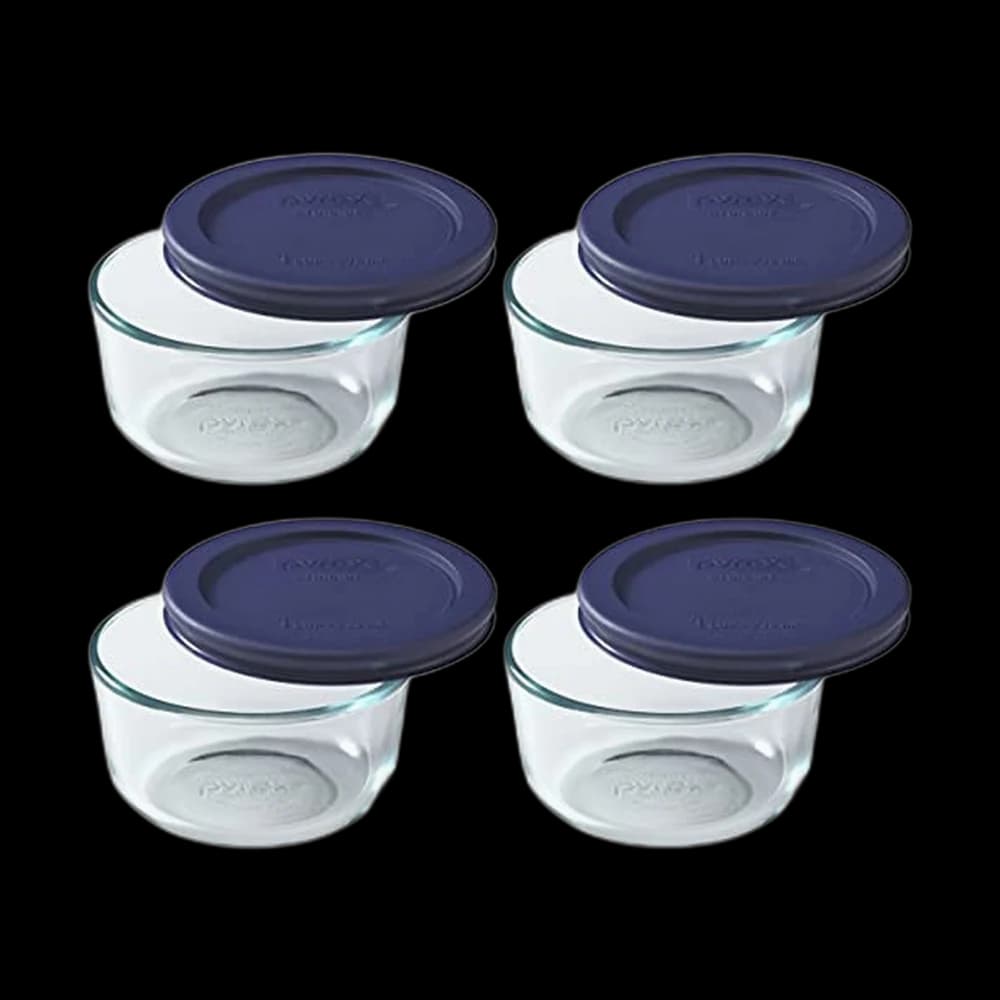 Pyrex 7202 (1-Cup) Glass Bowl with Dark Blue Lid (4-Pack) Pyrex 7202 (1-Cup) Glass Bowl with Dark Blue Lid (4-Pack) | Glass you can reheat without thinking about it. | ★ 4.8 | $26.99 | 81 | Buy on Amazon |
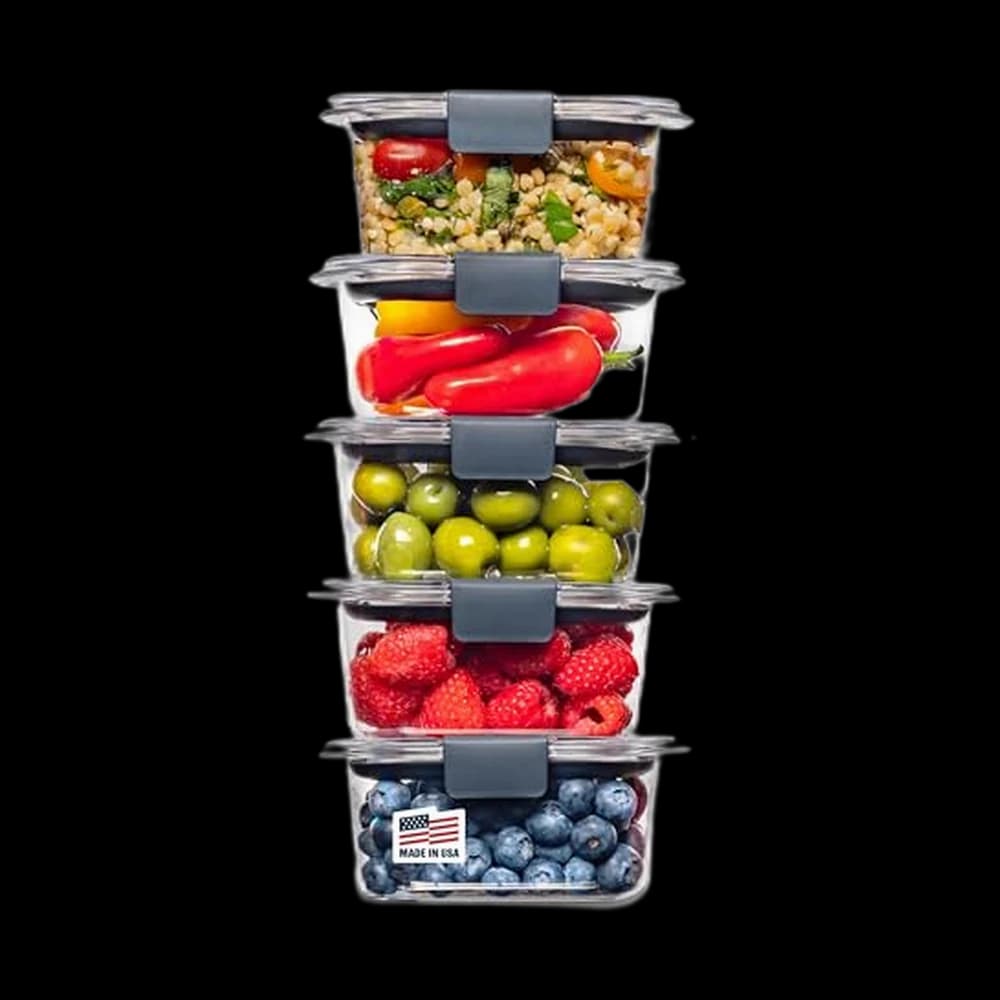 Rubbermaid Brilliance BPA-Free Food Storage Containers Multi Pack,… Rubbermaid Brilliance BPA-Free Food Storage Containers Multi Pack,… | Leakproof, crystal-clear, and genuinely snack-sized. | ★ 4.7 | $24.03 | 85 | Buy on Amazon |
Most meal plans carrying the words "" are ordinary reduced-calorie diet plans with the word protein set in bold. They assume the problem is wanting too much food. On a GLP-1 it is usually the reverse: appetite arrives late, leaves early, and some days does not turn up.
This week is built the other way round. Every portion is small enough to finish, every protein figure is arithmetic you can check against a government database, and every slot has a swap for the days that go sideways. It is a shape to copy, not a prescription — the target that matters is the one your clinician set.
What this week solves that a normal plan does not
Two things, and only one of them is appetite.
The first is the gut. WEGOVY's prescribing information reports gastrointestinal adverse reactions in 73% of adults treated with 2.4 mg in the weight-reduction trials, against 47% on placebo.
| From the label's adverse-reaction table | WEGOVY 2.4 mg (N=2,116) | Placebo (N=1,261) |
|---|---|---|
| Nausea | 44% | 16% |
| Diarrhea | 30% | 16% |
| Vomiting | 24% | 6% |
| Constipation | 24% | 11% |
ZEPBOUND's label shows the same shape lower down: nausea in 25% to 29% of adults across the three maintenance doses, against 8% on placebo.
The second thing is arithmetic, and almost nobody writes about it.
The protein number nobody can honestly hand you
A 2026 systematic review in Diabetes, Obesity and Metabolism pooled 16 randomised trials and 7,096 participants and concluded that further trials are needed to clarify protein requirements. Any site publishing one universal gram target for GLP-1 users is running ahead of the literature.
What can be said is narrower. A 2026 review in Advances in Therapy found that trials of held protein at roughly 13.9% to 17.5% of total energy — the proportion survives, but the absolute amount does not, because the total shrinks underneath it. FDA counts protein at 4 calories per gram, so the arithmetic is yours to run:
| If your day lands at | At 13.9% of energy | At 17.5% |
|---|---|---|
| 2,000 calories | about 70 g | about 88 g |
| 1,600 calories | about 56 g | about 70 g |
| 1,200 calories | about 42 g | about 53 g |
| 900 calories | about 31 g | about 39 g |
For scale, FDA's Daily Value for protein on a Nutrition Facts label is 50 g — a population reference, not a target set for you.
- Nothing went wrong in that table. The plate did not change shape; it got smaller.
- So "smaller portions of what you already eat" is the mechanism that makes the gap, not a plan for closing it.
Protein per 100 grams, because volume is the limit
Calories per gram is the wrong axis when the constraint is how much will go down. The same 100 grams of eight ordinary foods, from USDA FoodData Central:
| Food (USDA entry) | Protein per 100 g |
|---|---|
| Chicken breast, meat only, roasted | 31.0 g |
| Salmon, Atlantic, farmed, cooked | 22.1 g |
| Tuna, light, canned in water, drained | 19.0 g |
| Tofu, firm, calcium sulfate | 17.3 g |
| Egg, whole, hard-boiled | 12.6 g |
| Cottage cheese, lowfat 2% | 11.0 g |
| Greek yogurt, plain, nonfat | 10.3 g |
| Lentils, cooked | 9.0 g |
Chicken breast carries about three and a half times the protein of cooked lentils in the same 100 grams. On a day when 100 grams is all you are getting down, the food you pick is the protein decision.
The seven days
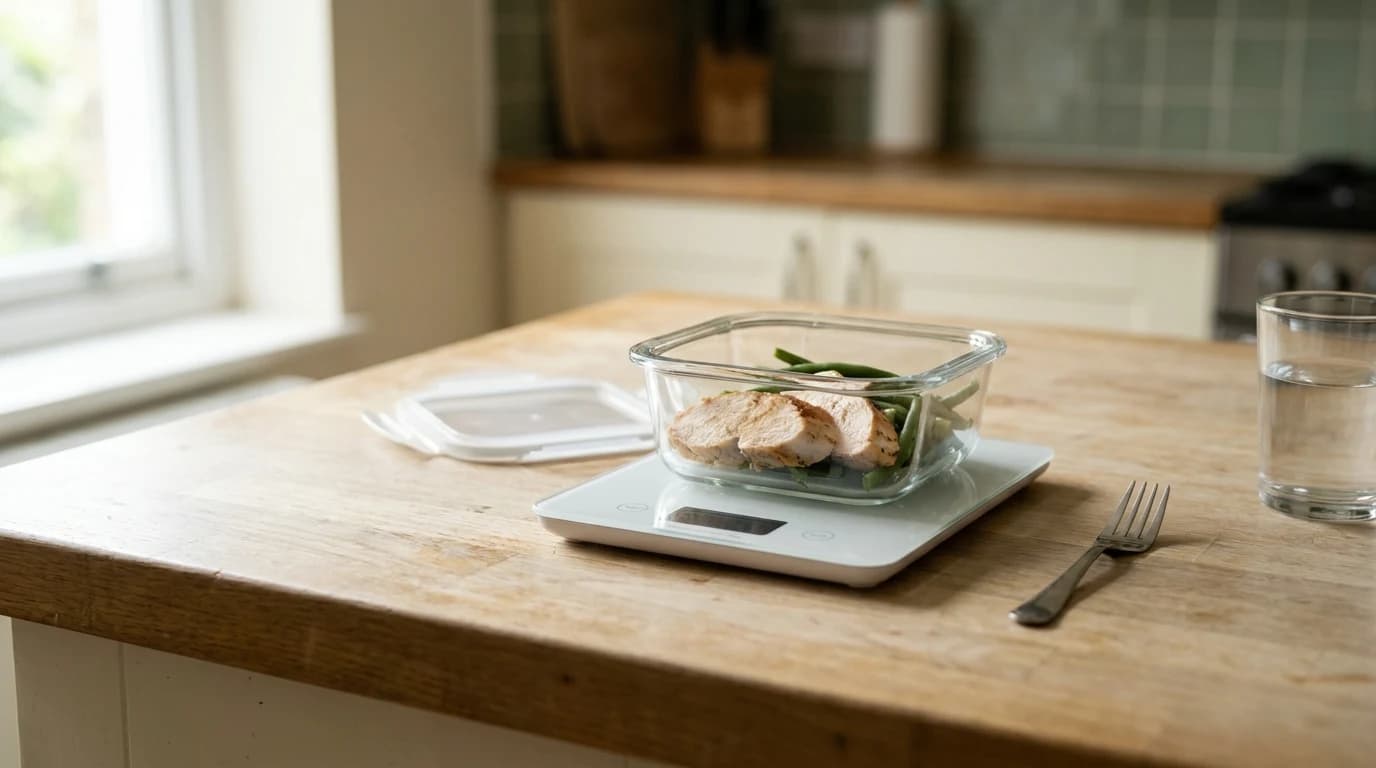
Every figure is arithmetic from the table above, at the weight shown.
| Day | Breakfast | Lunch | Dinner | Total |
|---|---|---|---|---|
| 1 | Yogurt 150 g · 15 g | Tuna 85 g · 16 g | Chicken 85 g · 26 g | 77 g |
| 2 | Cottage cheese 150 g · 17 g | Chicken 85 g · 26 g | Lentil soup 200 g · 18 g | 81 g |
| 3 | Two eggs, yogurt 100 g · 23 g | Salmon 85 g · 19 g | Tofu 150 g · 26 g | 88 g |
| 4 | Shake · 30 g on the label | Tuna 85 g · 16 g | Chicken 85 g · 26 g | 92 g |
| 5 | Yogurt 150 g · 15 g | Lentil soup 200 g · 18 g | Salmon 85 g · 19 g | 72 g |
| 6 | Cottage cheese 150 g · 17 g | Chicken 85 g · 26 g | Tofu 150 g · 26 g | 89 g |
| 7 | Two eggs · 13 g | Salmon 85 g · 19 g | Chicken 85 g · 26 g | 78 g |
Totals include two snack slots adding roughly 20 g between them — rotate whatever is already in the fridge, or the shelf-stable snacks you keep for the bad days: two hard-boiled eggs (13 g), cottage cheese 100 g (11 g), Greek yogurt 100 g (10 g), edamame or a tuna pouch (9 to 10 g).
Notice what the week never asks: eat more. On a 1,200-calorie day, 80 g of protein is about a quarter of your energy rather than a seventh — the share moved, the volume did not. Whether 80 g is your number is a question for your prescriber.
Portion, container, and the swap for any day
| Slot | A portion this size fits | On a day that turns queasy |
|---|---|---|
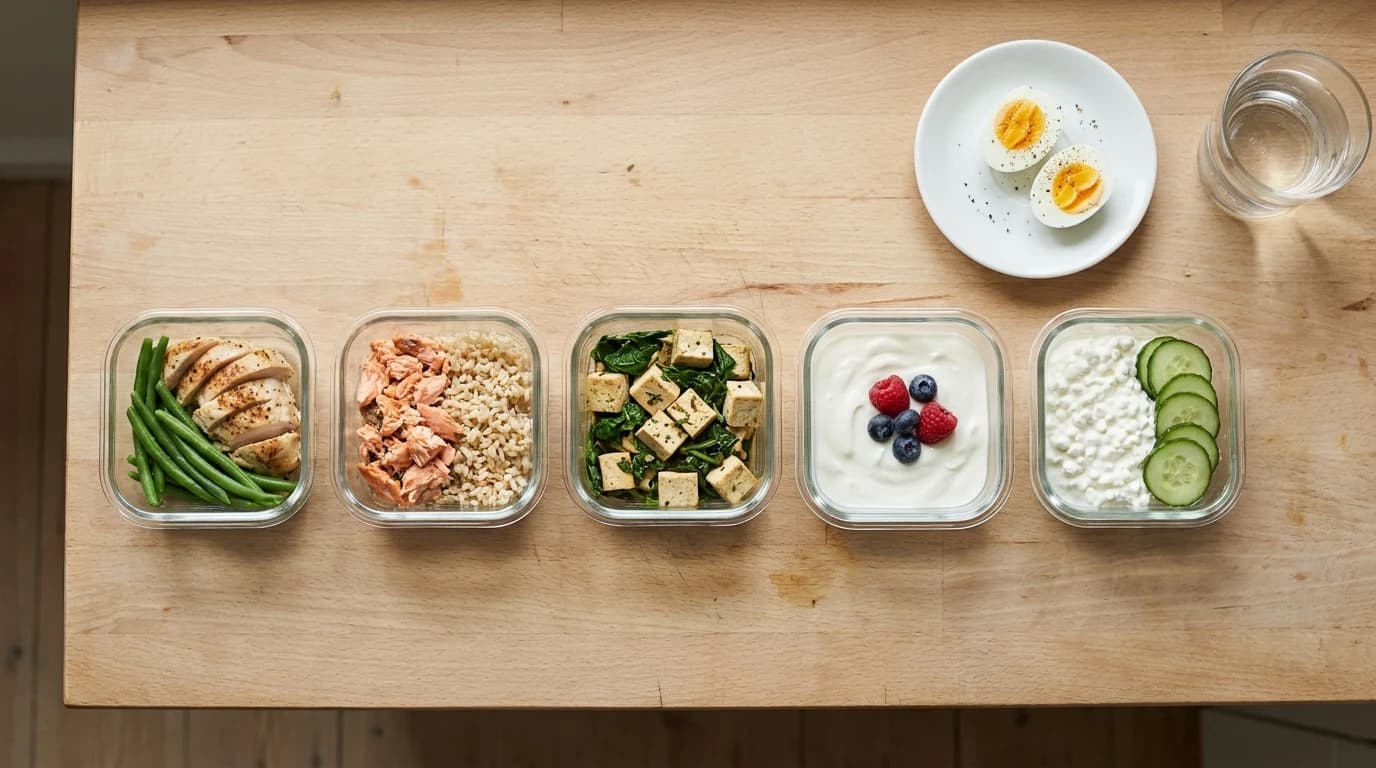
| Breakfast | One-cup container | Some people find protein easier cold and drinkable than on a spoon |
| Lunch | One-cup container | Half now, half from the same container an hour later |
| Dinner | One-cup container, or a half-cup freezer well | Thin it — lentils to soup, fish flaked into stock |
| Snacks | Snack box, or the lunch container, lid back on | Skip the solid and sip instead |
Shot day is not a menu
Most GLP-1 plans pin a bland day to the day after the injection. The labels describe no weekly rhythm at all. ZEPBOUND's prescribing information puts the majority of nausea, vomiting and diarrhea events during dose escalation, decreasing over time. The systematic review above found those effects were often dose-related. Neither source describes a weekday pattern.
So the plan carries a swap column instead of a bland day:
- A bland day on the calendar wastes a good day and leaves a bad one uncovered.
- A swap covers the escalation weeks, where the labels put the trouble.
- Days that stay easy get the full portion. Nothing is spent in advance.
Just moved up a dose? Expect more swap and less plan — the medication doing what its label says, not the week failing.
When this stops being a meal-planning question
The grocery list, in the order you shop
Protein — the part that decides the week
- Chicken breast, two packs; salmon, fresh or frozen
- Tuna, five cans or pouches; firm tofu, two blocks
- Eggs, a dozen; cottage cheese and plain Greek yogurt
Everything else
- Green beans, greens, squash, frozen edamame
- Lentils, rice or crackers, fruit you will finish
- Two ready-to-drink shakes, for the mornings that do not happen
When the same seven dinners start to wear thin, the recipe library has twelve small-volume recipes you can rotate into any slot.
The four things that make this easy
- A one-cup container set. The OXO Good Grips 1 Cup Smart Seal is the size every row above is written to; our 4-to-8 oz container guide covers the specifications that decide whether you keep using them.
- Half-cup freezer wells. Souper Cubes trays turn one dinner cook into four dinners at a size you can finish.
- A scale. Every gram above is a weight, so a Nicewell food scale makes the arithmetic real; the protein-per-dollar calculator does the other half.
- One shake and one bottle. A Premier Protein shake is the day-four breakfast and the swap for a morning that will not start; an Owala FreeSip keeps fluid moving alongside the fiber, and if your clinician gave you a fluid goal, the sip schedule tool spreads it across the day.
New to the ordering principle? Read protein-first eating. If constipation derails the week, the food-first kit is the companion; if strength is what is slipping, start with muscle loss and sarcopenia.
Before buying ingredients, use the small-appetite grocery worksheet to plan package sizes, first uses and leftovers.
Your next step
Every portion this week is written to a one-cup container. Here is how the containers compare.
Frequently asked
The questions that keep coming up
How much protein should I eat on a GLP-1?
There is no gram target published specifically for people on these medications. A 2026 systematic review in Diabetes, Obesity and Metabolism pooled 16 randomised trials and 7,096 participants and concluded that further trials are needed to clarify protein requirements. What the research does show is that appetite suppression tends to preserve protein as a proportion of energy while the absolute amount falls with the total. The target is one your prescriber or dietitian sets; the week above is a shape for hitting whatever that number is.
Is this a 1,200-calorie plan?
No. The week is written in protein grams and portion weights rather than calories, because on a small appetite the binding constraint is volume rather than energy. If your day happens to land near 1,200 calories, about 80 g of protein would be roughly a quarter of your energy instead of the 13.9 to 17.5 percent of energy that trials have observed. That shift in share is the design, not an accident.
What should I eat on the day of my injection?
The labels do not describe a day-of-injection pattern. Zepbound's prescribing information places the majority of nausea, vomiting and diarrhea events during dose escalation, decreasing over time, and the 2026 systematic review found those effects were often dose-related rather than tied to a weekday. That is why this plan carries a swap column for any day instead of a bland day fixed to the calendar. If a particular day is reliably hard for you, that is worth raising with your prescriber.
Can I follow this week as a vegetarian?
Partly, as written. Every breakfast and three of the seven dinners are already meat-free, on tofu at 17.3 g of protein per 100 g, lentils at 9.0 g, eggs at 12.6 g and dairy at 10 to 11 g. The chicken, salmon and tuna rows are the ones to replace. Because plant sources are less protein-dense per 100 grams, a fully plant-based version generally needs either a larger portion or a plant-based protein powder in one of the slots.
Do I have to weigh everything?
Only until the sizes become familiar. Every figure in the tables is a weight, so the arithmetic only holds if the portion does. After a week or two most people recognise 85 g of chicken or 150 g of yogurt by eye, and the scale goes back in the drawer for the days when a number matters.
Sources & further reading
We research from primary and authoritative sources. Where our guidance rests on a fact, here's where it comes from.
- DailyMed — WEGOVY (semaglutide) injection prescribing information — Source for gastrointestinal adverse reactions in 73% of adults treated with 2.4 mg against 47% on placebo, for the adverse-reaction table figures used here (nausea 44% vs 16%, diarrhea 30% vs 16%, vomiting 24% vs 6%, constipation 24% vs 11%), and for the instruction to report severe or persistent abdominal pain and persistent nausea, vomiting and diarrhea promptly.
- DailyMed — ZEPBOUND (tirzepatide) injection prescribing information — Source for nausea in 25% to 29% of adults across the three maintenance doses against 8% on placebo (Table 1), and for the statement that the majority of nausea, vomiting and diarrhea events occurred during dose escalation and decreased over time. Also the source for the instruction to report severe abdominal pain that may radiate to the back, and persistent or extended nausea, vomiting and diarrhea.
- Diabetes, Obesity and Metabolism — Dietary Strategies and Nutritional Management in Patients Receiving GLP-1 and Dual GIP/GLP-1 Receptor Agonists (2026) — Systematic review of 16 randomised trials and 7,096 participants. Source for the conclusion that evidence on optimal nutritional approaches remains limited and further trials are needed to clarify protein requirements, and that the gastrointestinal effects were often dose-related.
- Advances in Therapy — Risk of protein intake deficiency during treatment with GLP-1 and GIP/GLP-1 receptor agonists (2026) — Source for the finding that liraglutide trials generally held protein at roughly 13.9% to 17.5% of total energy, and that a preserved proportional intake can still leave absolute protein below the level needed to stimulate muscle protein synthesis in older adults.
- USDA FoodData Central — Chicken, broilers or fryers, breast, meat only, cooked, roasted (SR Legacy 171477) — 31.0 g of protein per 100 g — the top row of the density table. Every other row links its own FoodData Central entry inline.
- USDA FoodData Central — Lentils, mature seeds, cooked, boiled, without salt (SR Legacy 172421) — 9.0 g of protein per 100 g — the bottom row of the density table, and the comparison behind the three-and-a-half-times figure.
- FDA — Daily Value on the Nutrition and Supplement Facts Labels — Source for the 50 g Daily Value for protein, used here only as a population-level scale reference.
- eCFR — 21 CFR 101.9, Nutrition labeling of food — Source for the general factor of 4 calories per gram for protein at 101.9(c)(1)(i)(B), used for the energy-share arithmetic.
LeanFed is not medical advice and is not a substitute for your prescriber, pharmacist or dietitian. We do not test products hands-on — we compare labels, specifications and owner reviews. Prices and LeanScores reflect our most recent research and refresh on a cycle; confirm the current price and read the product's own label before buying. We may earn a commission from affiliate retailers — it never changes our recommendations. See how we score.