Protein PowdersDeep dive6 min
Protein Pudding for a Small Appetite: How to Build a 25 g Portion
TL;DR
LeanFed may earn a commission from links on this page; it never changes a ranking. Full disclosure.
The short answer
Our pick
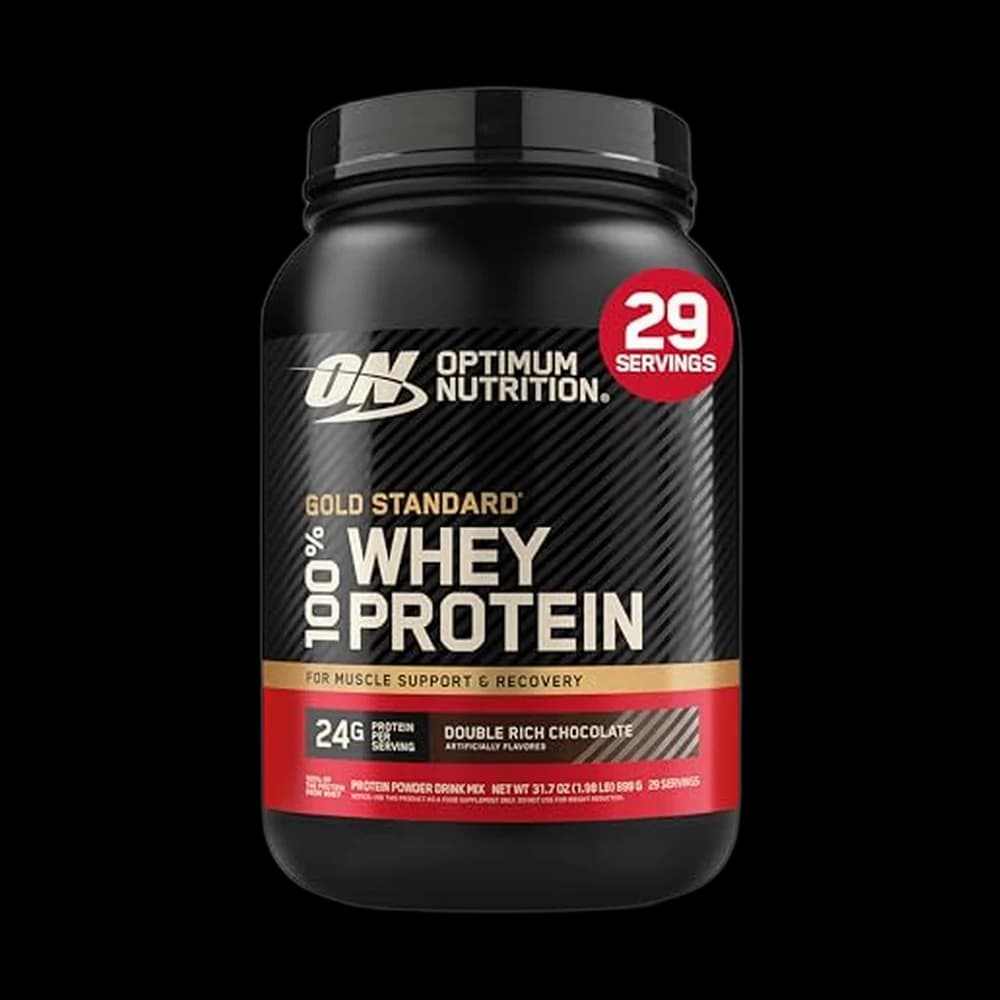
Optimum Nutrition Gold Standard Whey Protein, Double Rich…- Anyone who wants the cheapest gram of whey protein and does not care about the flavour being basic.
- Lactose bothers you — this is a blend, not a pure isolate.
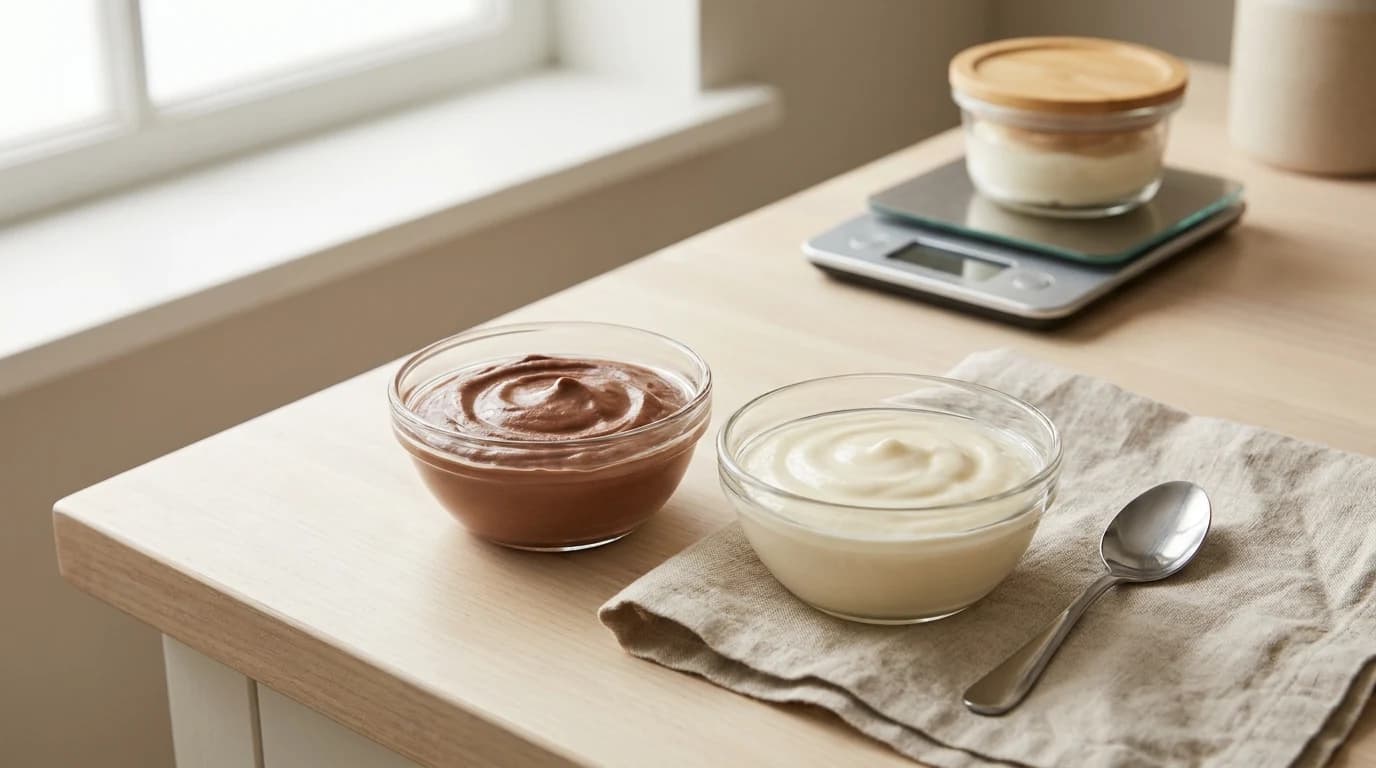
Protein per half cup and per 100 calories for Greek yogurt, cottage cheese, whey and casein, calculated from USDA and label data, not a tested recipe.
Key takeaways
- Nonfat Greek yogurt and cottage cheese are close on protein. Calculated from USDA cup weights, each lands at about 12 g per half cup; the real difference is calories.
- Fat moves protein per 100 kcal, not protein per half cup. Whole-milk Greek yogurt calculates to 10.8 g per half cup but only 9.3 g per 100 kcal, against 17.5 g for nonfat.
- Powder is how you reach about 25 g without eating more. Half a cup of nonfat Greek yogurt plus 16 g of a 24 g-per-31 g whey calculates to 25.0 g of protein and 134 kcal.
- Grams of ingredients are not half a cup of pudding. Powder absorbs moisture and blending adds air, so measure a finished batch before claiming a volume.
- Thickness is on the ingredient list. The casein label checked here includes guar, acacia and xanthan gums and the whey label lists none, so gums may explain a thicker set as much as protein type.
Pick by your situation
| If your situation is… | Pick | Why |
|---|---|---|
| You want the most protein for the fewest calories | Nonfat plain Greek yogurt as the base | It calculates to 17.5 g of protein per 100 kcal from USDA data, the highest of the four dairy bases compared. |
| Eating enough at all is the harder problem | Whole-milk Greek yogurt or creamed cottage cheese | Protein per half cup stays close to the nonfat versions while calories rise, though richer dairy can sit badly on a GLP-1. |
| You need about 25 g in one small serving | Half a cup of base plus about half a scoop of powder | The base supplies roughly 12 g and the powder about 12 g more, weighed on a scale rather than guessed. |
| Your whey pudding keeps turning out thin | Use less liquid, or read the ingredient list of a thicker-setting powder | The casein label checked here includes gums, and its brand says less liquid gives a thicker consistency. |
| You have kidney disease or a milk allergy | Ask your dietitian or clinician before making any of these | NIDDK advises working with a dietitian on protein in CKD, and every base and powder here is dairy. |
Each pick is one of the products compared below — a shortcut by situation, not a separate recommendation.
Protein Powders: our picks
| Pick | Best for | Rating | Price | Cost per 20 g protein | LeanScore | Buy |
|---|---|---|---|---|---|---|
| №1Optimum Nutrition Gold Standard Whey Protein, Double Rich… | The default tub: 24 g a scoop, everywhere, and cheap per gram. | ★ 4.6 | $48.83 | $1.40 / 20 g | 84 | Buy on Amazon |
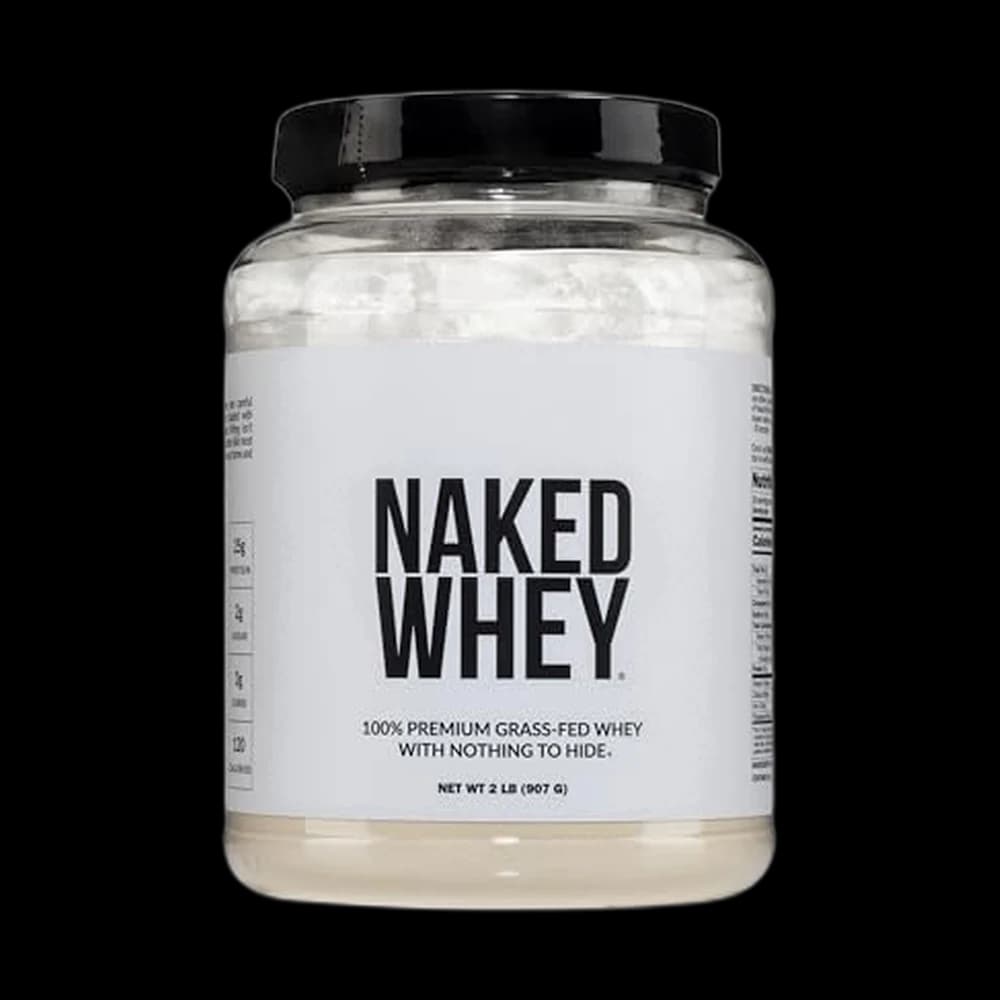 NAKED Whey 2LB 100% Grass Fed Whey Protein Powder NAKED Whey 2LB 100% Grass Fed Whey Protein Powder | One ingredient, no sweetener, so it disappears into food. | ★ 4.3 | $62.99 | $1.68 / 20 g | 74 | Buy on Amazon |
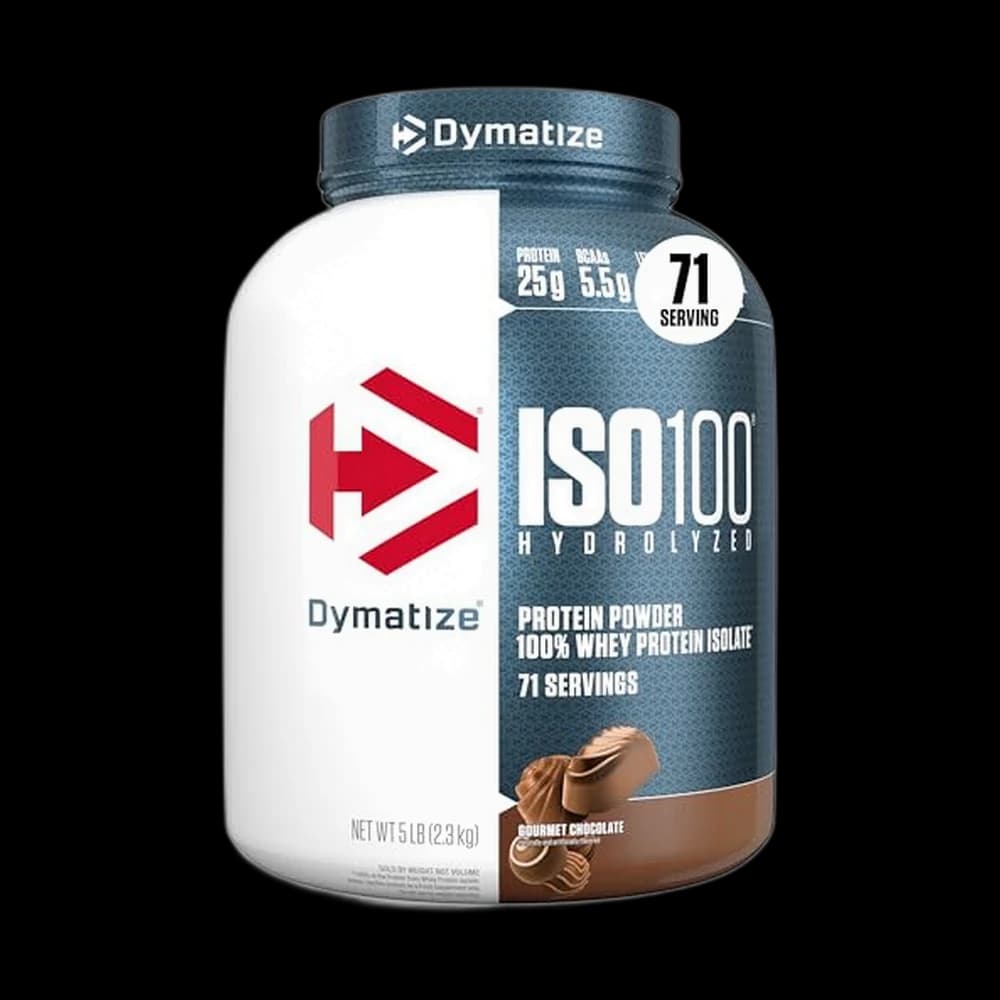 Dymatize ISO100 Protein Powder, 100% Whey Isolate, Gourmet Chocolate Dymatize ISO100 Protein Powder, 100% Whey Isolate, Gourmet Chocolate | Hydrolyzed isolate with almost no lactose left in it. | ★ 4.7 | $109.99 | — | 79 | Buy on Amazon |
Protein pudding has an obvious appeal when appetite is small: it is cold, smooth and eaten by the spoonful rather than the plateful. The catch is that most recipes are written for people trying to eat less, so they stretch one scoop of powder across a big bowl. When the limit is how much you can finish, the number that matters is protein per spoonful you actually eat.
This guide is arithmetic, not a tested recipe. Every figure below comes from USDA FoodData Central or a manufacturer's Nutrition Facts panel, and every half-cup value was calculated from the gram weight the source gives for one cup. Nothing here has been made in a test kitchen, and no calculation can tell you the finished volume after mixing.
Before you start: this is education, not a nutrition prescription. If you have chronic kidney disease, a milk allergy or a texture-modified diet for swallowing, the plan your care team gave you comes first.
Protein per half cup, by base
Half-cup figures are calculated: the source's stated weight for one cup, halved, then multiplied by its per-100 g values. Powders get no half-cup figure, because you measure them by weight, not volume.
| Base | Source weight used | Protein per ½ cup (calculated) | Calories per ½ cup (calculated) | Protein per 100 kcal (calculated) |
|---|---|---|---|---|
| Greek yogurt, plain, nonfat | 1 cup = 245 g (USDA) | 12.6 g | 72 | 17.5 g |
| Greek yogurt, plain, whole milk | 1 cup = 245 g (USDA) | 10.8 g | 115 | 9.3 g |
| Cottage cheese, 2% milkfat | 1 cup, not packed = 226 g (USDA) | 11.8 g | 92 | 12.8 g |
| Cottage cheese, creamed, small curd | 1 cup = 225 g (USDA) | 12.5 g | 110 | 11.3 g |
| Whey powder, Double Rich Chocolate (Optimum Nutrition Gold Standard Whey) | 31 g scoop, 24 g protein, 120 kcal (label) | Measured by weight | 120 per scoop | 20.0 g |
| Micellar casein powder, chocolate (manufacturer label) | 34 g scoop, 24 g protein, 120 kcal (label) | Measured by weight | 120 per scoop | 20.0 g |
Two things stand out. Nonfat Greek yogurt and both cottage cheeses land within about a gram of each other per half cup; the gap opens up in calories. And fat moves the last column far more than the protein column: whole-milk Greek yogurt carries nearly as much protein per half cup as nonfat, at about half the protein per 100 kcal.
Which column you should care about depends on your problem. If you are struggling to eat enough overall, calories are not the enemy, and chasing the highest protein-per-calorie figure can distract from that. There is no ready-made protein pudding in our catalog, so the table has no boxed row.
From 12 grams to about 25: add powder, not volume
Half a cup of any base above gives you roughly 11 to 13 g of protein. To get near 25 g without eating more food, add protein that brings little bulk with it, which means powder. Both examples below are calculations from the table's sources.
Nonfat Greek yogurt plus whey
- ½ cup nonfat plain Greek yogurt (122.5 g): 12.6 g protein, 72 kcal
- 16 g of Gold Standard Whey, about half its 31 g scoop: 12.4 g protein, 62 kcal
- Calculated total: 25.0 g protein, 134 kcal, 138.5 g of ingredients
2% cottage cheese plus casein
- ½ cup 2% cottage cheese (113 g), blended smooth: 11.8 g protein, 92 kcal
- 17 g of the casein powder, half its 34 g scoop: 12.0 g protein, 60 kcal
- Calculated total: 23.8 g protein, 152 kcal, 130 g of ingredients
What the maths cannot tell you: 138.5 g of ingredients is not half a cup of pudding. Powder absorbs moisture, blending traps air, and the finished bowl will be larger than the half cup of base you started with. Measure your own batch if volume matters. Label values are rounded too, so read 25.0 g as about 25 g.
Weigh the powder rather than guessing at half a scoop. A kitchen scale that reads in 1 g steps makes 16 g repeatable.
Casein, whey and thickness: what the labels show
A common claim is that casein thickens and whey does not, which is supposedly why whey puddings turn out soupy. We could not find a primary source supporting that as a general rule, so we are not repeating it. What these two labels show is narrower:
| On the label | Whey (Gold Standard Whey) | Casein (chocolate) |
|---|---|---|
| Scoop weight | 31 g | 34 g |
| Suggested mixing liquid | 6 to 8 fl oz | 10 to 12 fl oz |
| Gums in the ingredients | None listed | Guar, acacia and xanthan |
The casein brand's website also says less liquid gives a thicker consistency. So if one powder sets thicker in your bowl, read the ingredient list: the gums may be doing as much of the work as the protein type.
The method, in four steps
1. Choose the base by the column that matters to you
Nonfat Greek yogurt leads on protein per 100 kcal. Whole-milk yogurt or creamed cottage cheese adds energy if eating enough is the harder problem. diaTribe notes that high-fat dairy and large portions can heighten digestive side effects on medicines, especially early on, so a richer base is the one to question if it sits badly.
2. Weigh everything, then add powder a little at a time
Stir and scrape the sides between additions so dry pockets show before you decide the texture needs fixing.
3. Add liquid in small, recorded amounts
Each addition makes the bowl bigger without adding protein, so update your arithmetic rather than keeping the original number out of habit.
4. Portion before you store
A 1-cup glass container holds one serving with room to stir. Our 4 to 8 oz container system covers the rest of the fridge.
Storage: treat it like the dairy it is
FDA advises keeping the refrigerator at or below 40°F and not leaving foods that need refrigeration at room temperature for more than two hours, or one hour above 90°F. Nobody has validated a shelf life for these mixtures, so make small batches and go by the date on the base you opened.
If you are eating this on a GLP-1
This is background, not medical advice. diaTribe's nausea guidance includes eating more slowly and avoiding large or heavy meals, and lists plain Greek yogurt among bland foods that can help in the morning. Cleveland Clinic points out that GLP-1 medicines reduce appetite while your body still needs a variety of nutrients, and that a registered dietitian can build a plan around your needs.
So a pudding is one slot in a day, not the day. The 7-day small-appetite meal plan shows where a snack like this fits. Cleveland Clinic says a loss of appetite is usually a concern if it lasts longer than a week; if you cannot keep food or fluids down, call your prescriber rather than adjusting a recipe.
Check with your care team first if
- You have a milk allergy. NIDDK describes milk allergy as an immune system disorder, which is different from lactose intolerance. Every base and both powders here are dairy, and both labels also declare soy. Lactose-free does not mean milk-protein-free.
- You have chronic kidney disease. NIDDK says some people with CKD may need moderate amounts of protein, while too little risks malnutrition. Get that balance from your dietitian before adding a 25 g snack.
- You follow a swallowing plan. Looking like pudding is not a texture specification.
Choosing a powder is its own decision. Our guide to protein powders for a small appetite compares the options, and NAKED Whey is the unflavoured, additive-free route if sweet flavours have stopped working.
Your next step
Where most people go from here
Frequently asked
The questions that keep coming up
How much protein is in half a cup of Greek yogurt?
Calculated from USDA FoodData Central, which gives 245 g for one cup, half a cup of plain nonfat Greek yogurt carries about 12.6 g of protein and 72 calories. Whole-milk Greek yogurt calculates to about 10.8 g and 115 calories. Brands vary, so your own label is the better number.
Is this a tested protein pudding recipe?
No. It is a method with calculated nutrition from USDA data and manufacturer labels. Nobody has made and measured these mixtures, so the finished volume and texture are yours to find out, and the protein figures should be read as approximate.
Does casein make a thicker pudding than whey?
We could not find a primary source that supports that as a general rule. The casein label checked here contains guar, acacia and xanthan gums while the whey label lists none, so the ingredient list may explain a thicker set as much as the protein type does.
Can I use cottage cheese instead of Greek yogurt?
Yes. By USDA cup weights, half a cup of 2% cottage cheese calculates to about 11.8 g of protein and 92 calories, within about a gram of nonfat Greek yogurt. Blending it first gives a smoother, pudding-like texture.
How long does homemade protein pudding keep?
No shelf life has been validated for these mixtures. Keep it in a refrigerator at or below 40°F, do not leave it out for more than two hours, or one hour above 90°F, and go by the date on the yogurt or cottage cheese you opened.
Sources & further reading
We research from primary and authoritative sources. Where our guidance rests on a fact, here's where it comes from.
- USDA FoodData Central: Yogurt, Greek, nonfat milk, plain (FNDDS, FDC ID 2705424) — FoodData Central record: 10.3 g of protein and 59 kcal per 100 g, and a 1 cup portion weight of 245 g. Half-cup figures in the table were calculated from these values.
- USDA FoodData Central: Yogurt, Greek, whole milk, plain (FNDDS, FDC ID 2705422) — FoodData Central record: 8.78 g of protein and 94 kcal per 100 g, and a 1 cup portion weight of 245 g, used for the calculated half-cup row.
- USDA FoodData Central: Cheese, cottage, lowfat, 2% milkfat (SR Legacy, FDC ID 172182) — FoodData Central record: 10.4 g of protein and 81 kcal per 100 g, and 226 g for 1 cup (not packed), used for the calculated half-cup row.
- USDA FoodData Central: Cheese, cottage, creamed, large or small curd (SR Legacy, FDC ID 172179) — FoodData Central record: 11.1 g of protein and 98 kcal per 100 g, and 225 g for 1 cup of small curd (not packed), used for the calculated half-cup row.
- Optimum Nutrition: Gold Standard 100% Whey product page (Double Rich Chocolate Nutrition Facts) — Double Rich Chocolate label: 31 g serving (about 1 scoop), 120 calories, 24 g protein, 6 to 8 fl oz of mixing liquid, and an ingredient list with no gums.
- Optimum Nutrition: Gold Standard 100% Casein product page (Chocolate Supreme Nutrition Facts) — Chocolate Supreme label: 34 g serving (about 1 scoop), 120 calories, 24 g protein, 10 to 12 fl oz of mixing liquid, and a gum blend of guar, acacia and xanthan. The page's directions say less liquid gives a thicker consistency.
- diaTribe: 7 Tips for Navigating Nausea on a GLP-1 Medicine — Source for eating more slowly, avoiding large or heavy meals including high-fat dairy, and plain Greek yogurt among bland morning foods.
- Cleveland Clinic: GLP-1 Diet: What To Eat and Avoid — Source for GLP-1 medicines reducing appetite while the body still needs a variety of nutrients, and for a registered dietitian helping build an individual eating plan.
- Cleveland Clinic: Loss of Appetite: Causes and Treatment — Source for a loss of appetite usually being a concern if it lasts longer than a week, and for contacting a healthcare provider.
- NIDDK: Definition and Facts for Lactose Intolerance — Source for lactose intolerance being different from a milk allergy, which is an immune system disorder.
- NIDDK: Healthy Eating for Adults with Chronic Kidney Disease — Source for some people with CKD needing moderate amounts of protein, too little protein risking malnutrition, and working with a dietitian on the balance.
- FDA: Are You Storing Food Safely? — Source for keeping the refrigerator at or below 40°F and the two-hour rule, one hour above 90°F.
LeanFed is not medical advice and is not a substitute for your prescriber, pharmacist or dietitian. We do not test products hands-on — we compare labels, specifications and owner reviews. Prices and LeanScores reflect our most recent research and refresh on a cycle; confirm the current price and read the product's own label before buying. We may earn a commission from affiliate retailers — it never changes our recommendations. See how we score.